Singapore Airlines Discount Fares Signal Network Calibration Across Regional Hubs
Discounted economy seats between Changi and major capitals reveal how legacy carriers manage volume against premium transit yields
SINGAPORE
A commercial airframe parked idle on the tarmac generates continuous capital depreciation without producing operational revenue. When Singapore Airlines puts promotional inventory into circulation through Time To Fly 2026, the underlying arithmetic reflects capacity allocation rather than consumer generosity. Round-trip economy fares starting from S$258 link Changi Airport in Singapore to regional and intercontinental destinations including Bangkok, Taipei, London, Madrid and Los Angeles. All-in return fares across economy cabins serve an operational requirement that differs entirely from retail marketing.
Every scheduled transport network relies on baseline passenger volume to offset inflexible fixed commitments. Terminal docking charges, navigation expenses, flight crew allowances and fuel procurement contracts accumulate whether seats remain empty or occupied. Releasing inventory at lower price tiers captures forward liquidity months ahead of actual flight dates. That early cash collection insulates scheduled carrier operations against seasonal dips in international travel demand across primary departure gates.
Fleet Utilisation Across Stage Lengths
Operating scheduled services across varied route corridors requires balancing equipment turnaround cycles against fixed terminal slots. Aircraft flying return sectors between Singapore and Bangkok or Taipei run on rapid gate rotations designed to maintain high daily frequency. Long-haul stages connecting to London, Madrid or Los Angeles tie up heavy twin-aisle equipment across extended intercontinental segments. Managing those contrasting stage profiles demands distinct yield targets across identical physical cabin configurations.
Entry fares starting from S$258 absorb marginal capacity without compromising forward cabin returns. Full-service operators cannot sustain global flight networks solely on promotional economy receipts, because fuel burn and technical maintenance quickly outpace low nominal ticket prices. The discounted economy bucket acts as operational ballast, filling excess seat inventory that would otherwise fly empty alongside high-margin business traffic. This balance allows carrier planners to maximise passenger load factors while protecting top-tier corporate revenue streams.
Point-to-point competitors face structural pressure when full-service legacy carriers trim their entry-tier fares. Centralised hub infrastructure at Changi Airport allows Singapore Airlines to gather travelers from regional points like Bangkok and direct them into long-distance journeys toward London, Madrid or Los Angeles. Funnelling connecting traffic through a primary hub stabilises passenger volume on long-range widebody rotations, helping carriers cover the high fixed capital costs of heavy twin-aisle fleets.
Ground Capacity and Network Margins
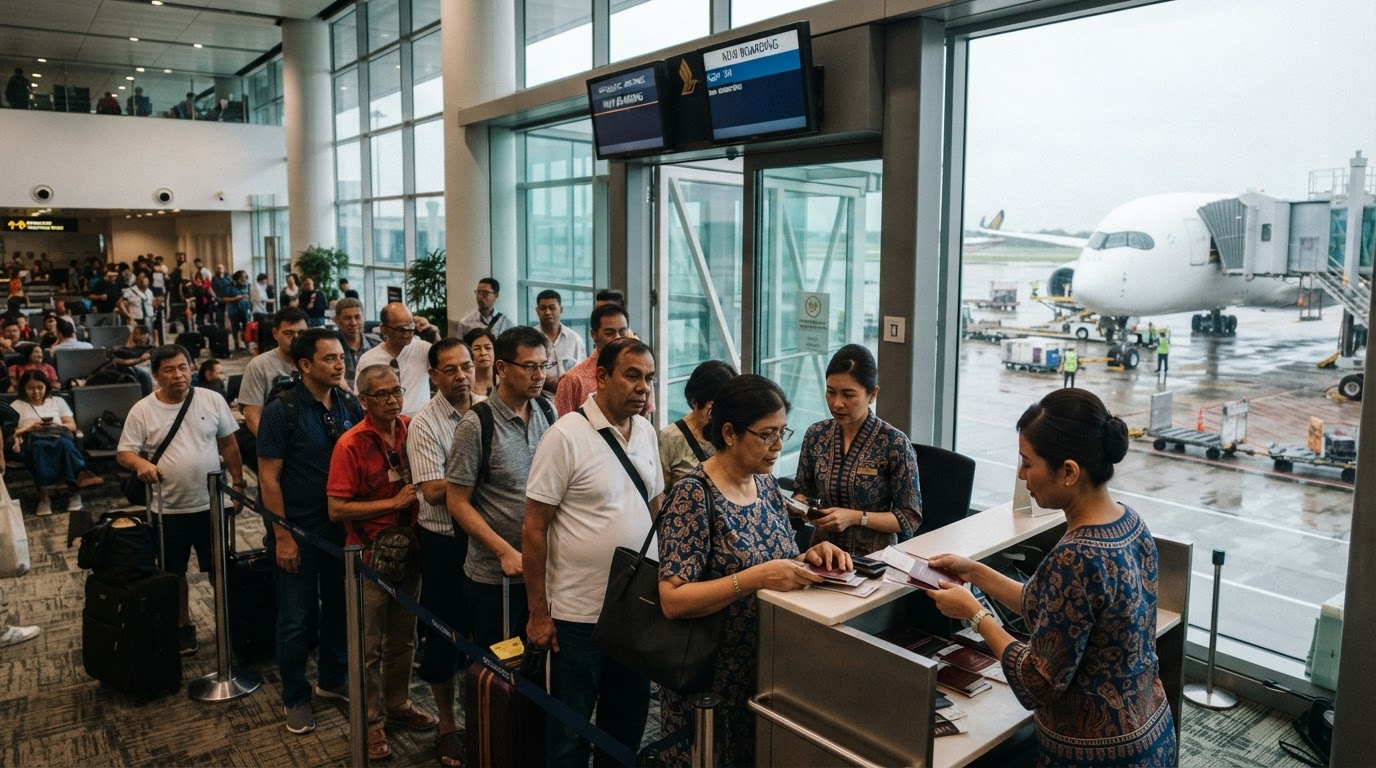
Pumping higher passenger volumes into economy cabins introduces measurable friction at terminal gates. Check-in facilities, baggage transit belts and boarding counters must process dense passenger flows within narrow departure banks. While low headline fares generate retail interest, ground support systems must handle increased physical throughput without creating ground delays that threaten tightly timed connecting flights. Operational efficiency on the apron remains critical when passenger density increases.
Discounted economy seating functions as operational ballast, converting surplus capacity into baseline cash flow across long-distance transit corridors.
Industry critics often argue that broad promotional discounting compresses long-term yields and cheapens a full-service brand. Price reductions can spark competitive discounting across regional hubs, eroding profitability across contested sectors. However, disciplined seat inventory management restricts promotional allocations to specific low-demand dates, insulating peak business schedules from price erosion. Full-service networks rely on revenue management algorithms specifically calibrated to prevent promotional seats from spilling into high-yield booking windows.
Long-term route viability ultimately rests on maintaining an equilibrium between low-yield volume and premium commercial yields. If jet fuel costs escalate or competing airlines add unabsorbed seat capacity across regional corridors, entry fares fail to generate sufficient marginal margin. The long-term return on network operations through Changi Airport will depend on whether economy passenger volume can consistently support widebody utilization without diluting overall network yield.
Sources
Newsletter
Pacific Daily
A curated briefing from Thailand, Asia-Pacific and the world.