Singapore Airlines and the Quiet Architecture of Cabin Hierarchy
By handing batik pouches to economy and sleeper suits to business class, the carrier balances corporate distinction with cultural hospitality
SINGAPORE
Stepping onto a twin-aisle passenger aircraft at boarding exposes one of modern transit's most calculated exercises in spatial choreography. Passengers squeeze down narrow floor tracks toward their assigned row numbers, immediately adjusting elbows, shoulders, and carry-on bags to the rigid boundaries of purchased space. Partitions divide the fuselage into distinct thermal and sensory microclimates. Rigid bulkheads, blue cloth curtains, and galley dividers map out sharply segregated expectations of comfort. From November 2026, Singapore Airlines will alter the physical inventory within those boundaries by introducing refreshed in-flight amenities across all cabin classes.
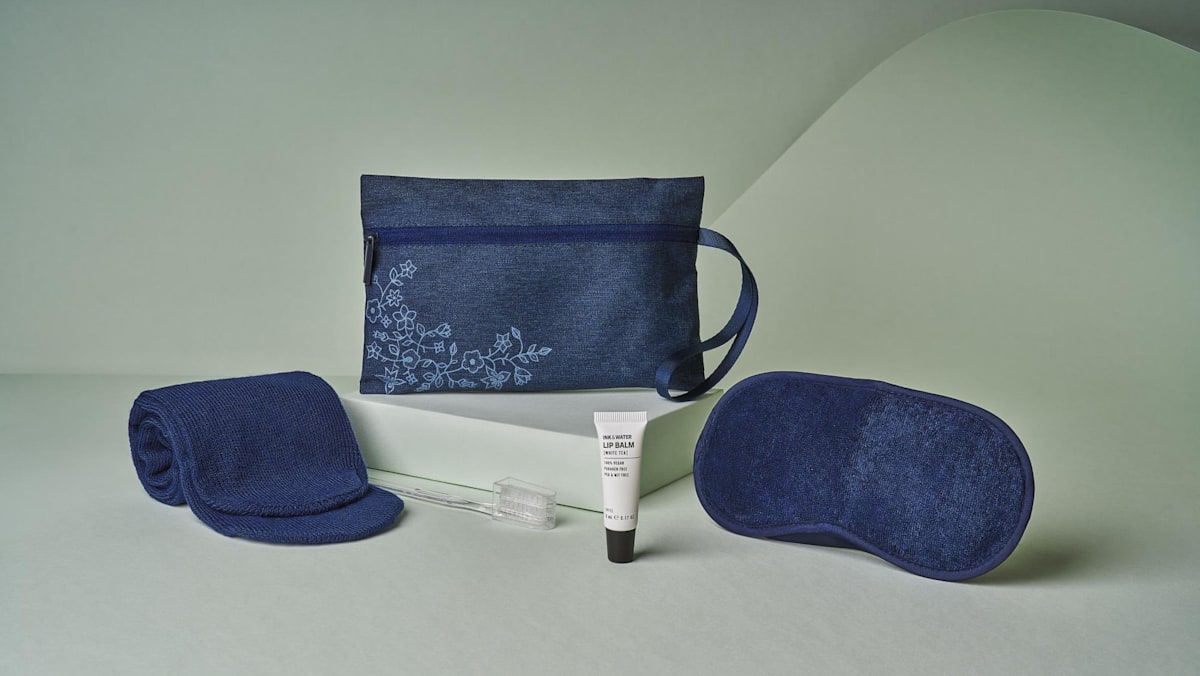
The carrier’s economy passengers will receive a collectible drawstring pouch printed with the airline's batik motif, containing basic travel essentials. Business class travelers, meanwhile, will receive dedicated sleeper suits.
On its surface, the rollout reads like ordinary airline marketing. Yet cabin layouts tell a sharper economic story.
The fabric of distinction
Long-distance flight strips away ordinary physical autonomy. Passengers must yield their schedules, sleep cycles, and personal perimeter to the steel and composite shell moving across time zones. In standard economy seating, that experience has grown increasingly austere over recent decades. Global aviation networks have systematically stripped away complimentary eye masks, physical menus, and plush pillows to reduce payload weight and compel supplemental seat fees.
Singapore Airlines appears to be testing a different calculation. Providing a fabric drawstring kit to economy travelers will not expand seat pitch or widen legroom. Even so, the physical artifact shifts the psychological terms of the flight. The pouch, decorated with the carrier's traditional batik pattern, functions as a tangible souvenir rather than disposable trash.
It is a deliberate sensory cue.
The distribution of small comforts across every seat acknowledges that endurance belongs to all travelers.
In the forward cabins, the material calculation serves practical corporate sleep. Sleeper suits in business class directly address the physiological friction of overnight long-haul sectors, where corporate travelers demand horizontal rest over novelty. In modern aviation economics, premium passenger revenue hinges on arriving uncreased and rested for morning meetings. The garment acknowledges that the corporate seat is no longer merely transportation, but a mobile hotel bed.
Soft diplomacy in the aisle
This division of textile offerings illustrates how Singapore Airlines maintains its regional posture. Several legacy carriers have reduced back-row travel to bare-bones transit, concentrating cultural attention and branded gifts exclusively on premium suites. Such austerity often risks alienating cost-conscious passengers who still choose full-service tickets on the expectation of institutional respect.
SIA uses familiar regional motifs to soften the mechanical friction of commercial flight. A printed fabric bag cannot eliminate the physical strain of sitting upright for twelve hours over ocean crossings. Nevertheless, handing an intentional keepsake to every ticket holder suggests that lower-fare passengers are treated as guests rather than mere freight. When an airline strips away all material generosity from its main cabin, it inevitably erodes the baseline brand loyalty that feeds long-term corporate upgrades.
As November approaches, this cabin refresh will reveal how effectively modest physical items can preserve passenger goodwill in an unforgiving operating environment. The curtain dividing premium seats from the rest of the plane will remain firmly closed during flight. Still, that small patterned pouch resting on an economy tray table suggests that travel dignity does not vanish at the partition.
Sources
Newsletter
Pacific Daily
A curated briefing from Thailand, Asia-Pacific and the world.