Managerial Authority and the Limits of Public Contrition at Manchester United
Michael Carrick secures an apology from Lisandro Martinez following European defeat, yet internal disciplinary measures highlight systemic institutional friction
SINGAPORE
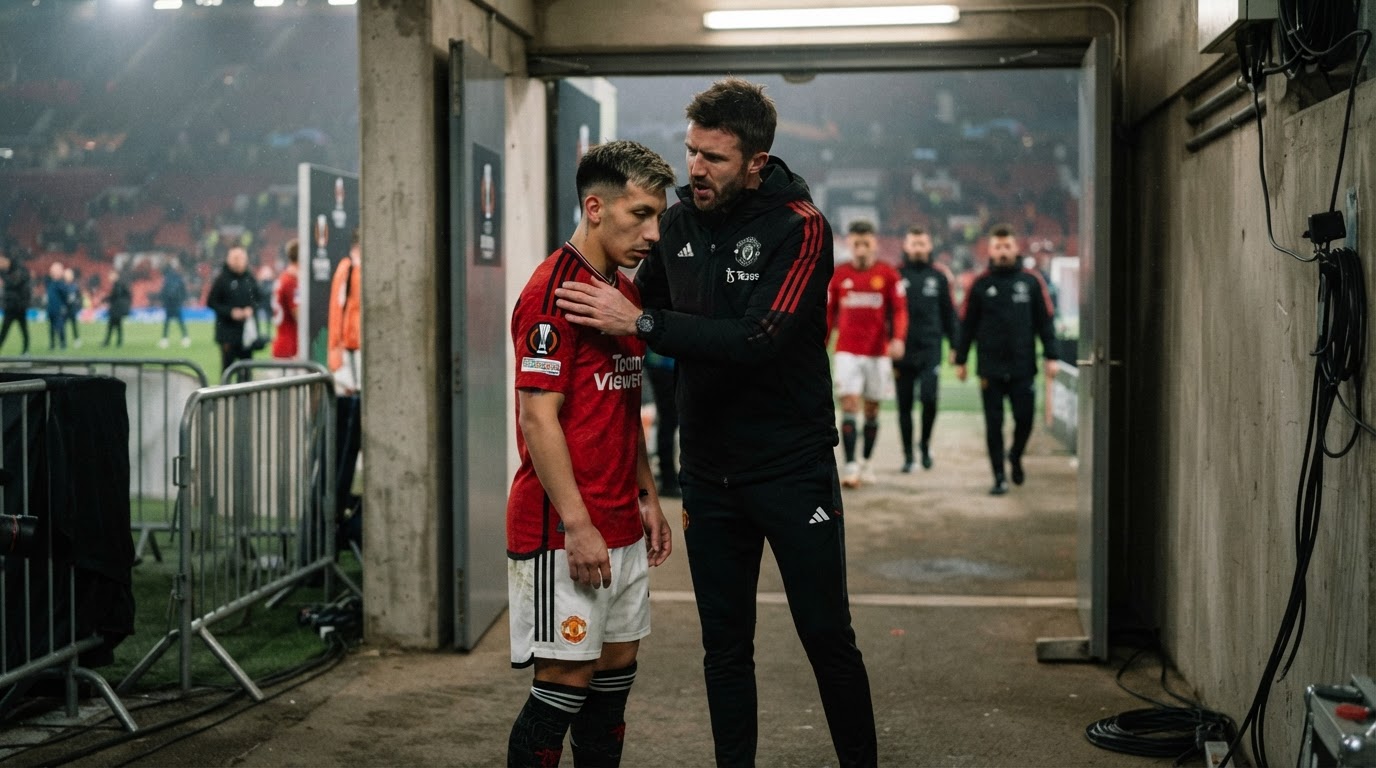
Managerial discipline inside elite European football institutions relies fundamentally on structural deference rather than retrospective conciliation. When Lisandro Martinez issued a formal apology after direct discussions with manager Michael Carrick, Manchester United addressed an overt rupture in its operational hierarchy. The intervention followed a contentious European fixture that exposed deeper strategic vulnerabilities within the squad.
On October 13, 2026, Manchester United suffered a defeat against Atletico Madrid at Riyadh Air Metropolitano in Madrid, Spain. In the immediate aftermath of that UEFA Champions League fixture, Martinez directed public criticism toward the club hierarchy, prompting immediate administrative and sporting repercussions. By October 15, 2026, the defender faced both an internal fine and formal discussions regarding his public posture. The player subsequently stated, > "Today I met with the club's leadership and the manager," acknowledging the institutional necessity of addressing the public discord.
Institutional Hierarchy and Squad Control
Public grievances aired by senior personnel routinely challenge the core command structure of modern sporting enterprises. At Craven Cottage in London on September 20, 2026, Manchester United had contested a Premier League match against Fulham without visible institutional fractures. The subsequent breakdown in Madrid revealed how volatile competitive setbacks become when leadership structures face external scrutiny. Carrick, observing the squad during the Atletico Madrid contest, confronted an immediate test of managerial authority.
Enforcing a financial penalty alongside an explicit retraction restores the appearance of order. The measure demonstrates that executive leadership intends to insulate decision-making from public player dissent. Corporate governance within the Premier League demands absolute coherence when communicating strategic objectives, particularly under the commercial weight of the UEFA Champions League. Disciplinary fines serve as standard deterrents against insubordination, maintaining an operational boundary between playing staff and executive management.
Such punitive actions rarely resolve the strategic disagreements that provoke public outbursts. An apology delivered under contractual duress alters verbal output, not underlying tactical or organizational capabilities. Observers who assess sports governance recognise that transactional retractions often mask continuing divergence between changing technical staff and long-term club stewardship. Carrick's ability to extract an immediate concession secures short-term authority on the training pitch, but the institutional friction that generated the complaint remains intact.
Governance Risks Across Global Sports Enterprises
Global sports entities operating from the United Kingdom face immense scrutiny from international commercial partners and regional broadcast consumers across Asia and beyond. Instability at board level degrades brand value and distorts competitive execution. When organizational friction surfaces in post-match statements, it damages investor confidence and disrupts long-term technical planning. Stakeholders tracking sports management across international jurisdictions assess stability through operational cohesion rather than post-crisis press management.
The administrative confrontation between Carrick and Martinez highlights an enduring operational boundary. Michael Carrick has established immediate managerial boundaries through direct consultation and swift financial penalties. Nevertheless, managerial control enforced strictly through discipline leaves structural cohesion vulnerable whenever sporting results falter under intense competitive pressure.
Sources
Newsletter
Pacific Daily
A curated briefing from Thailand, Asia-Pacific and the world.