Iraola Confronts the Physical Limits of Modern Squad Rotation
Managing Ryan Gravenberch through structural pain exposes the tactical friction between domestic ambition and European logistics
SINGAPORE
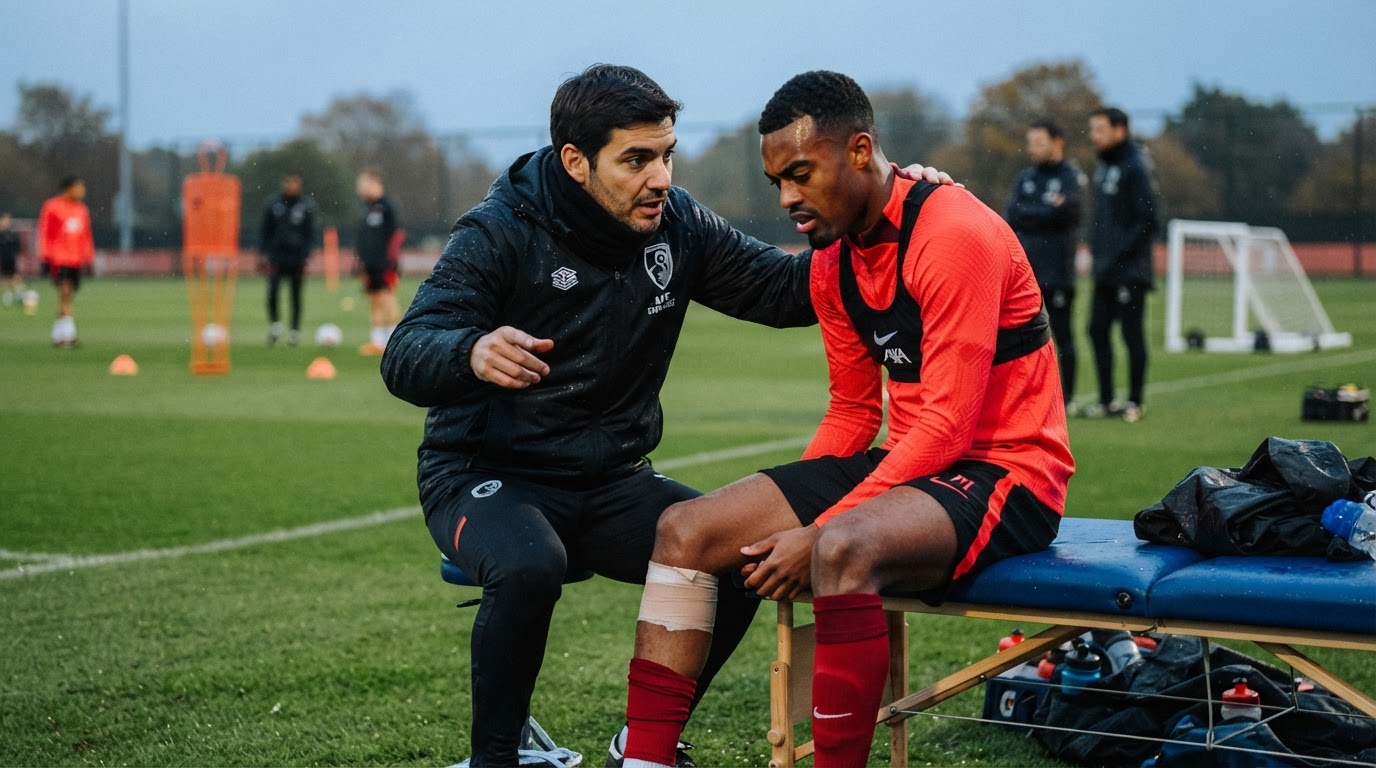
When Liverpool manager Andoni Iraola confirmed on Tuesday that midfielder Ryan Gravenberch would be omitted from the travelling squad for Wednesday's UEFA Champions League fixture against Fenerbahce, the announcement addressed immediate pain tolerance rather than strategic preference. The official assessment indicates that the Dutch midfielder continues to manage the discomfort of a heel fracture, an injury that previously restricted his participation during Sunday's 1-0 domestic defeat by Arsenal. What altered on the training pitches of the AXA Training Centre in the United Kingdom was not the tactical framework itself, but the operational capability available to execute it across an unforgiving continental calendar.
Skeletal trauma imposes non-negotiable boundaries on managerial planning. Although Gravenberch engaged in touchline warm-ups during the Arsenal encounter, Iraola acknowledged that the player lacked physical confidence and had shown no measurable progress since that weekend fixture. Bone fractures resist accelerated rehabilitation timelines regardless of technical necessity. Managerial calculations must therefore yield to physiological recovery rates, leaving staff to reconfigure their central midfield options under rigid competitive deadlines.
"It's a day-to-day thing. It's a fracture of the heel and it's about the pain... The other day against Arsenal he was warming up but was not fully confident and he hasn't improved since then,"
At stake in Turkey is not merely a single group-stage result, but the preservation of structural balance across distinct competitions. With an away fixture in Istanbul presenting severe environmental and tactical demands, removing a primary midfield anchor directly reduces defensive stability and transition control. The coaching staff faces an unavoidable operational triage, balancing immediate point accumulation in Europe against broader Premier League objectives.
Structural Demands and Tactical Adjustments
Domestic competition introduces an immediate layer of urgency. Following Sunday's narrow defeat to Arsenal, Liverpool cannot afford compounding dropped points in their upcoming weekend league meeting with Crystal Palace. Iraola's tactical calculus indicates a deliberate prioritization, preserving Gravenberch's conditional readiness for domestic duties rather than subjecting an inflamed heel to transcontinental travel.
Deprived of their established central pivot, the technical staff must weigh whether internal development can offset senior squad depletion. Regarding younger options such as Trey Nyoni, Iraola noted that developing personnel must maintain the continuity established since pre-season, remaining prepared for selection at every turn. Promoting developmental talent into high-stakes continental competition nevertheless carries measurable risk, testing whether technical discipline can substitute for mature physical resilience under intense pressing conditions.
Skeptics might argue that elite European organizations maintain sufficient depth to absorb isolated injuries without diminishing systemic quality. Modern club rosters are specifically constructed to distribute physical wear across multiple senior internationals. This institutional buffer operates effectively only until specialized tactical profiles are compromised. When a midfielder provides unique press resistance and ground coverage, replacing those specific functional attributes proves substantially more difficult than simple personnel rotation suggests.
The Unresolved Ledger of Fixture Congestion
Long-term athletic sustainability frequently conflicts with the relentless scheduling demands enforced by European football governance. Managers operating at this echelon function as resource allocators, continually balancing competitive viability against physical degradation. The decision to leave Gravenberch in Britain confirms that attempting to accelerate bone recovery carries unacceptable operational hazards for the remainder of the campaign.
Whether Gravenberch returns to active competition against Crystal Palace remains contingent upon daily clinical evaluation. Tactical improvisation can temporarily mask systemic absences, yet sustained physical strain inevitably extracts a competitive tax. Until functional confidence is completely restored to the joint, Liverpool remains bound by an unresolved structural constraint where fixture density continually outpaces physical durability.
Sources
Newsletter
Pacific Daily
A curated briefing from Thailand, Asia-Pacific and the world.