Fatal Gwalior Freight Collision Exposes the Cost of Unchecked Night Transit
A temple disaster in Madhya Pradesh demonstrates how logistics speed incentives continually bypass civic safety controls across industrial transit corridors.
SINGAPORE
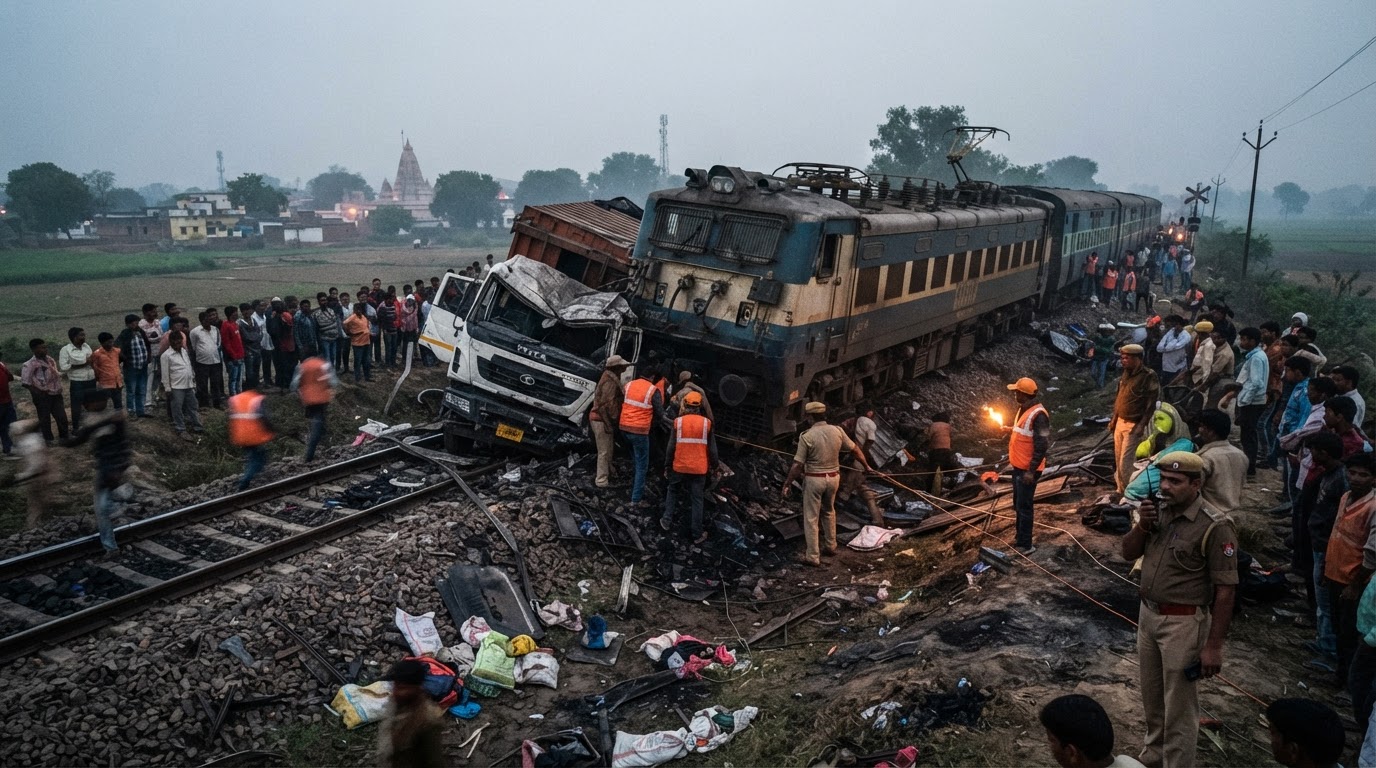
Commercial freight networks reveal their operational priorities when traffic controls fall silent. In the early hours of Sunday, Oct 18, 2026, a heavily loaded truck lost control and ploughed into devotees gathered at a temple in Gwalior, in the central state of Madhya Pradesh. The incident killed 13 people, an outcome President Droupadi Murmu described as heartbreaking. Initial reports from officials in New Delhi and dispatches carried by the Press Trust of India confirm that the vehicle struck the crowd during an active Hindu festival. Divergent casualty counts from regional outlets, spanning between 12 dead with 30 injured and 14 dead with 40 injured, reflect the immediate structural confusion that follows high-impact collisions along shared trunk roads.
The tragedy at Gwalior is a structural signal. Across rapidly expanding regional manufacturing hubs, the economic incentive governing heavy goods movement prioritises transit velocity and overnight scheduling. Fleet operators route heavily loaded trucks through municipal belts during off-peak night windows to avoid daytime urban congestion, fuel consumption penalties, and regulatory scrutiny. Devotees gathering before dawn occupied the same spatial boundary as long-haul transit. When mechanical limits fail or vehicles travel at high velocity, the risk falls entirely onto vulnerable civic populations who have no protective physical separation from primary transport routes.
The Freight Margin
Logistical efficiency in secondary transit nodes relies on low margins and tight delivery intervals. Industrial production corridors across India require long-distance haulage to bridge primary manufacturing clusters with inland consumer markets. Shippers operate under contracts that penalise delivery delays far more rigorously than route deviations. Moving bulk tonnage in the early hours reduces road turnaround times. This practice shifts the cost of logistical speed from corporate ledgers onto roadside public spaces. Heavy trucks navigate provincial arteries that double as community celebration corridors without dedicated buffer lanes or mandatory physical speed mitigations.
The economic incentive governing heavy goods movement prioritises transit velocity and overnight scheduling.
Regulatory authorities frequently respond to catastrophic accidents with selective enforcement drives and localized travel restrictions. Fleet operators argue that restrictive daytime bans leave overnight dispatch as their only viable method to maintain economic throughput. When regulatory frameworks treat each fatal collision as an isolated mechanical failure or a case of driver error, systemic operational pressures remain untouched. Vehicle maintenance deficits, payload thresholds, and overnight transit allowances persist because municipal monitoring recedes once daylight fades.
Unresolved Corridor Risk
Resolving corridor risk requires realigning transport incentives rather than relying on administrative grief. Until transport oversight ties freight operator licensing directly to automated tracking of payload limits and spatial corridor containment near religious and community sites, the economic return on pushing overloaded freight through municipal thoroughfares will outweigh periodic fines. The physical overlap between heavy industrial transit and local gathering points exposes an acute governance deficit across emerging economic corridors.
The central contradiction rests in the gap between infrastructure expansion and pedestrian protection. While long-distance road networks expand to accommodate rising industrial volumes, local access controls remain static. The Gwalior collision demonstrates that when commercial logistics corridors intersect unprotected civic assemblies, the externalized cost of heavy transit speed becomes lethal.
Sources
Newsletter
Pacific Daily
A curated briefing from Thailand, Asia-Pacific and the world.