European Red Lines in Bangkok Expose Fractures in Global Governance
German resistance to Russian participation at the G20 finance meeting strains diplomatic neutrality across the Asia-Pacific.
BANGKOK
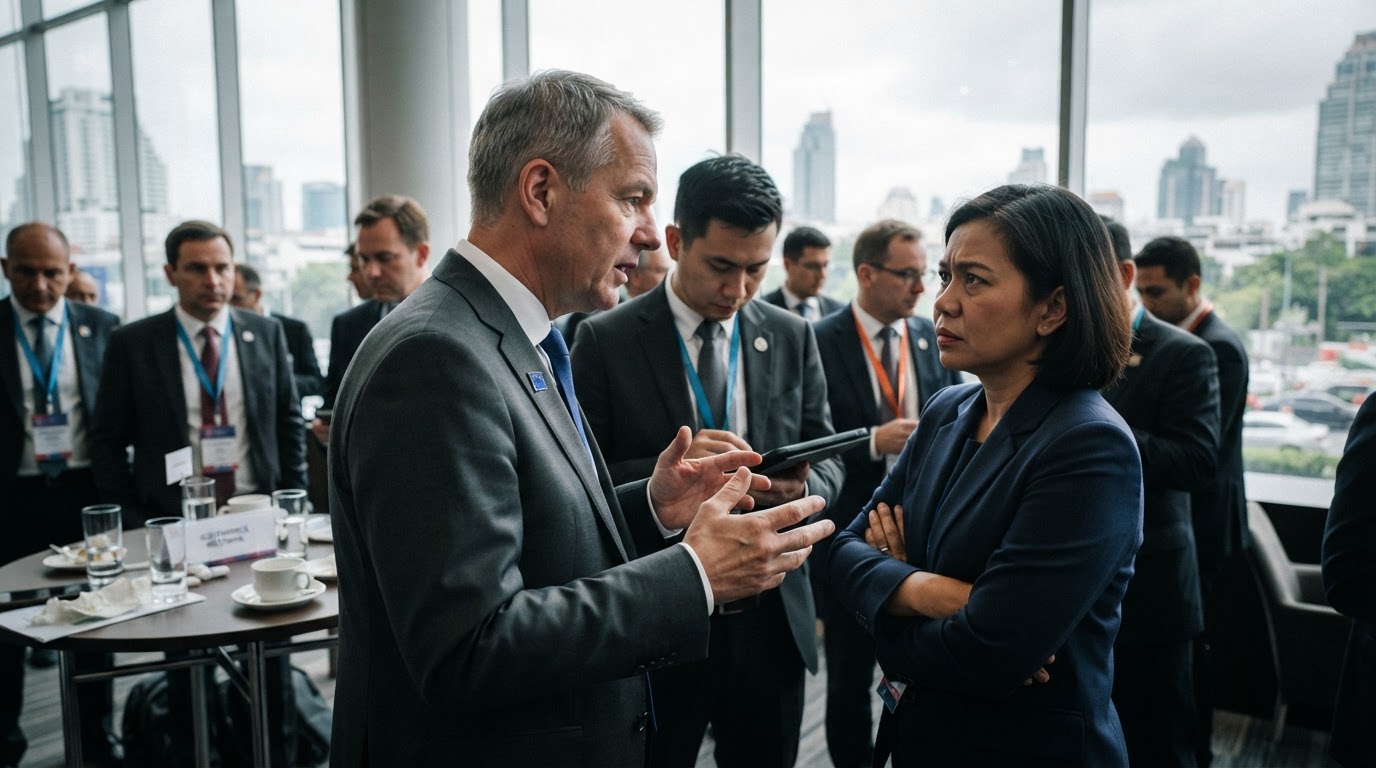
Multilateral ministerial meetings convened across the Asia-Pacific have historically prioritised trade consensus over geopolitical alignments, yet European delegations increasingly view these economic tables through the lens of European continental security. That divergence hardened into explicit confrontation when German Finance Minister Lars Klingbeil addressed delegates in Bangkok. Speaking to counterparts on Thursday, his declaration established a strict boundary for the forum: normal diplomatic engagement cannot be granted to Russia, and European governments will refuse to treat its presence as standard procedure.
There will be no pretending that Russia is now returning as a normal member of the G20 and simply taking its seat at the table again - not with me, and not with the other Europeans.
His stance exposes a widening structural fault line between European strategic objectives and the institutional traditions of regional hosts. While European capitals insist on isolating Russia following the war in Ukraine, diplomatic practice across Asia has routinely favoured non-alignment, comprehensive dialogue, and economic stability. By drawing an absolute boundary in Bangkok, Germany demonstrated how political imperatives negotiated thousands of miles away are projected onto regional assemblies that were established to coordinate global financial stability.
Competing Agendas at the Table
The Bangkok finance ministers' meeting coincided with parallel pressure from Western partners, as Britain simultaneously urged tighter international sanctions targeting Russian shipping operations. Meanwhile, questions regarding the long-term diplomatic direction of the United States have introduced further volatility into international economic discussions. This combination leaves Asian host authorities navigating European diplomatic demands while seeking to protect functional economic ties with diverse partners. When major powers split along geopolitical axes, ministerial meetings cease to function as predictable venues for policy alignment.
European policymakers answer to domestic expectations that treat Russian diplomatic isolation as an indispensable security requirement. In contrast, emerging Asian economies rely on ministerial summits primarily to resolve financial vulnerabilities, trade frictions, debt stress, and monetary volatility. Transforming these economic meetings into geopolitical tests diverts critical attention from cross-border fiscal stability. For developing economies, the primary risk remains financial contagion and currency pressure rather than the diplomatic composition of the conference room.
The Regional Burden of Exclusion
The European argument rests on a coherent premise. Allowing unhindered participation risks weakening global principles of territorial integrity and sovereign immunity, establishing a precedent that severe breaches of international rules carry no lasting institutional consequences. If multilateral bodies overlook sovereign conflict simply to maintain a superficial procedural routine, their broader governance value risks rapid decay. From the European perspective, financial cooperation cannot exist in a vacuum insulated from violent interstate conflicts.
Yet this unbending standard creates a difficult operational dilemma for regional conveners. Asia-Pacific diplomatic networks function effectively precisely because they maintain open communication across rival blocs. When European members condition participation on the exclusion of others, host governments bear the diplomatic cost of disputes rooted outside their territories. Regional hosts find themselves pressured to enforce exclusions that clash directly with their own strategic preferences for non-alignment and non-interference.
Whether the G20 can maintain institutional utility amid such irreconcilable positions remains an open question. Host governments across the Asia-Pacific are left attempting to balance the preservation of international rules against the structural necessity of broad economic dialogue. That unresolved tension between Western security enforcement and regional inclusivity leaves multilateral finance meetings trapped between conflicting visions of global order.
Sources
Newsletter
Pacific Daily
A curated briefing from Thailand, Asia-Pacific and the world.