Dubois and Wardley Weigh Heavy on London Scales
The immediate WBO rematch exposes how promoter Frank Warren prioritises swift domestic theatre over strategic division building.
SINGAPORE
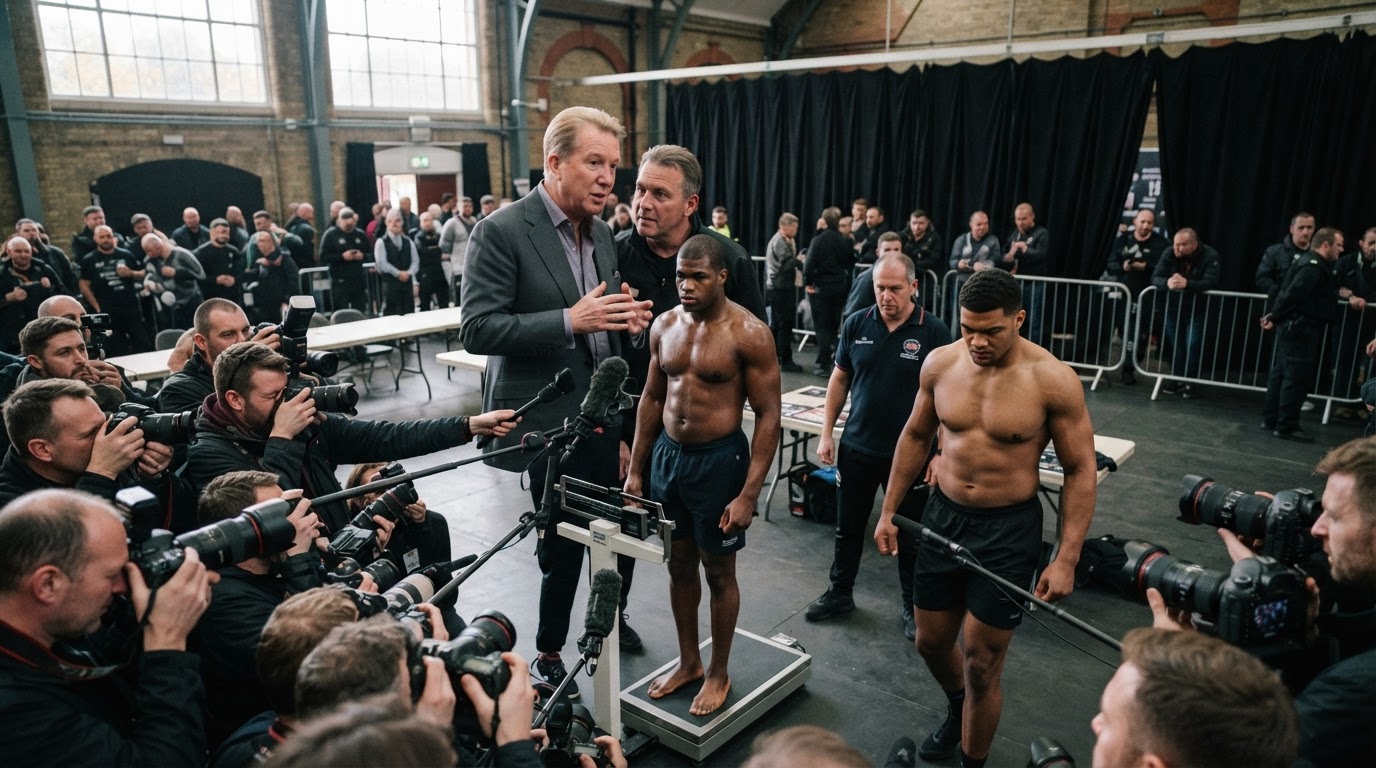
Heavyweight championship rematches arranged within five months rarely suggest tactical reinvention. When Daniel Dubois and Fabio Wardley stepped onto the scales in London on October 16, 2026, their recorded weights of 248.3 and 253.9 pounds confirmed that promoter Frank Warren was staging a contest of raw attrition rather than technical evolution. The British fighters logged career-high numbers for their second bout, registering approximately 112 and 115 kilograms, choosing mass over mobility after their initial meeting earlier in the year. That decision sets an unmistakable tactical premise for the rematch. Dubois and Wardley have opted to absorb and deliver force rather than maneuver around each other, ensuring that the physical toll taken in their prior encounter will only be magnified under the lights in London.
Wardley enters the ring driven by a stated desire for revenge, yet the speed of the pairing limits what either athlete can meaningfully alter. Dubois holds the WBO belt following an encounter that punished both men physically. Returning to the same arena so rapidly reflects commercial urgency more than athletic preparation. Boxing history demonstrates that rapid rematches between bruising heavyweights compound physical damage while diminishing stylistic variety. The fighters have essentially doubled down on physical presence, as shown by the scale readings, betting that sheer weight can substitute for extensive technical adaptation. When two athletes gain mass between bouts, stamina diminishes while collision impact escalates, creating a fight script that prioritises early stoppage over sustainable ring craft.
The Economics of Repetition
Warren's promotional architecture relies heavily on keeping championship hardware circulating within domestic orbit. Staging the event in London anchors the commercial proceeds firmly inside the British capital, concentrating live attendance and direct promotional revenue close to home. Promoters understand that domestic rivalries generate reliable ticket sales and localized public interest without requiring complex cross-border coordination. By staging Dubois against Wardley under the supervision of Warren, the promotional apparatus capitalizes on established name recognition in the United Kingdom. This self-contained operational model insulates domestic promoters from international scheduling friction, guaranteeing immediate returns from arena ticket gates and domestic broadcast agreements.
Rapid rematches between heavyweights compound physical damage while diminishing stylistic variety.
Broadcast networks present a contrasting regional dynamic. Platforms across the asia-pacific territory, including Channel News Asia and The Straits Times, monitor the contest as general global wire reporting rather than prime-time showcase sport. While the BBC coordinates live radio coverage on BBC Radio 5 Live alongside digital watchalong streams on BBC iPlayer and YouTube, international platforms must contend with substantial time differences. European evening timing places the live bout into early morning hours for overseas audiences, transforming what London presents as a premier championship clash into peripheral broadcast coverage. International combat sports followers outside the host country consume these events primarily through wire agency feeds, secondary summaries, and delayed news reports, highlighting the structural ceiling of inward-looking metropolitan promotions.
Structural Limits in Global Reach
Sanctioning bodies like the WBO benefit immediately from the sanctioning fees generated by prompt title defenses. Dubois defending against Wardley provides immediate financial return and clears administrative obligations without enforcing long mandatory waiting periods. Such arrangements keep the belt visible in headline media cycles, but they simultaneously restrict opportunities for emerging contenders in other regions who seek entry into the heavyweight hierarchy. A closed circuit of immediate rematches concentrates title opportunities within a small cadre of familiar combatants, narrowing the pathway for fighters seeking global advancement.
Physical toll remains the primary uncalculated variable in this equation. Both boxers enter the ring at their heaviest recorded weights, bearing the cumulative impact of two intensive training camps and two championship bouts packed into a single calendar year. Dubois risks over-reliance on punching power at the expense of defensive endurance, whereas Wardley gambles that revenge can be secured through direct collision. London's promotional machinery continues to extract value from domestic heavyweight drama, yet the arrangement leaves the wider division static. The two men will settle their personal rivalry inside the ropes, but the compressed calendar and inward-looking promotional framework do little to advance the sport beyond its traditional metropolitan base.
Sources
Newsletter
Pacific Daily
A curated briefing from Thailand, Asia-Pacific and the world.