Aviation retreats from fuel hedges as war resets Asia ticket economics
Carriers abandon traditional hedging to transfer double fuel expenses straight to passengers
SINGAPORE
A barrel of jet fuel and an invoice for wholesale food provisions share the exact same financial arithmetic. When primary procurement expenses double without warning, an enterprise either absorbs severe margin destruction or pushes the surcharge directly downstream to the end consumer.
That operational threshold has fractured across commercial aviation corridors connecting Hong Kong and Malaysia. Channel News Asia reports that jet fuel prices currently stand at roughly double their levels before the Iran war erupted. In orthodox transport finance, structural volatility of this magnitude dictates defensive market hedging. Forward contracts traditionally enabled carriers to lock in kerosene supplies months in advance, smoothing out sudden swings in crude through cash premiums and posted collateral. Hedging provides cost predictability, shielding balance sheets from sudden market spikes. Yet as military conflict across the Middle East grinds through October 2026, international airlines are actively pulling back from fresh hedging instruments. Locking in procurement obligations at current doubled prices threatens corporate viability. If diplomatic mediation abruptly eases regional supply fears, any carrier committed to peak derivatives faces ruinous operating costs while unhedged competitors purchase cheaper fuel on the open market.
Airline treasury desks have decided against risking liquid reserves on peak-cycle insurance. Instead, corporate leadership has elected to transfer raw procurement exposure directly onto the travelling public.
Transferring wholesale volatility
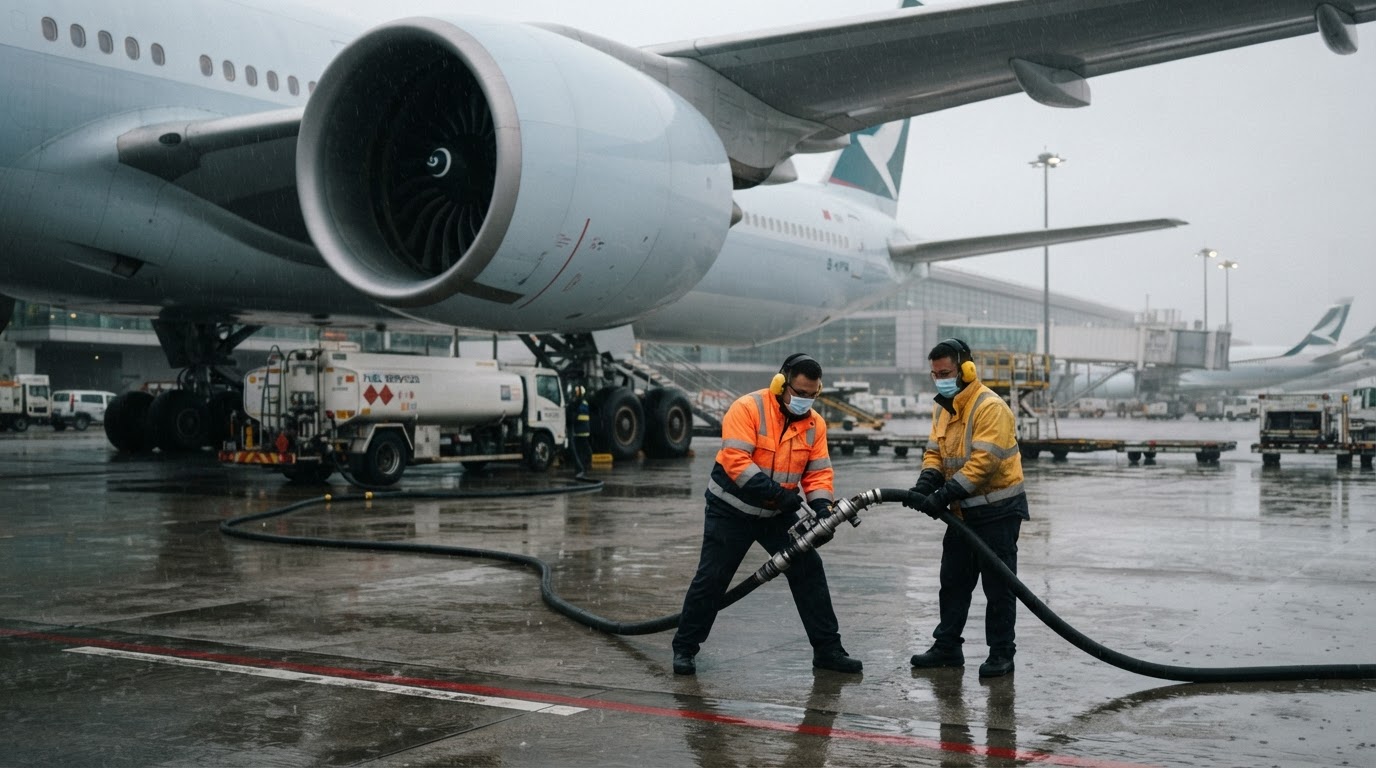
Hedging allows airlines to lock in future fuel prices, helping shield them from increases and providing greater certainty over costs.
Securing cost certainty through financial instruments requires substantial liquidity, collateral deposits, and insurance premiums that corporate balance sheets are no longer willing to surrender. Rather than absorbing these derivative expenses, carriers are issuing explicit warnings of steep, unavoidable fare increases. The day-to-day reality of airline operations demands continuous cash flow, whether servicing long-haul routes or handling short-haul turnaround schedules. When a Shell tanker truck refuelled a Ryanair aircraft at Eindhoven Airport in the Netherlands in April 2026, it captured an operational chain dependent on disciplined working capital. Low-cost carriers, an operational model shaped across Asia by figures such as AirAsia CEO Tony Fernandes, rely upon relentless volume to offset wafer-thin seat margins. With fuel bills doubling and defensive financial hedges abandoned, the passenger seat becomes the sole remaining revenue lever available to protect operational solvency.
The limits of retail elasticity
Executive suites defend this withdrawal by arguing that unhedged spot exposure preserves critical agility if crude markets soften. That reasoning reflects an unproven commercial gamble. Travellers across the Asia-Pacific region have endured sustained fare inflation through 2026, but household budgets and corporate travel accounts do not possess limitless price elasticity. Transit networks cannot simply pass wholesale procurement failures to retail consumers without eventually depressing passenger volume and weakening overall seat load factors.
Every production model eventually collides with the spending limit of its final customer. Transport networks connecting Asia and the Middle East are attempting to substitute fare surcharges for disciplined treasury hedging, betting that consumer demand will withstand doubled energy inputs indefinitely. Transferring raw geopolitical risk directly to ticket counters leaves passenger volume acutely exposed to economic fatigue. When balance sheets refuse to absorb the financial friction of international conflict, the departing traveller is forced to act as the ultimate corporate shock absorber.
The fundamental energy constraint remains entirely unresolved. Until wholesale fuel prices recede or airlines re-establish workable balance-sheet buffers, commercial aviation remains unhedged at the boarding gate.
Sources
Newsletter
Pacific Daily
A curated briefing from Thailand, Asia-Pacific and the world.