AI's Wage Impact: Europe's Warning Echoes Across Asia-Pacific
A European Central Bank economist's remarks on AI's potential to weaken worker bargaining power suggest a pattern with distinct implications for diverse Asian labor markets.
SINGAPORE
Philip Lane, Chief Economist at the European Central Bank, observed on Tuesday that increased AI use by euro zone companies might curb workers' ability to demand higher wages. His analysis, delivered on October 13, 2026, posits that heavy investment in new technology could tighten financing conditions. This perspective, concerning AI's influence on labor markets and wage growth, draws attention to similar dynamics that may manifest across the Asia-Pacific region.
Lane stated, "The potential for AI to replace some types of workers may also weaken the bargaining power of workers, moderating wage growth and reducing the labour share in total income." This claim, made as inflation in the euro zone runs at nearly twice the ECB's 2 percent target, suggests a structural shift rather than a temporary economic fluctuation. The ECB's ongoing search for signs of second-round price effects, with so far no such conclusion, underscores a focus on underlying economic forces. This assessment in Europe, where an advanced economy faces specific labor market pressures, provides a lens through which to examine the varied economic landscapes of the Asia-Pacific.
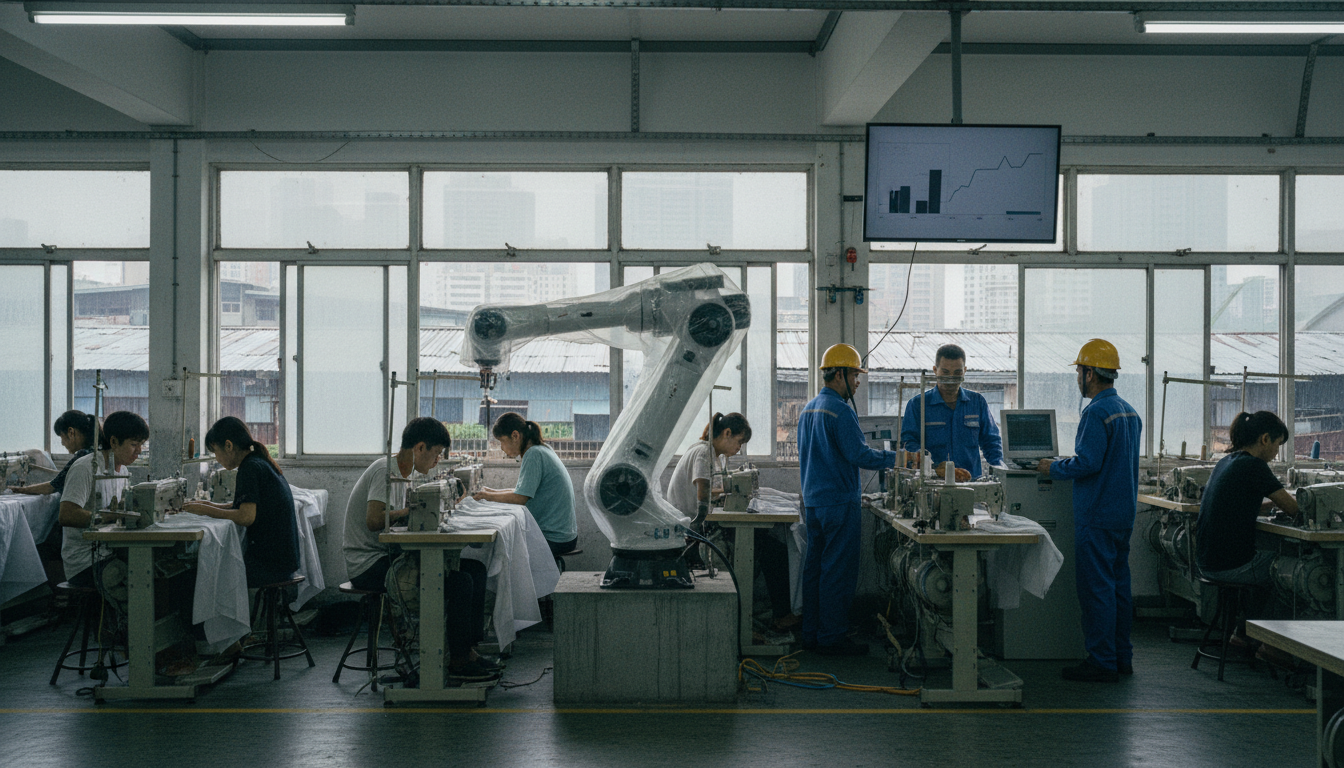
The implications for Thailand and other Asia-Pacific economies are not uniform. Countries with large manufacturing bases and those undergoing rapid industrialisation, where labor costs are a significant competitive factor, might experience this phenomenon differently. If AI adoption primarily targets routine tasks, it could displace a segment of the workforce, increasing labor supply relative to demand in specific sectors. This shift would naturally diminish workers' leverage in wage negotiations, echoing Lane's concern about reduced labor share in total income.
Conversely, economies in the region investing heavily in technological infrastructure and digital services might see a demand for highly skilled workers in AI development and maintenance. This could create a bifurcated labor market, where a premium is placed on specialized digital skills while other segments face downward pressure on wages. The diverse stages of economic development and technological adoption across the Asia-Pacific mean that the impact of AI on bargaining power will likely vary from country to country. A single, unified regional trend is unlikely to emerge; instead, a mosaic of localized effects should be expected.
Policymakers in the Asia-Pacific must consider the potential for such shifts to exacerbate existing inequalities or to reshape national economic strategies. The European experience, where concerns about worker bargaining power are articulated within a context of specific inflation targets and monetary policy, offers a reference point. However, the unique demographic structures, social safety nets, and industrial compositions of Asian nations will dictate the precise nature of AI's influence on wages and employment. The underlying tension between technological advancement and labor market stability remains a central challenge, irrespective of geography.
Sources
Newsletter
Pacific Daily
A curated briefing from Thailand, Asia-Pacific and the world.