Administrative Churn at the Lectern Raises Diplomatic Premiums
Rapid turnover in the White House press office signals volatility that forces Asia-Pacific policymakers to price executive rhetoric directly rather than rely on institutional channels.
SINGAPORE
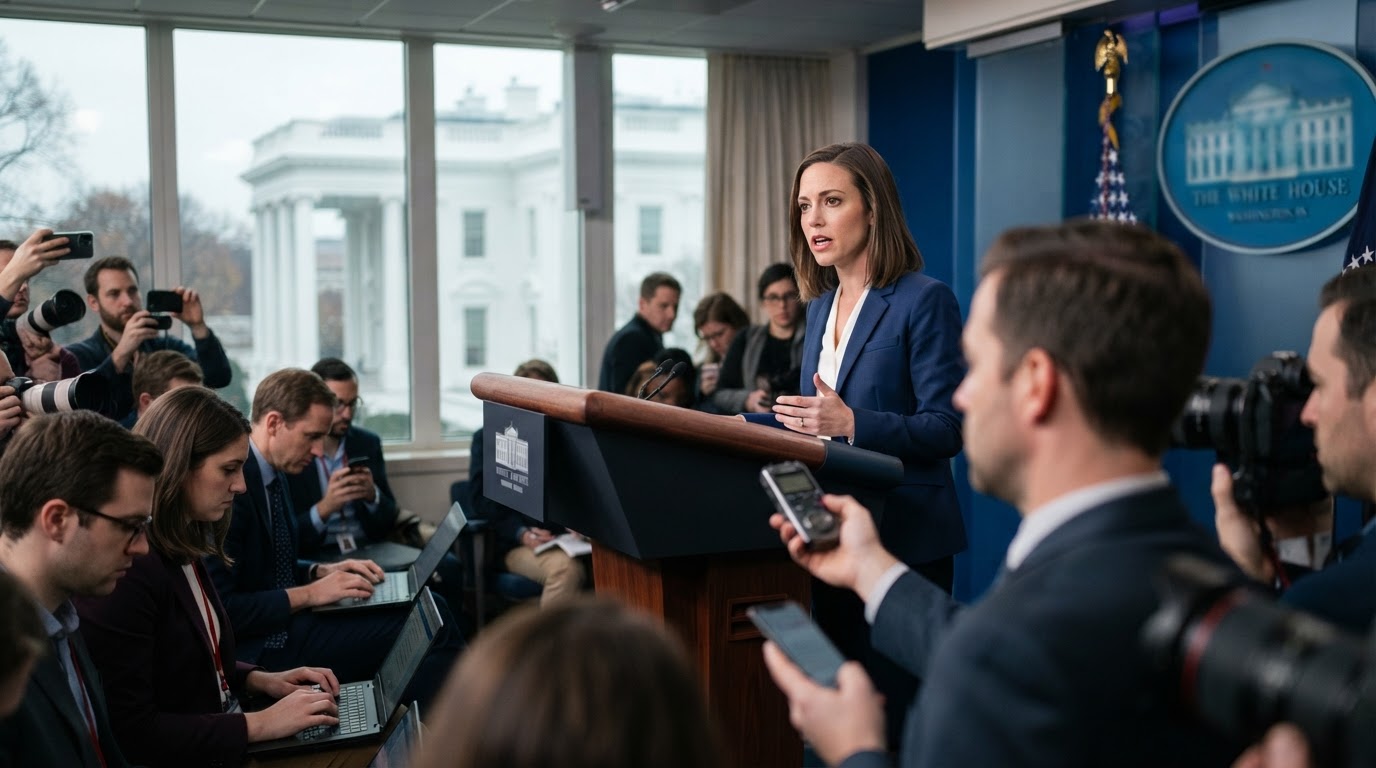
Personnel stability carries a quantifiable premium. When an administrative post depreciates within seven days, external counterparties bear the hedging cost. US President Donald Trump told newly appointed White House press secretary Katie Zacharia to reconsider her job on Friday, Oct 16, 2026, less than a full week into her tenure. Selected on Oct 9, Zacharia conducted her first press briefing on Tuesday, Oct 13, only to face immediate public friction. By the end of that same week, Trump openly questioned her position as he prepared to board Marine One on the South Lawn, turning what should function as a reliable signaling asset into an immediate balance-sheet liability.
Foreign offices and regional markets across the Asia-Pacific depend on reliable institutional signalling to calibrate long-term policy exposure. When an administration cycles through official spokespersons within seven calendar days, traditional diplomatic conduits lose their pricing efficiency. Observers in capitals from Beijing to regional trade hubs cannot depend on lectern declarations to forecast geopolitical posture or bilateral enforcement. Institutional intermediaries are effectively priced out of the transaction, forcing strategists to write down the value of verified personnel immediately after their initial appearance.
Shifting Diplomatic Calculations
Executive communication operates under rigid contractual mechanics: without structural permanence, the expense of interpreting official statements escalates. In conventional statecraft, the press secretary represents the baseline narrative of the executive branch. Zacharia stepped up to the White House briefing podium on Oct 13 under scrutiny, and her subsequent sidelining on Oct 16 indicates that individual tenure remains entirely subordinate to immediate executive reaction.
I said, 'Katie, is this for you
Such remarks illustrate how quickly administrative authority can evaporate under the current leadership structure. For partners and competitors in Asia, including China, this pattern prices out conventional intermediaries. Bilateral delegations cannot comfortably structure concessions around statements delivered by officials who may not survive the working week. The incentives consequently tilt away from formal institutional channels and toward direct, unvarnished communication lines with Trump himself.
The Cost of Structural Volatility
Defenders of this operational style argue that rapid personnel replacement demonstrates decisive quality control rather than institutional fragility. An administration that swiftly removes an appointee whose public defense proves ineffective may avoid prolonged communication crises. According to this reasoning, holding staff to rigorous immediate standards protects the executive agenda from poor representation before broader political damage occurs. Prompt corrections, from this perspective, preserve ultimate policy control.
That argument overlooks the compounding friction passed down to external counterparties. Turnover at this velocity introduces operational volatility that cannot be hedged through standard bureaucratic protocol. If statements made on Tuesday are liquidated by presidential reassessment on Friday, diplomatic counterparties must treat every briefing as provisional debt. Regional policymakers planning defensive economic postures or monitoring United States foreign commitments are left without solvent interlocutors.
Accelerated personnel turnover compresses the lifespan of official guidance down to mere hours. Governments across the Asia-Pacific that allocate resources based on Washington pronouncements find their planning horizons severely truncated. Direct transactional diplomacy gains leverage, while structured departmental processes lose authority. The outcome now depends on whether counterparties accept the premium of direct executive negotiation or discount official American signaling entirely.
Sources
Newsletter
Pacific Daily
A curated briefing from Thailand, Asia-Pacific and the world.