Yemen's Conflict Extends Its Reach to Asia-Pacific Trade Routes
While Yemeni government forces seek to reclaim lost territory, the contest for strategic waterways poses direct implications for Asian markets and global maritime stability.
SINGAPORE
The Yemeni military is advancing against the Houthis in areas around the Bab al-Mandab Strait. This movement follows a counteroffensive announced by the Saudi Arabia-backed government last week, with the aim of retaking all areas held by the Houthis. The pro-Iran Houthis previously seized Yemen’s entire western coastline in a rapid offensive.
Sources yesterday indicated that Yemeni military forces were advancing around the Bab al-Mandab Strait but had not yet secured control of the waterway. The government launched this operation to capture lost territory. The Houthis confirmed that government forces attacked in the Bab al-Mandab area, but they stated they had repelled the assault. According to Hizam, "Saudi-led forces attempted to advance from the Ras al-Ara area in Lahj governorate towards the area south of Bab al-Mandab."
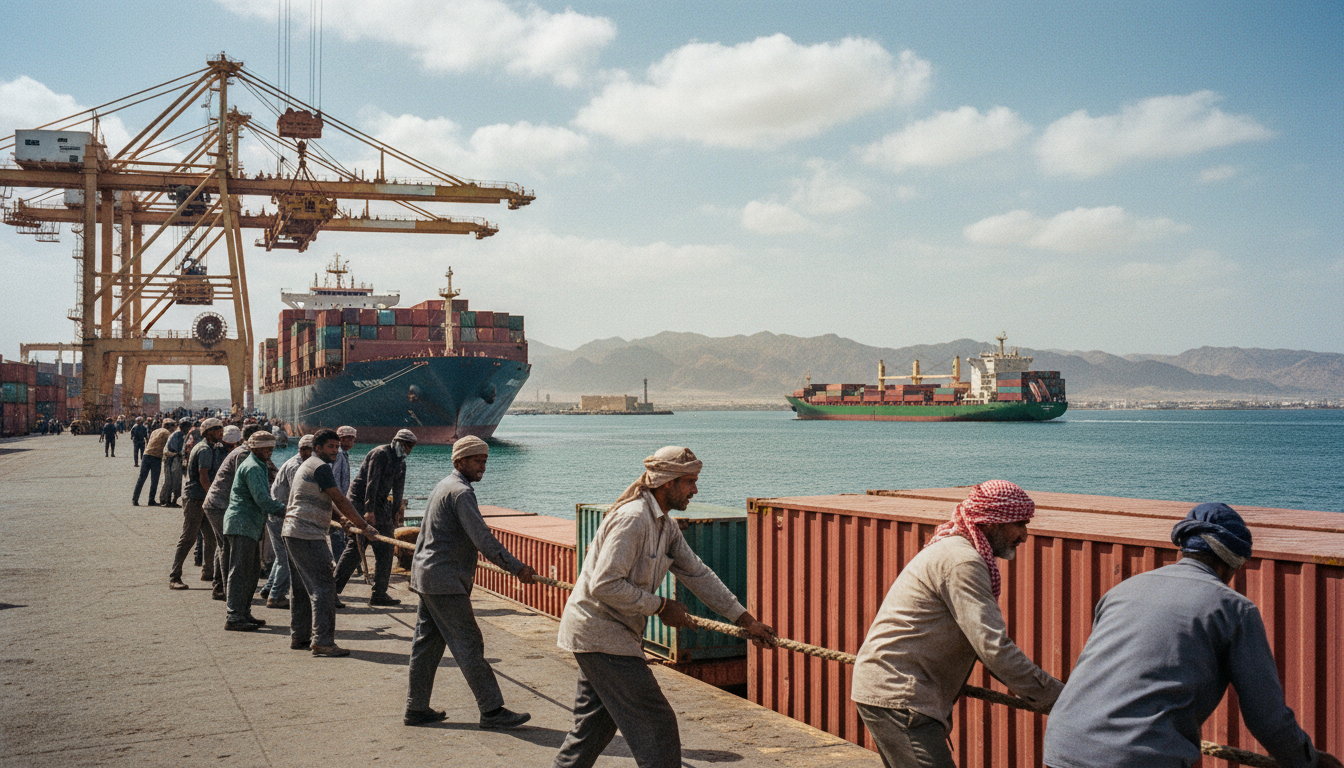
This renewed fighting, though geographically distant, introduces tangible concerns for Asia-Pacific trade and economies. The Bab al-Mandab Strait represents a critical maritime passage, connecting the Red Sea to the Indian Ocean. Its importance as a conduit for global trade, including energy shipments and goods destined for or originating from Asian markets, is substantial. Disruptions in this area often translate into higher shipping costs, extended transit times, and potential instability in supply chains vital to many Asia-Pacific nations.
Escalation and Regional Implications
Beyond the immediate battlefield, the conflict has seen significant escalation. Houthi attacks on Riyadh airport in early October damaged a plane, injured dozens, and killed three Saudis. These incidents underscore the Houthis' capacity to project power beyond Yemen, adding layers of complexity to regional security dynamics. The Houthis' claim to have repelled the government’s assault, inflicting heavy losses and forcing a retreat outside the Bab al-Mandab zone, highlights the contested nature of the conflict and the difficulty in asserting decisive control.
The broader context frames this as a proxy struggle for influence. The Saudi Arabia-backed government of Yemen is engaged in conflict with the pro-Iran Houthis. This dynamic reflects a wider regional competition, which often impacts maritime security. For Asia-Pacific nations, such as Thailand, which rely on open and secure sea lanes for economic prosperity, conflicts in distant strategic chokepoints necessitate careful observation. While specific economic data linking these events directly to Asia-Pacific nations is not detailed, the ripple effects on commodity prices and established trade routes remain a persistent risk. The vulnerability of international shipping to non-state actors in crucial maritime passages suggests a model that could inspire similar challenges elsewhere.
Historically, reliable maritime passage has been fundamental to global trade, especially for export-oriented economies across Asia. Interruptions to key routes, including the Bab al-Mandab Strait, challenge this foundational assumption. The ongoing struggle for control in Yemen, therefore, transcends internal politics; it continues to test international maritime security and the resilience of global supply chains that Asian markets depend upon. The eventual outcome in this strait will likely influence trade far beyond the immediate conflict zone.
Sources
Newsletter
Pacific Daily
A curated briefing from Thailand, Asia-Pacific and the world.