Why Off-Grid Solar Cannot Substitute for State Power Infrastructure
Decentralized renewable energy delivers emergency relief to conflict-hit clinics, but humanitarian microgrids lack the capital and supply chains to anchor permanent economic development.
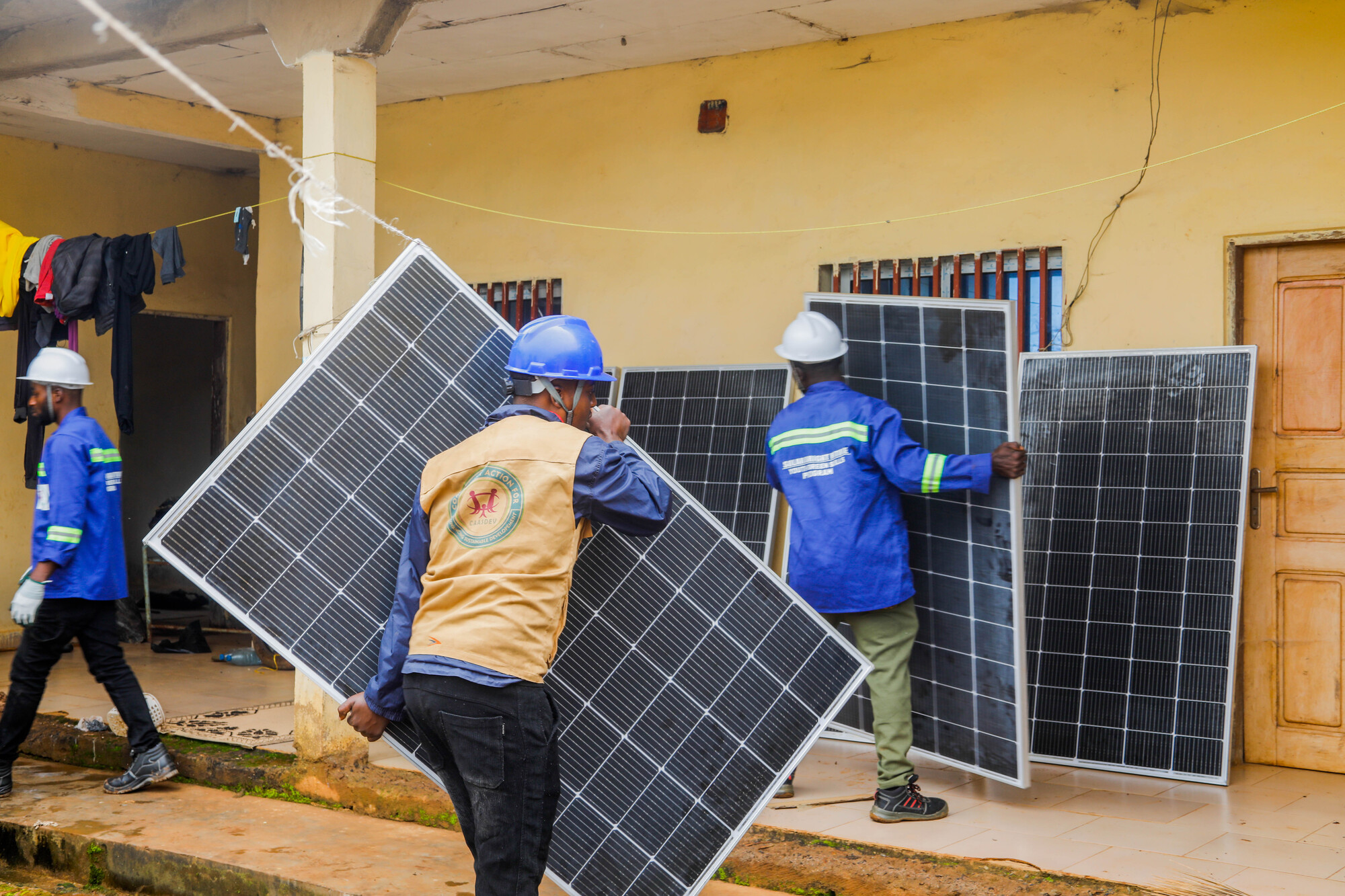
Decentralised energy expands fastest where public governance fails first. When municipal power grids collapse under sustained conflict, off-grid generation is frequently presented as an autonomous market solution capable of bypassing institutional decay. That narrative deserves rigorous scrutiny. Without formal capital reserves or established supply chains, humanitarian microgrids inevitably struggle to bridge the gap between temporary survival and durable economic independence.
The underlying friction appears plainly in Cameroon’s Northwest and Southwest regions, where armed conflict has persisted for 10 years. Prolonged warfare has dismantled regional commerce and forced public service systems into severe breakdown. Rural clinics endure the sharpest deficits. Mothers face labor in unlit maternity wards, while pediatric clinics risk spoiling vital vaccines because facilities lack steady power for illumination and medical refrigeration. Solar power addresses this immediate physical shortfall by converting regional sunlight into emergency clinic electricity.
Community organizations have attempted to link clinical relief with labor absorption. Groups such as CAASDEV, operating alongside NGO Action and Advancing Sustainable Development, have mobilized around distributed photovoltaic generation. Local coordinators, including Ndze Noel Lifogha through frameworks like Solar Bright Future, direct these efforts toward hundreds of young internally displaced people whose employment vanished during the fighting. The operational premise is straightforward: by training displaced youths to install and repair solar panels, project leaders aim to maintain clinic refrigeration while generating local technical livelihoods.
The Limits of Humanitarian Generation
A balance-sheet test reveals the structural constraints of this arrangement. Off-grid installations can restore lighting to delivery rooms, yet technical hardware depreciates rapidly under severe operating conditions. Battery storage requires recurrent capital outlays, and replacement solar components depend on distribution networks that conflict disrupts. While vocational programs train displaced youths to handle immediate maintenance, localized labor cannot manufacture replacement photovoltaic cells or subsidize parts inventories when project funding runs dry. Emergency relief mitigates a clinical disaster; it does not constitute a viable, self-financing municipal utility.
Pacific rim observers will recognize this institutional divergence. Following the nuclear disaster in Fukushima, the prefecture emerged as a renewables leader, showing that distributed generation can rapidly reconstruct critical energy access when conventional generation fails. Yet Japan’s decentralization succeeded because it rested on heavy municipal capital, predictable procurement corridors, and state-backed balance sheets. Distributed installations in Cameroon operate in an institutional vacuum, lacking the regulatory backstops and public subsidies that make grid transitions economically viable elsewhere.
Transition Without Capital Guarantees
Providing solar power to illuminate maternity wards and protect infant vaccines preserves human lives. Displaced youths acquire functional vocational skills that aid relief logistics. Even so, humanitarian interventions should not be conflated with sustainable industrial policy. As long as technical employment remains tied to external donor budgets rather than internal commercial demand, local technicians remain vulnerable to the next funding shortfall.
Solar cells cannot permanently substitute for public administration. The survivability of off-grid clinical networks ultimately depends on whether central authorities can reconstruct regional public finance and re-establish secure trade routes for spare parts. Until regional institutions assume long-term fiscal responsibility for maintenance, localized solar power will operate strictly as a vital defensive stopgap rather than an engine of broad economic transformation.
Sources
Newsletter
Pacific Daily
A curated briefing from Thailand, Asia-Pacific and the world.