Acoustic Crowdsourcing Cannot Substitute for Wetland Defence
Mobilising holidaymakers to track the Australasian bittern exposes the limits of civic surveillance when habitats collapse.
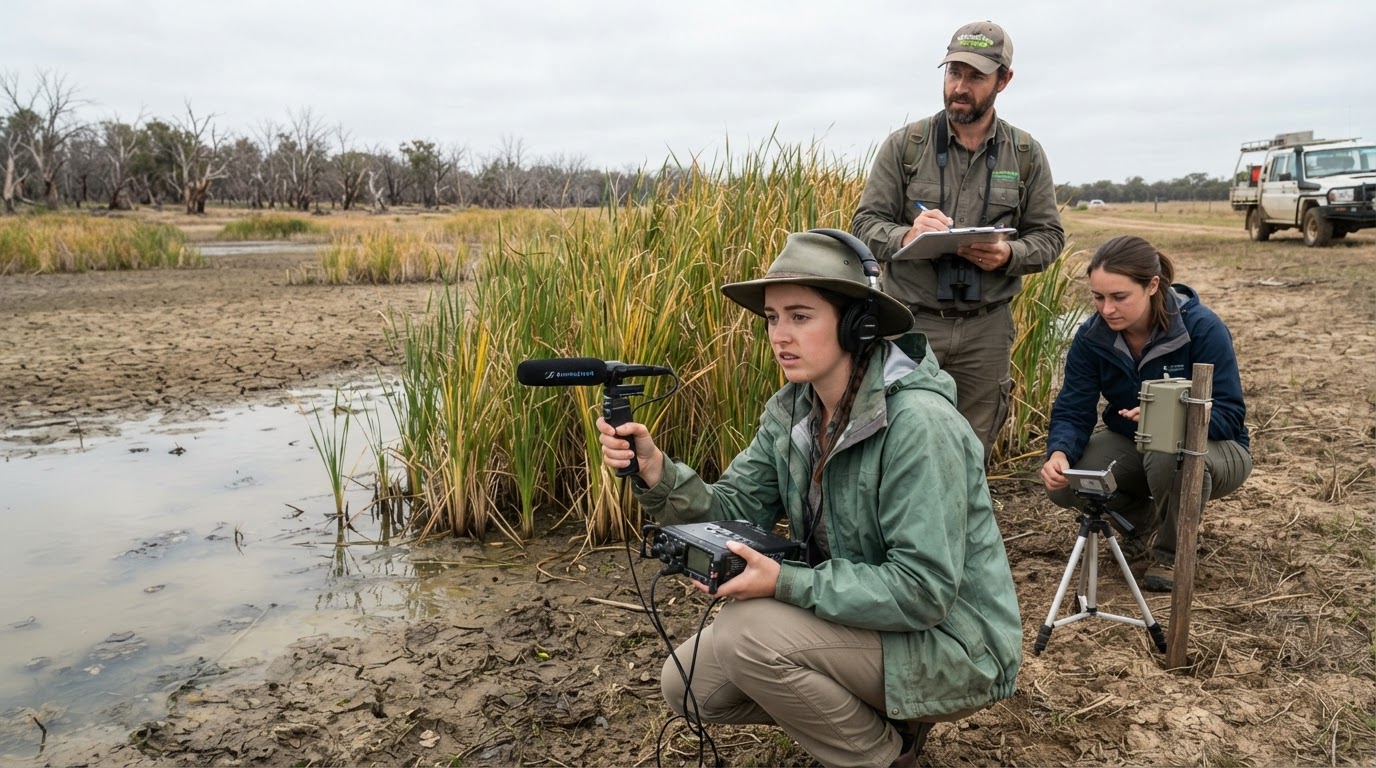
Public participation in ecological monitoring offers extensive territorial reach, yet relying on recreational listening highlights an awkward institutional compromise. Conservation appeals that urge holiday travellers to record bird calls over Labour weekend frame public vigilance as civic stewardship. Such exercises reflect an acute monitoring deficit across remote marshes, where formal administrative surveillance has thinned out.
The appeal by the conservation group Love Bittern, articulated by Wendy Ambury on Morning Report, asks New Zealanders to identify and record the calls of the matuku-hūrepo, or Australasian bittern. Because the start of the mating season coincides with the holiday break, acoustic detection provides a fleeting opportunity to register secretive birds across reed beds and swamp margins. Fewer than 1000 Australasian bitterns remain in the wild, rendering every confirmed encounter statistically meaningful for surviving distribution maps.
The Convenience of Amateur Acoustics
Turning travellers into impromptu field monitors carries an obvious administrative appeal. Dispersed wetland territories are difficult to survey systematically without substantial field personnel, specialized hydro-acoustic gear, and continuous operational funding. Inviting holidaymakers to submit audio recordings converts private leisure into an informal biological sensor network at negligible cost.
Civic data collection can undeniably surface isolated specimens that institutional surveys miss. A family walking past an estuary might register a distinctive mating call from deep within private farmland or unmanaged wetlands that statutory rangers rarely visit. From the standpoint of community engagement, recruiting citizens creates direct psychological attachment to threatened landscapes. Individuals who listen actively for an endangered creature are naturally more inclined to support preservation policies when drainage proposals or land clearances arise.
Yet this reliance on holiday crowdsourcing obscures a deeper problem. Acoustic detection by untrained passers-by remains erratic, methodologically inconsistent, and dependent on seasonal travel corridors rather than ecological boundaries. Most travellers congregate along accessible tracks and holiday spots, leaving extensive wetland interiors unmonitored. When an avian population drops below 1000 individuals, erratic recordings cannot provide the baseline accuracy required for systematic threat mitigation.
The Illusion of Participatory Protection
Outsourcing biological surveillance risks normalizing the withdrawal of professional conservation capacity. Celebrating volunteer enthusiasm can become a substitute for sustained public investment in ecological observation. A fragmented audio archive gathered over a long weekend does not deter predatory mammals, arrest wetland drainage, or restore deteriorating hydrological basins.
Crowdsourced acoustics cannot reverse the underlying structural pressures that drove the species into steep decline.
Asking citizens to listen for the matuku-hūrepo essentially documents scarcity rather than arresting it. Audio files recorded on pocket devices simply catalogue an absence that institutional inaction permitted over decades. If civic listening is not matched by rigid statutory protection of remaining wetland hydrology, citizen monitoring merely compiles a high-resolution chronicle of localized extinction.
What remains unresolved is whether participatory science assists recovery or merely masks state retreat. The Australasian bittern does not persist on casual human goodwill; it requires undisturbed, functioning swamps. As long as recording calls remains easier than defending wetland real estate, crowdsourced monitoring will remain an acoustic measure of institutional evasion.
Sources
Newsletter
Pacific Daily
A curated briefing from Thailand, Asia-Pacific and the world.