Amazon Political Shifts Signal Unresolved Climate Risks for Asia
A potential realignment in nations containing the Amazon rainforest suggests future economic and environmental instability for the Asia-Pacific.
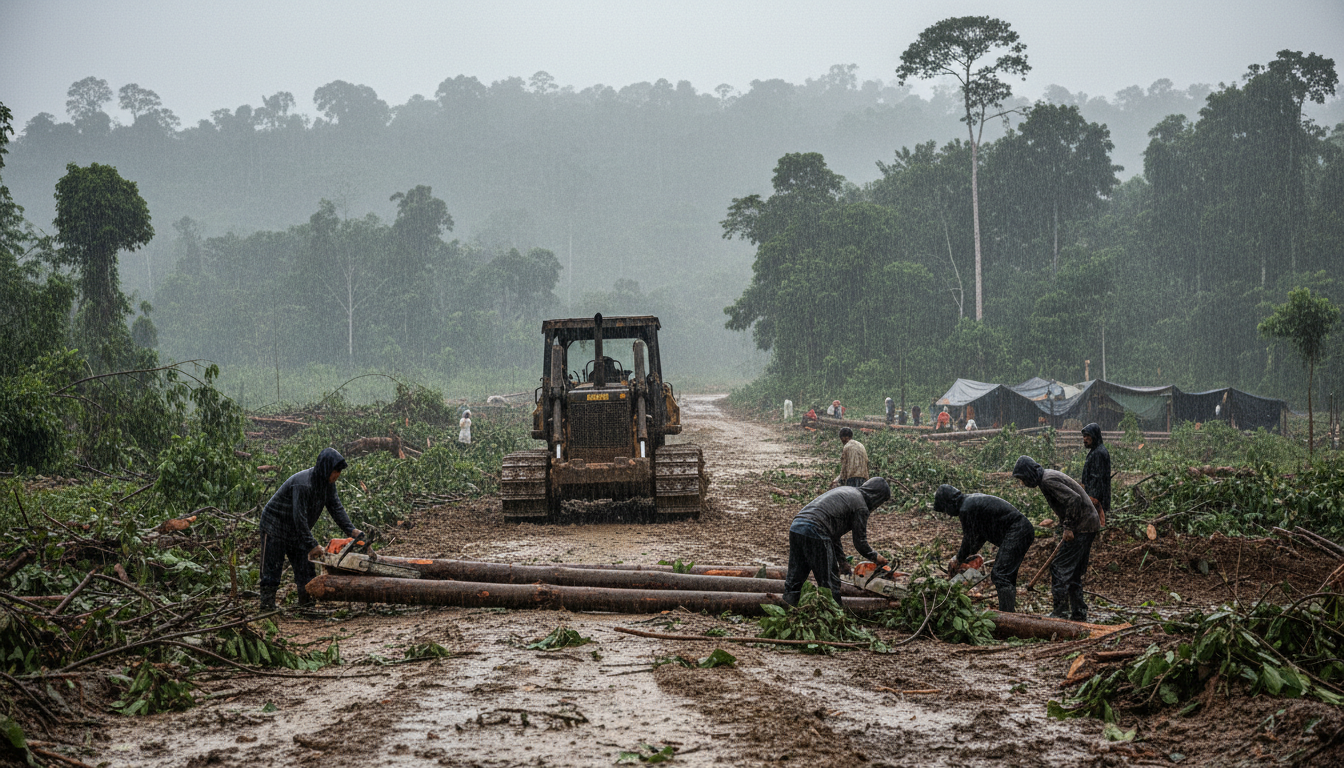
The political trajectory of nations containing the Amazon rainforest, specifically the potential for a majority of governments to align with right-wing ideologies by 2027, presents a structural concern for the Asia-Pacific region. Experts warn that five of the nine Amazonian countries could be governed by right-wing or far-right parties in January 2027, according to Mongabay Asia on September 15, 2026. Peru, Colombia, Bolivia, and Ecuador have already elected leaders favoring agribusiness and mining over environmental conservation. Brazil, which contains over 60% of the Amazon, faces an election where the left-wing incumbent, Luiz Inácio Lula da Silva, is in a close race against Flávio Bolsonaro, son of a former president previously convicted for an attempted coup d'état. This electoral contest could solidify a political landscape less inclined to preserve the rainforest.
The implications for Thailand and the broader Asia-Pacific extend beyond immediate environmental concerns. The Amazon’s role as a global climate regulator means its sustained degradation could alter weather patterns, impacting agricultural productivity and increasing the frequency of extreme weather events across distant regions. For Asia, which relies heavily on rain-fed agriculture and is vulnerable to climate shifts, this represents a material risk to food security and economic stability. Trade flows, particularly for agricultural commodities, could see disruptions. Furthermore, the global carbon cycle relies on the Amazon as a significant carbon sink; its continued deforestation would accelerate climate change, translating into direct and indirect costs for Asia-Pacific nations through infrastructure damage and public health crises.
Some might argue that these political shifts are internal matters for the nations involved, with limited direct impact on Asian economies, or that market forces will naturally mitigate the most extreme environmental outcomes. This perspective often underestimates the interconnectedness of global climate systems and the long-term economic dependencies across continents. While the immediate drivers are political decisions within the Amazonian nations, the effects cascade globally. The structural analyst recognizes that capital plans in resource extraction, whether in the Amazon or elsewhere, often proceed irrespective of long-term environmental costs unless robust policy frameworks or market mechanisms provide counter-incentives.
The core issue is not simply the ideological leaning of governments, but their stated policy priorities regarding resource management. When electoral mandates consistently prioritize short-term economic gains from extractive industries over ecological preservation, the commitment to climate stability weakens. The evidence from Peru, Colombia, Bolivia, and Ecuador suggests a pattern of such prioritization. For the Asia-Pacific, therefore, the unfolding political landscape in the Amazon is not a distant concern but a precursor to potential climate-related economic and social challenges that remain unresolved.
Sources
Newsletter
Pacific Daily
A curated briefing from Thailand, Asia-Pacific and the world.