Why Expat Health Insurance Falters at Thailand's Border
Geographic limits and exclusions for planned care abroad turn regional medical trips into unexpected household liabilities
SINGAPORE
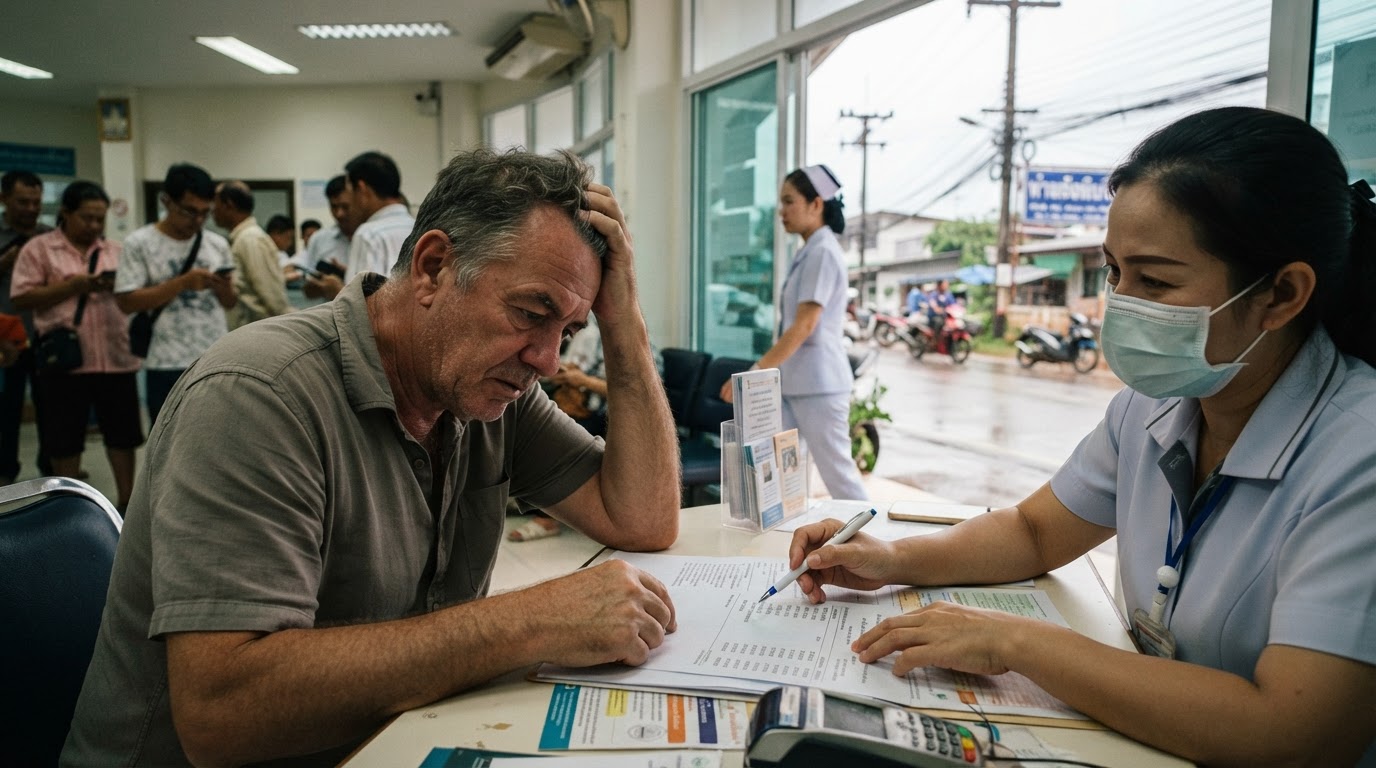
An insurance policy designed to cover medical care in Thailand functions under domestic boundaries that alter the moment a patient leaves the country. Foreign residents frequently purchase coverage assuming that medical security travels with them across national borders. In personal accounting, insurance premiums represent a predictable monthly expense intended to eliminate catastrophic healthcare risks. That assumption breaks down during emergency treatment or planned medical visits abroad. When an unexpected illness strikes during travel in Japan, or when an individual books scheduled surgery in Singapore, local policies respond under very different rules. Returning to the United Kingdom to consult an established specialist introduces payment terms that contrast sharply with hospital discharges in Thailand.
The financial friction arises because insurers do not view medical care outside Thailand through a uniform lens. Coverage depends fundamentally on stated geographical zones, emergency classifications, and pre-authorisation agreements. Some contracts remain confined strictly to domestic facilities, leaving policyholders completely exposed to overseas medical fees. Other frameworks cover selected Asian countries, while high-tier products extend worldwide, occasionally carving out separate rules for the United States. When a plan excludes overseas coverage, foreign hospitals demand direct settlement from the patient before treatment or discharge. Within personal balance sheets, an unverified assumption about cross-border coverage turns a routine holiday or family visit into an immediate cash liability.
The dividing line between emergencies and scheduled surgery
Planned procedures create the sharpest administrative resistance. Insurers that might reimburse an acute, unforeseen emergency during a temporary stay in Japan will often refuse planned treatment in Singapore outright unless an international extension was pre-arranged. Private hospital fees in Singapore demand substantial upfront capital for complex surgery, and domestic Thai policies rarely clear direct billing overseas without dedicated global riders. Even when care takes place in an expat's country of origin, such as the United Kingdom, insurers frequently evaluate whether the patient bypassed public options simply to access private specialists. Without prior written clearance, patients must pay the full bill out of pocket and submit claims that insurers may ultimately reject.
To an insurer, territorial limits represent necessary risk management against uneven medical pricing across jurisdictions. Healthcare costs in Japan, Singapore, or Western systems routinely exceed the fee structures established across private facilities in Thailand. From the provider's viewpoint, granting unrestricted cross-border claims under domestic pricing would quickly inflate premiums for everyone in the pool. Restricting claims abroad preserves baseline affordability for local residents who never intend to seek treatment overseas. Such limits keep entry-level premiums manageable, but they shift the entire financial risk of overseas illness onto the traveller.
Budget exposure for retirees and mobile workers
A domestic premium buys domestic protection, leaving cross-border medical debt to the policyholder.
Fixed-income retirees and self-employed individuals absorb the brunt of this divide. Expatriates on fixed pensions or freelance incomes often operate without the expansive safety nets provided by multinational corporate employers. For a self-employed professional working remotely across Asian markets, an unexpected hospital admission outside Thailand requires liquid savings that can dismantle an annual operating budget. Retirees residing in Thailand face similar exposures when travelling to visit family in the United Kingdom, where travel insurance exclusions and residency definitions complicate overseas care. When an older traveller requires medical evacuation or prolonged inpatient care, out-of-pocket costs can easily exceed several months of living expenses.
Managing these coverage limits requires policyholders to examine policy schedules long before boarding an outbound flight. Evaluating whether a contract includes emergency medical evacuation, direct settlement abroad, or pre-authorisation requirements determines whether an overseas clinic demands immediate payment. Relying on vague assumptions about international protection invites severe financial distress when medical emergencies happen away from home. When insurers refuse cross-border liabilities, the cost reverts entirely to household reserves. The financial stability of living abroad ultimately rests on recognising that a policy issued in Thailand is primarily engineered for Thailand.
Sources
Newsletter
Pacific Daily
A curated briefing from Thailand, Asia-Pacific and the world.