The Silent Costs of Rural Vulnerability in Thailand
A girl's jump from a second-story window in Sakon Nakhon reveals a pervasive pattern of protection gaps that ripple across Thailand's provinces.
SINGAPORE
The report from Sakon Nakhon of a 13-year-old girl suffering serious injuries after jumping from a second-story window to escape an attempted sexual assault by her uncle, identified as 31-year-old Wee, highlights a specific form of vulnerability.
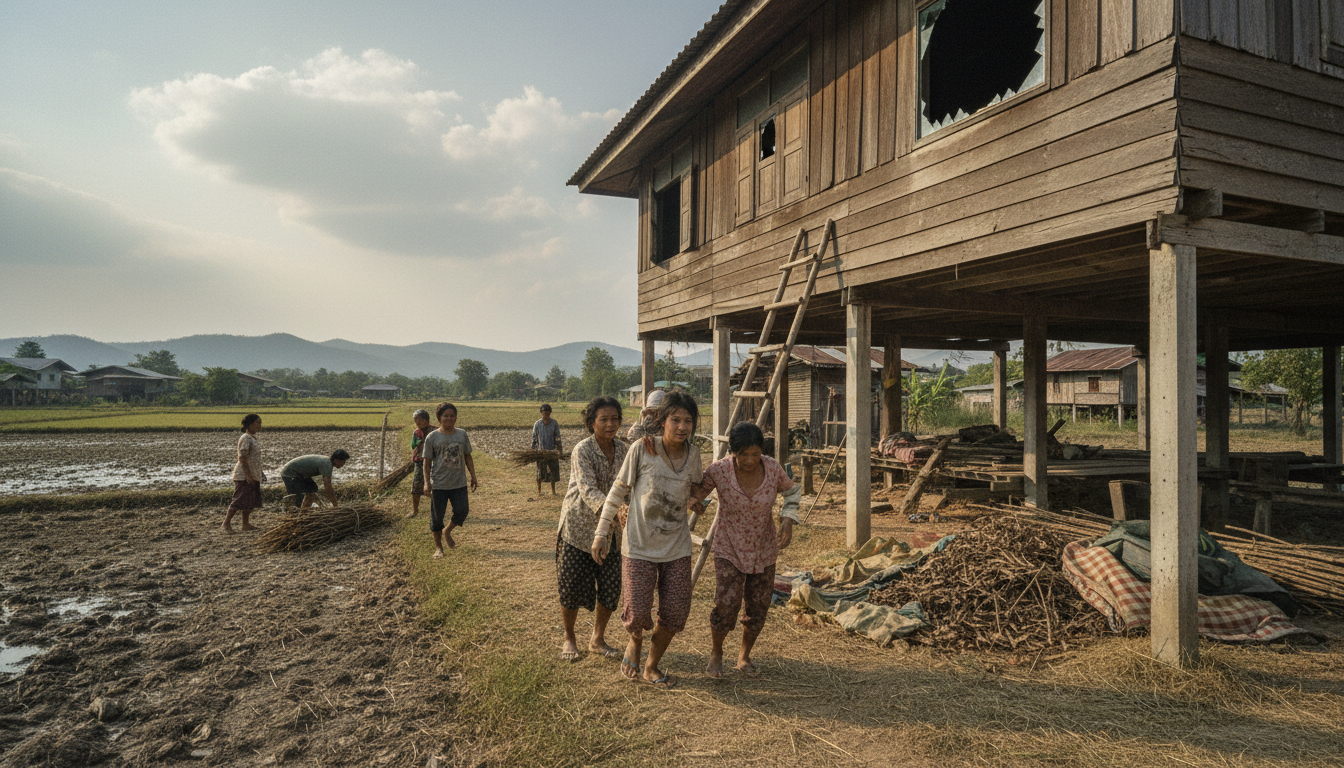
According to Chalida “Ton Or” Phalamat, founder of Be One Foundation, who reported the case on Facebook on September 21, the girl was left alone with her biological uncle when her grandparents went to work. This circumstance, in the Chanphen subdistrict of Tao Ngoi district, Sakon Nakhon province, placed the child in a situation where her primary caregivers were absent, leading to a critical failure in immediate protection. The family is seeking the suspect's arrest, who was reportedly still at large at the time of Ton Or's social media post.
The incident, while singular in its tragic details, points to a broader challenge concerning protection mechanisms, particularly for children in rural Thai communities. While initiatives, such as promoting herbs as a "soft power product," draw national attention and investment, the daily realities of family structures and child safety in provinces like Sakon Nakhon often recede from public discourse. The allocation of resources and policy focus often gravitates towards economic development or national branding, leaving the human-scale costs of inadequate social safety nets to be borne by individuals and local communities.
Rural areas, by their nature, often have fewer formal support structures and a greater reliance on extended family networks. When these networks fail, as they did in this instance, the consequences are immediate and severe. The immediate cost is the physical and psychological trauma inflicted on the victim. The sustained costs, however, are carried by the family struggling for justice, the community facing a breach of trust, and ultimately, by a society that has not yet built robust, accessible safeguards for its most vulnerable members across all its regions.
The challenge is not merely one of law enforcement, but of social infrastructure. It necessitates a systemic approach that goes beyond reacting to individual tragedies. Ensuring that children, especially those in less urbanized areas, have reliable oversight and accessible channels for reporting abuse without fear of further harm or reprisal is a complex undertaking. It demands investment in community-level support, awareness campaigns tailored to local contexts, and a commitment to address the root causes of vulnerability, rather than solely focusing on their symptoms.
While the national conversation often centers on economic growth or technological advancement, such as the potential for AI to close learning gaps in schools or new industrial investments by companies like Bayer in places like Phitsanulok, the foundational issue of basic child protection in everyday environments like a home in Sakon Nakhon remains pressing. The question for Thailand is not simply how to respond to such incidents, but how to proactively prevent them by strengthening the fabric of protection for every child, regardless of their family's circumstances or geographic location. This incident underscores a persistent tension between national aspirations and the critical, often under-addressed, needs at the local level.
Sources
Newsletter
Pacific Daily
A curated briefing from Thailand, Asia-Pacific and the world.