When Travel Collides With Local Reality
The fragility of public health systems, highlighted by newborn deaths in Mexico, offers a stark view into the often-unseen infrastructure beneath tourism's surface, a concern that echoes across varied destinations.
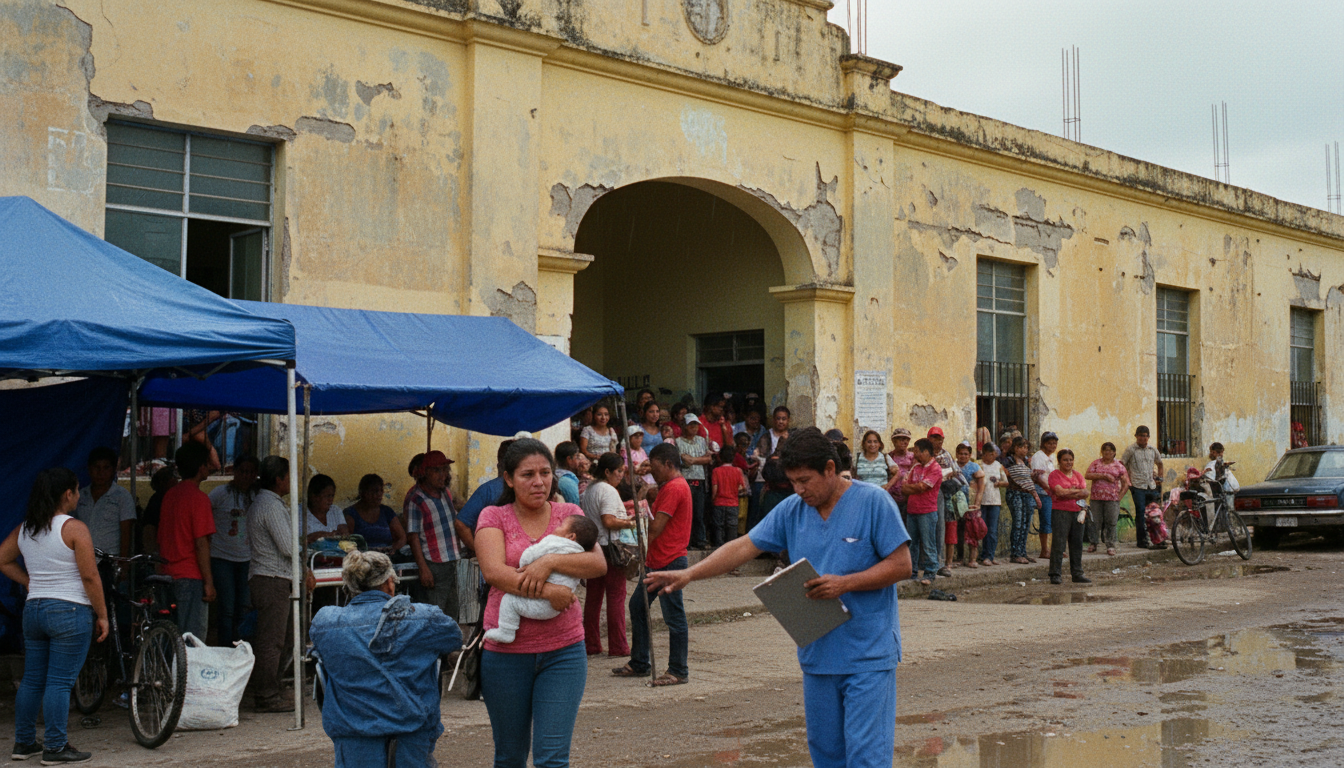
The sun-drenched shores of Mexico’s Pacific coast, often promoted as a destination of escape, presently face a reality far removed from brochure images. While Hurricane Simon strengthens rapidly and Hurricane Polo earlier threatened the region, a different kind of storm brews inland, one concerning the very foundations of public welfare. Multiple newborn deaths have occurred at public hospitals in Jalisco and Durango, sparking investigations and prompting the dismissal or suspension of at least three Mexican Social Security Institute (IMSS) officials.
These events, unfolding as they do within a country renowned for its tourism, compel a re-evaluation of what a destination truly offers beyond its superficial appeal. At the Centro Médico Nacional de Occidente in Guadalajara, Jalisco, between eight and 18 newborn deaths have occurred in the neonatal intensive care unit since March. These deaths have expanded investigations into alleged medical negligence and lack of hygiene, as noted by Mexico News Daily. Neonatal units in both affected hospitals have been temporarily closed. This situation shows the critical infrastructure of daily life that visitors rarely encounter, yet it profoundly shapes the local experience.
The unstated vulnerability of essential services, such as public healthcare, underpins the stability of any locale. While the reported situation in Jalisco and Durango pertains to medical care, it points to a broader truth: the unseen systems supporting local populations can be strained or neglected, with consequences far beyond their immediate impact. The anonymous claim that the investigation “is not intended to point the finger at medical personnel,” while asserting a “priority is to know the truth, support the families and prevent similar events from happening again,” underscores the systemic nature of such failures.
In destinations across the Pacific Rim, from bustling Thai cities to remote Indonesian islands, the balance between drawing visitors and maintaining robust local infrastructure is constant. For travelers, the image presented is one of seamless experience and exotic allure. Yet, beneath that veneer, real communities contend with the daily realities of public services, resource allocation, and government accountability. The focus on medical facilities in Mexico foregrounds how a region's true health is measured not just by its tourist arrivals or resort developments, but by the fundamental provisions available to its own citizens.
Considering Thailand, for instance, a nation that skillfully blends ancient culture with modern hospitality, the implications are pertinent. While medical tourism is a thriving sector for a specific demographic, the vast public health system caters to millions of Thai citizens. Any stress or failure within this often-invisible network, whether due to resource constraints or oversight, can ripple outwards, affecting trust and stability. The ongoing inquiries in Mexico are not simply about tragic individual cases; they are about the systemic integrity that allows a society to function, or to falter.
The challenge for any destination is to ensure that the pursuit of external appeal does not overshadow the necessity of internal strength. Public health, infrastructure, and governance are tangible elements determining a place’s resilience. The situations reported in Jalisco and Durango illuminate the fragile interdependencies within a community, a perspective often lost when a location is primarily viewed through the lens of leisure and escape.
Sources
Newsletter
Pacific Daily
A curated briefing from Thailand, Asia-Pacific and the world.