When the Skyline Disappears
Malaysia’s unreachable arrival targets collide with regional smoke, revealing the fragility of urban tourism built on atmospheric trust.
SINGAPORE
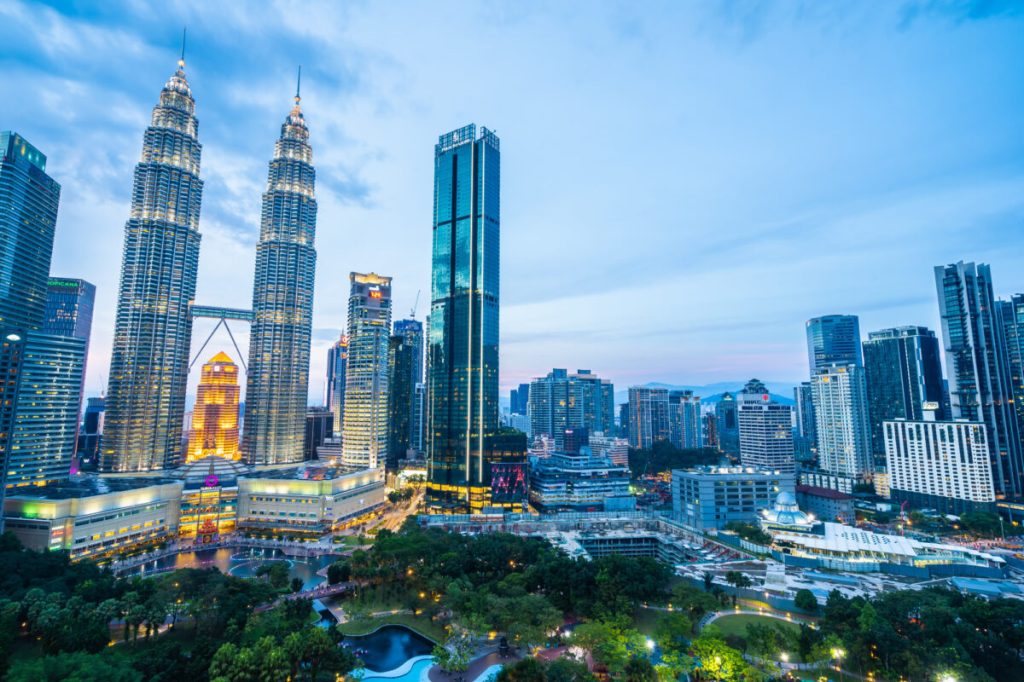
Observation decks and high-altitude walkways depend entirely on an unwritten spatial guarantee: the city below must remain visible. Along the viewing plazas beneath the Petronas Twin Towers in Kuala Lumpur, that commercial arrangement falters whenever agricultural smoke settles across urban airspace. Visitors who arrive expecting sharp geometric silhouettes instead encounter a dense, chalky ceiling that flattens distance and drains the skyline of its visual drama.
That visual erasure arrives at a difficult moment for national tourism planning. Malaysia had set an ambitious benchmark of 47 million arrivals, an objective that had already slipped beyond realistic reach before agricultural blazes started burning. Once smoke from Indonesian forest and peatland fires drifted into regional airspace ahead of the year-end holiday window, an existing numerical shortfall hardened into an immediate logistical retreat.
Inbound tour operators across Malaysia are logging itinerary cancellations for November. Over in Indonesia, domestic carriers have registered more than 2,600 disrupted flights as smoke blinds regional runways, while across the border in Singapore, outdoor walking tours and open-air sightseeing programs are quietly cut short. The disruptions do not merely inconvenience individual holidaymakers; they dismantle the delicate scheduling that underpins regional package tours, where a single obscured vista cascades into cancellations for municipal coach operators, hotels, and retail merchants.
The Atmospheric Deficit
Tourism planning throughout Southeast Asia operates on a deliberate presumption of seasonal stability. Targets are calculated around calendar holidays, airline seat capacities, and regional marketing campaigns designed to draw travellers from China, Singapore, and regional domestic markets. Yet the atmosphere remains an unmanaged commons. The annual burning of Indonesian peatland creates a regional environmental tax paid disproportionately by urban service economies that have no direct authority over agricultural land clearing.
Chasing a 47 million visitor threshold requires reliable, unimpeded physical movement. That ambition assumes international visitors will land, photograph landmark towers, travel outward along domestic corridors, and spend steadily on local hospitality. Smoke recalibrates personal safety calculations long before economic considerations register. Discretionary visitors do not linger on outdoor promenades when particulates irritate eyes and throats, nor do they rebook holidays in destinations whose signature views have vanished into an opaque grey wall.
This dynamic highlights a persistent contradiction in regional promotional strategy. Official tourism bodies have long grappled with soft demand and changing visitor habits. Pointing to an atmospheric catastrophe offers convenient cover, masking structural weaknesses that had already left ambitious arrival figures stranded. Forest fires did not derail an otherwise buoyant season; they compounded an arithmetic that had separated itself from commercial reality long before the burning season commenced.
Shifting Horizons
Traveller behaviour alters swiftly under visible environmental degradation. While corporate travel and essential transit persist, leisure holidaymakers re-evaluate destination choices within hours of checking air quality reports. The vulnerability is structural: Malaysia, Singapore, and Indonesia share an atmospheric envelope that national borders and municipal balance sheets cannot divide.
Down at street level in Kuala Lumpur, the twin spires still emerge intermittently through the grey midday gloom, their stainless-steel facades turned dull rather than luminous. The travellers waiting near the base checking flight updates understand what promotional spreadsheets avoid acknowledging: governments can construct towers of immense ambition, but their commercial value still hinges on clear air that no marketing budget can purchase.
Sources
Newsletter
Pacific Daily
A curated briefing from Thailand, Asia-Pacific and the world.