When State Bans Turn Books Into Contraband
The British ban on Palestine Action has triggered a cultural boycott that reaches far beyond Westminster, pulling publishing houses and readers into legal jeopardy.
SINGAPORE
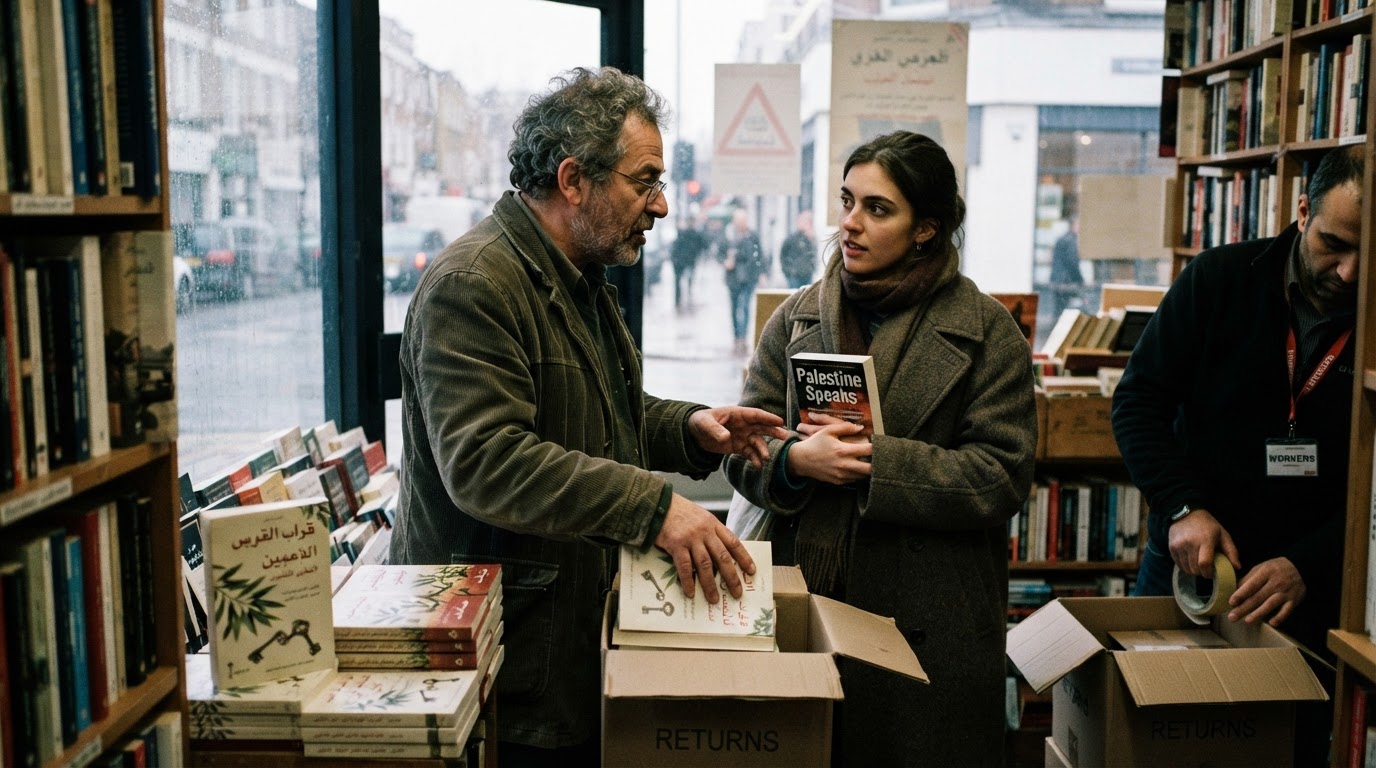
When a government applies counter-terrorism legislation against political protest, the disruption does not stop at police cordons or courtroom dockets. The consequences travel rapidly into ordinary routines, commercial contracts and neighborhood bookshops. Irish author Sally Rooney and her publisher Faber announced they had to end the sale of her books in Britain, demonstrating how quickly executive classifications alter everyday access to culture. For readers who simply expected to find contemporary fiction in high street shops, counter-terrorism enforcement has suddenly reshaped retail shelves.
More than 150 writers and personalities signed an open letter on Wednesday urging the UK government to amend its policy. The Labour government had designated Palestine Action as a terrorist group in July 2025, an executive move that placed political campaigning under statutory rules designed for violent militancy. Thousands of people have faced arrest since that decision for protesting against the move. Among those challenging the decree in the joint letter are Nobel laureates Annie Ernaux and Anne Carson, who argued that an author should not face the collateral fallout of national security statutes.
The Commercial Edge of Security Law
The practical consequence felt by readers is immediate rather than theoretical. Halting commercial book sales directly interrupts the quiet habits of bookstore patrons, university students and literary subscribers across the country. Rooney withdrew titles including Normal People and Intermezzo from British commercial distribution to avoid entanglement with the legal regime surrounding Palestine Action. Bookshops must suddenly reconsider standard inventory decisions, balancing the legal risk of carrying certain political works against their commercial commitments. By treating activist tactics through counter-terrorism definitions, British authorities created a precedent where literary commerce becomes entangled in domestic policing.
Sally Rooney is a writer, not a terrorist. Her books must be available to the public, said the letter signed by such notable figures as Nobel laureates Annie Ernaux and Anne Carson.
Supporters of the ban maintain that severe legal prohibitions remain necessary to preserve public safety and deter repeated disruption of critical infrastructure. In their assessment, when campaign groups move beyond conventional petitioning to direct physical interference, the state must deploy firm statutory deterrents. Public order cannot function if direct action damages facilities with legal impunity. Yet the operational scale of enforcement raises serious institutional questions about proportionality. With more than 500 arrests recorded at a single Palestine Action demonstration, the enforcement net has swept hundreds of ordinary participants into the criminal justice system.
Global Precedents and Literary Speech
The wider implication extends well beyond British borders. Expatriates, international students and mobile professionals moving across borders often rely on clear legal boundaries between non-violent advocacy and violent extremism. When established Western democracies blur that line, authorities elsewhere receive a convenient justification to apply emergency powers against political critics. What begins as an administrative decree in London creates ripples that weaken protections for speech in other jurisdictions where civil liberties are already contested.
Publishers and creative professionals now face an unappealing calculus that threatens basic cross-border circulation. Companies must decide whether circulating critical literature or defending international causes exposes their operations to financial penalties and criminal exposure. The open letter from Ernaux, Carson and their peers insists that writing cannot be criminalised through state proscription. Still, Rooney's decision demonstrates that writers must now weigh publishing agreements against direct exposure to sweeping security statutes.
Whether British authorities choose to amend the legal framework will test the resilience of democratic protest norms under political pressure. Everyday citizens who only wished to pick up a novel on a Saturday afternoon are discovering that legislative decisions made in closed cabinet rooms can abruptly dictate what remains legally available to read. Cultural access, once taken for granted in open societies, is becoming conditional on the state's expanding definition of national security.
Sources
Newsletter
Pacific Daily
A curated briefing from Thailand, Asia-Pacific and the world.