When Industrial Ruins Turn into Nighttime Entertainment
Night tours through chemical infrastructure show how aesthetic spectacle reshapes environmental memory across post-industrial Asia
SINGAPORE
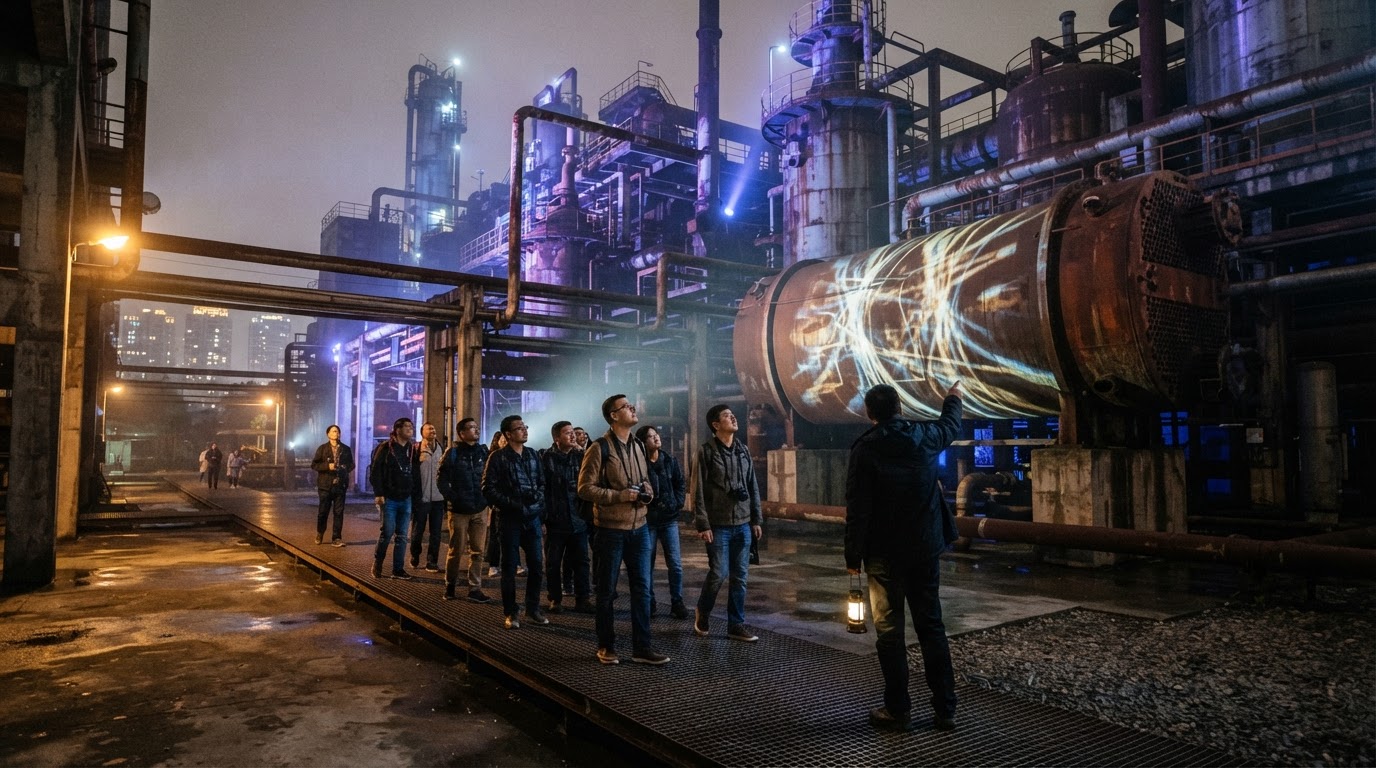
Floodlights carve sharp silhouettes against the dark coastal air in Japan, turning chemical towers and exhaust stacks into geometric sculptures. Where daytime observers once associated steel conduits with industrial runoff, evening visitors now arrive with cameras. Nightfall softens heavy production into scenery.
According to reporting from Nikkei Asia, a once-notorious Japanese chemical complex is drawing tourists after dark. The arrival of leisure crowds inside functional chemical hubs marks a curious inversion of long-standing urban habits. For decades, the perimeter of industrial waterfronts signaled avoidance, shaped by environmental anxiety and lingering memories of pollution. Now, after-hours sightseers treat operating plants as visual entertainment.
The shift reveals how quickly aesthetic fascination can rewrite the emotional geography of an industrial zone.
This transformation reflects a broader impulse across East Asian manufacturing corridors, where aging complexes face pressure to reinvent their civic presence. Heavy industry cannot easily relocate, nor can it entirely escape stricter scrutiny over carbon footprints and historical contamination. In response, municipal bodies and tour operators discover that dramatic lighting converts mechanical scale into public spectacle. Illuminated pipelines and venting steam cease to read as environmental liabilities. Instead, the apparatus becomes an architectural performance, enabling authorities to substitute cultural novelty for difficult conversations about material impact.
The Sanitisation of Industrial Memory
Visual consumption separates form from consequence. Excursionists admire intricate mazes of pipework while remaining detached from what actually moves through them. Sulfur scrubbers and cracking units become photographic backdrops rather than active machinery handling hazardous chemical loads.
Aesthetic spectacle easily detaches industrial infrastructure from the environmental battles that originally shaped it.
Defenders of industrial sightseeing argue that access demystifies domestic manufacturing and bridges an estrangement between urban consumers and essential utility networks. Watching the physical engines of production can remind an urban public of the physical systems underpinning daily commerce. There is civic utility in confronting the tangible scale of processing networks rather than banishing them from metropolitan consciousness.
Yet romanticising an industrial silhouette risks blunting historical memory.
When a site carries a notorious legacy, converting operational facilities into nighttime entertainment softens past disputes over community illness, toxic effluent and civic accountability. The glow of sodium lamps delivers a soothing veneer of clean control. By encouraging citizens to view operational chemical towers through an artistic frame, night tours inadvertently distance spectators from the decades of regulatory struggle required to curtail reckless discharge. The plant appears sublime, peaceful and curiously innocent.
Reframing the Post-Industrial Coast
The trend across coastal Japan offers lessons for industrial corridors throughout the Asia-Pacific. As heavy petrochemical hubs across the region confront neighboring residential sprawl, operators will look for ways to soften public hostility. Testing tourism within functional chemical perimeters reveals how easily industrial unease can be repackaged into passive recreation.
Past midnight, the tour buses depart and access roads empty. Floodlights continue to illuminate the steel towers against the black water. The complex keeps pumping unnoticed, indifferent to whether the public perceives it as an environmental scar or a luminous spectacle.
Sources
Newsletter
Pacific Daily
A curated briefing from Thailand, Asia-Pacific and the world.