When Digital Map Changes Hit the Daily Budget
A name change on a map might seem distant, but the ripples of information fragmentation reach ordinary transactions across borders.
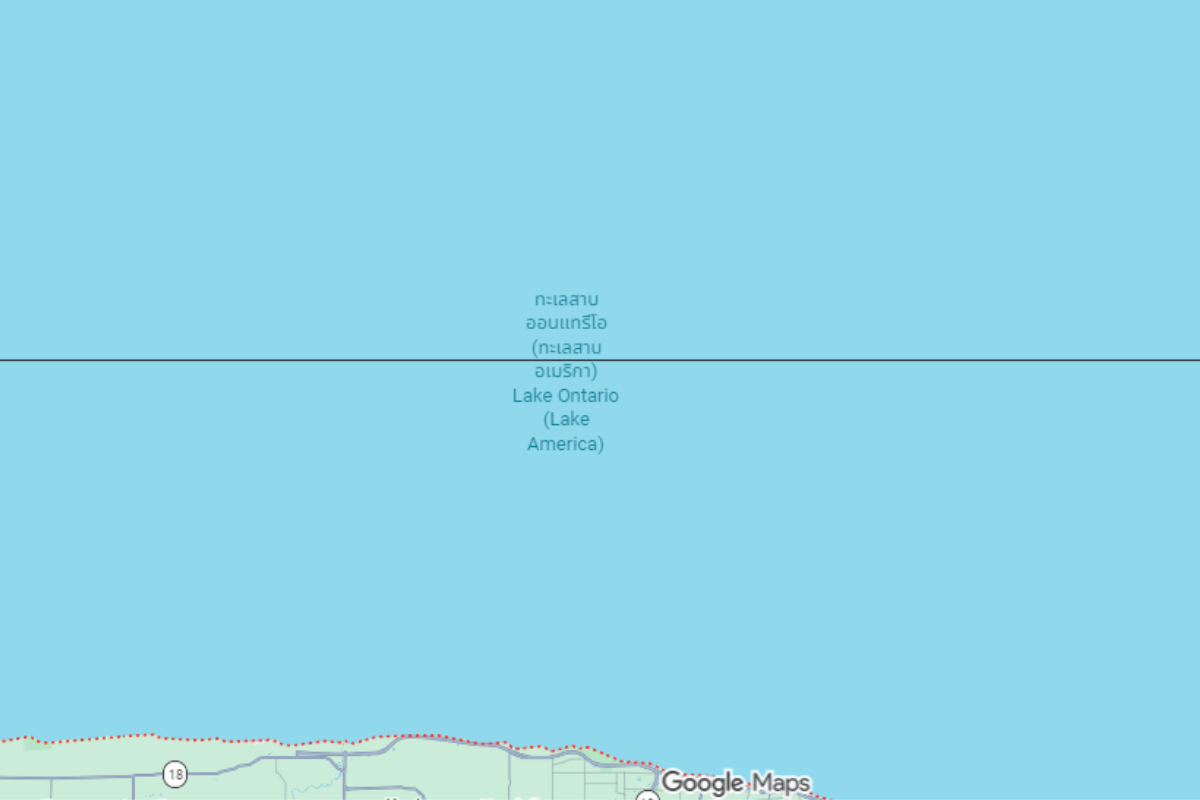
The renaming of Lake Ontario to 'Lake America' on Google Maps for users in the United States, following a US executive order, might appear to be a localized digital alteration. Yet, decisions that fragment universally accepted geographic information, even if confined to specific user groups, carry implications that can translate into tangible costs for individuals and businesses, including those in the Asia-Pacific.
An executive order signed on August 27, 2026, mandated that US federal agencies officially adopt the new title. Following this, Google Maps updated its platform in line with the US government’s Geographic Names Information System (GNIS) database. The Bangkok Post Life reported on September 20, 2026, that users accessing Google Maps within the US now see 'Lake America'. Canadian authorities continue to recognize the original name, creating a dual reality for what is a shared international feature. Apple Maps also reflected this change, as reported on September 2, 2026.
For a household budget in Thailand, the direct impact of a lake in North America changing its digital name is not immediately apparent. However, the indirect costs emerge when considering global supply chains and digital commerce. Imagine a small business in Bangkok importing specialized components from the US. If their shipping documentation, customs forms, or logistical software still references 'Lake Ontario' as a waypoint or a boundary marker, while US-based systems, including those used by customs or freight forwarders, now recognize 'Lake America', this creates a discrepancy. Such an inconsistency can lead to administrative hurdles, requests for clarification, or even temporary holds on shipments.
Each delay, each additional layer of paperwork, represents an unforeseen cost. For larger corporations with dedicated logistics departments and sophisticated international operations, adapting to such shifts might be manageable. They likely have robust internal systems that can reconcile these differences, or they rely on international standards that transcend regional digital map changes. This suggests a potential uneven impact, where smaller enterprises or those with fewer resources might bear a disproportionate share of the burden when information fragments.
Some might argue that such a change is merely symbolic and does not alter the physical reality of the lake or fundamental international trade agreements. They might contend that businesses are accustomed to navigating varying local regulations and that a place name change on a digital map is a minor adjustment in a complex global environment. The fact that the change only applies to US-based users of specific digital maps and does not alter global maritime charts supports this view, limiting the scope of immediate operational disruption.
However, the central question for the monthly budget lies in the accumulation of minor frictions. For many businesses, particularly small and medium-sized enterprises (SMEs) engaged in cross-border trade, thin margins mean that unexpected administrative costs, delays, or the need for manual reconciliation of geographic data can erode profitability. When universally accepted information begins to diverge across major digital platforms, even due to national mandates, it introduces an element of uncertainty into the digital tools that underpin daily commerce. The outcome now depends on how quickly and effectively the global network of digital services and their users can adapt to such fragmented information, and whether this incident signals a trend towards further digital cartographic nationalism that could complicate international trade more broadly, eventually impacting the price consumers pay for goods.
Sources
Newsletter
Pacific Daily
A curated briefing from Thailand, Asia-Pacific and the world.