Visa Denials Extract a Quiet Toll on Transnational Families
A rejected holiday visit exposes how border friction drains household budgets across Southeast Asia
SINGAPORE
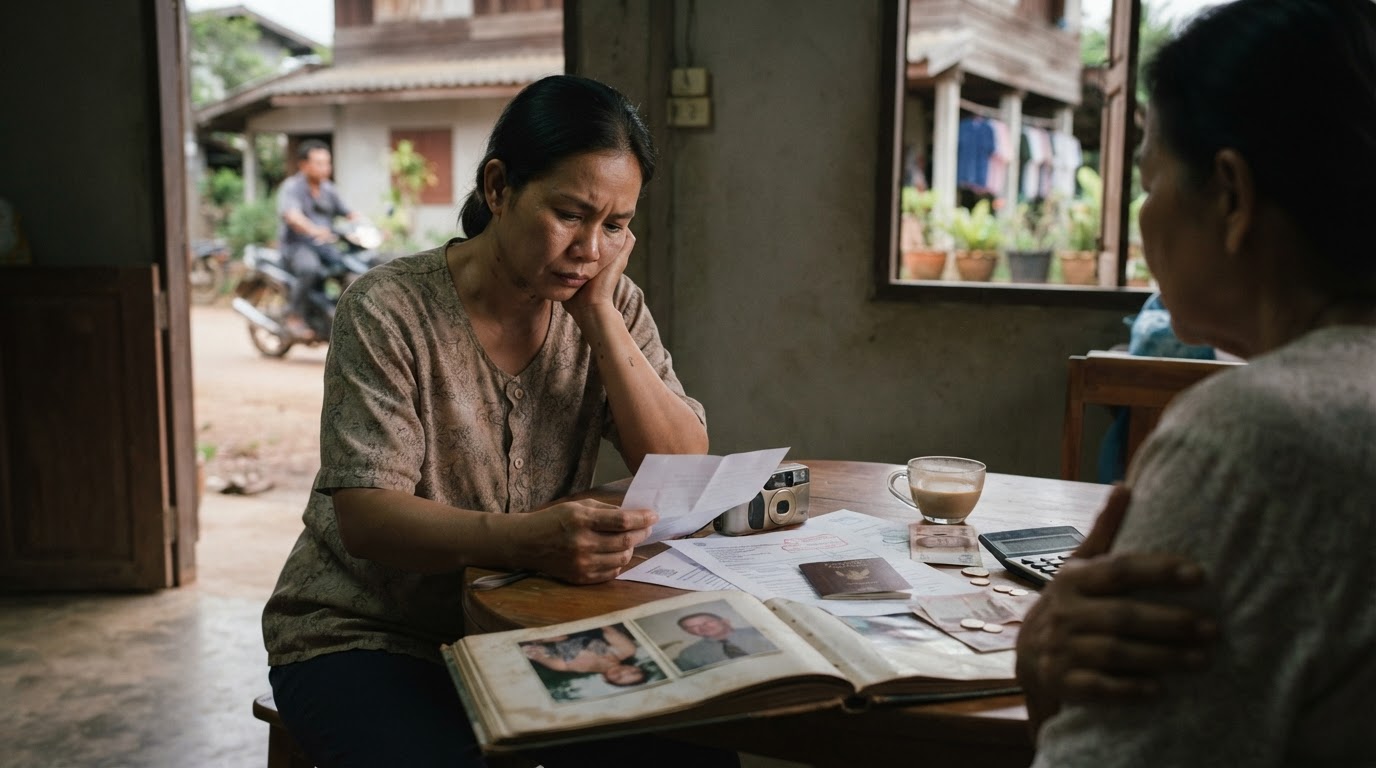
When a routine visa application fails, the financial impact registers immediately on household savings. For Matthew Cross, a 31-year-old British citizen living on Koh Tao in Surat Thani, Thailand, and his fiancée Khin Thant Zin, a 31-year-old Myanmar-born woman known as Jue Jue, an administrative refusal has disrupted both holiday plans and personal finances. The couple had arranged a Christmas journey to Burnley in Lancashire so their son, William, could meet his seriously ill great-grandfather, George Kerr. Instead, an entry refusal from the UK Home Office against Khin Thant Zin, who fled persecution in Myanmar, has prevented the family from travelling together.
The administrative block converts personal travel into an expensive endurance test. The Thailand-based family has already spent hundreds of pounds navigating the filing process. Preparing a second visa application now pushes their potential expenses higher, with Matthew Cross facing total costs of up to £3,000. Diverting £3,000 toward procedural appeals and fees forces an ordinary household to reallocate funds away from daily living expenses into non-refundable official payments.
The Price of Cross-Border Mobility
Cross-border households throughout Southeast Asia regularly absorb these friction costs. Passports held by Matthew Cross and his infant son William allow relatively open global travel, whereas Khin Thant Zin faces the strict constraints placed on Myanmar nationals. When immigration systems evaluate individuals who have escaped conflict, standardized assessments of residency, domestic ties, and travel intentions often trigger rapid denials. The result is not merely an itinerary dispute, but a direct financial drain on domestic earnings.
In practical terms, families bridging unequal legal documentation absorb repeated financial hits. Payments for administrative handling and formal filings disappear into state departments without any guarantee of success. If the second visa application is also rejected, none of that money returns to the family bank account. The financial exposure falls entirely on the household rather than the authorities setting the criteria. State bureaucracies retain application payments regardless of outcome, leaving ordinary wage earners to carry the complete fiscal loss.
Sovereignty Against the Family Budget
Immigration authorities maintain that rigid procedural enforcement remains vital for domestic border management. UK Home Office regulations are designed to prevent overstays and verify that applicants retain sufficient financial roots outside the destination country. Border enforcement frameworks rely on standard documentary proofs of residence and assets, requirements that people displaced from Myanmar often cannot easily provide through ordinary channels.
Yet strict bureaucratic rigidity frequently fails to accommodate urgent human circumstances, such as an elderly relative facing declining health before an April milestone. When administrative frameworks evaluate displaced partners through generic risk categories, they penalise stable binational families for geopolitical conditions beyond their control. Matthew Cross and Khin Thant Zin did not seek permanent relocation to Lancashire, aiming only for a temporary Christmas stay with George Kerr. The resulting refusal forces a working family on Koh Tao to stake monthly earnings against unyielding immigration rules.
The resolution of the planned journey now depends on whether the second visa application receives approval from officials in the United Kingdom. This episode demonstrates a persistent structural imbalance across the region, where state borders enforce strict administrative hurdles while binational households shoulder the entire financial burden of maintaining family relationships.
Sources
Newsletter
Pacific Daily
A curated briefing from Thailand, Asia-Pacific and the world.