Vancouver's Waterfront and the Quiet Rise of a Pacific Yachting Gateway
Between the city's towers and the mountains, Coal Harbour's marinas link Canada's west coast to cruising grounds stretching toward Alaska.
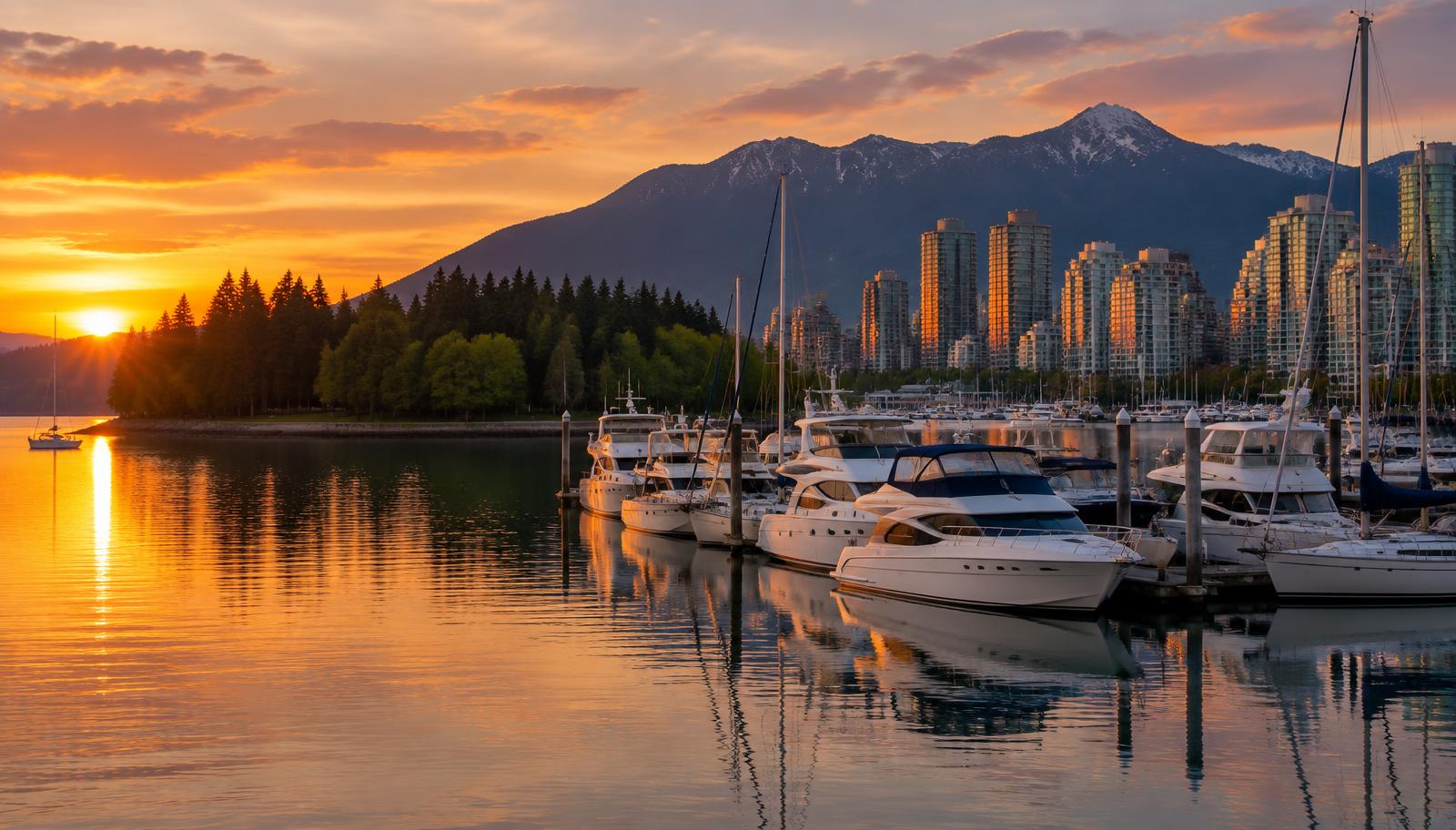
VANCOUVER — As the sun dips behind Stanley Park, the water of Coal Harbour turns copper. Motor yachts and sailboats sit in neat rows, their reflections broken only by a passing floatplane. Few cities place a marina so close to the heart of downtown, and for Vancouver the waterfront is part of its identity.
The Port of Vancouver is Canada's largest port, handling container ships, bulk carriers and cruise vessels bound for Alaska. Alongside that heavy industry, the harbour supports a busy recreational boating scene. Marinas around Coal Harbour, False Creek and the North Shore serve local owners and visiting yachts heading north into some of the most celebrated cruising waters in the world.
Gateway to the Inside Passage
From Vancouver, boats can head into the Strait of Georgia, Desolation Sound and the sheltered channels of the Inside Passage. These waters offer fjords, forested islands and wildlife, from orcas to bald eagles, within days of the city. Destination Vancouver and regional tourism bodies promote the combination of urban sophistication and wilderness access as a defining advantage.
That proximity has made the city attractive to yacht owners from across the Pacific, including buyers from the United States and Asia who keep vessels in British Columbia for summer cruising.
Pressure on space
Success brings constraints. Moorage in central Vancouver is limited and expensive, with waiting lists at some marinas. Waterfront land is among the most valuable in Canada, and debates over development often pit recreational access against housing and commercial projects.
Environmental stewardship is another priority. The Port of Vancouver runs programmes to reduce underwater noise from shipping to protect endangered southern resident killer whales, and marinas face growing expectations on fuel handling, sewage pump-out and the reduction of single-use plastics.
A Pacific identity
Vancouver's relationship with the water also reflects its Pacific orientation. The city has deep ties to Asia through trade, migration and culture, and its harbour is a place where those connections are visible, from container cranes to seaplanes bound for coastal communities.
As evening settles over Coal Harbour, a lone sailboat heads out past Stanley Park toward open water. Behind it, the city glows. Ahead lie channels that lead almost all the way to Alaska.
Sources
Newsletter
Pacific Daily
A curated briefing from Thailand, Asia-Pacific and the world.