Urban Memory Cleanses What the Walled City Actually Left Behind
An exhibition at Central Market frames recovery through art, exposing how modern heritage districts prefer aesthetic survival over difficult human rehabilitation.
SINGAPORE
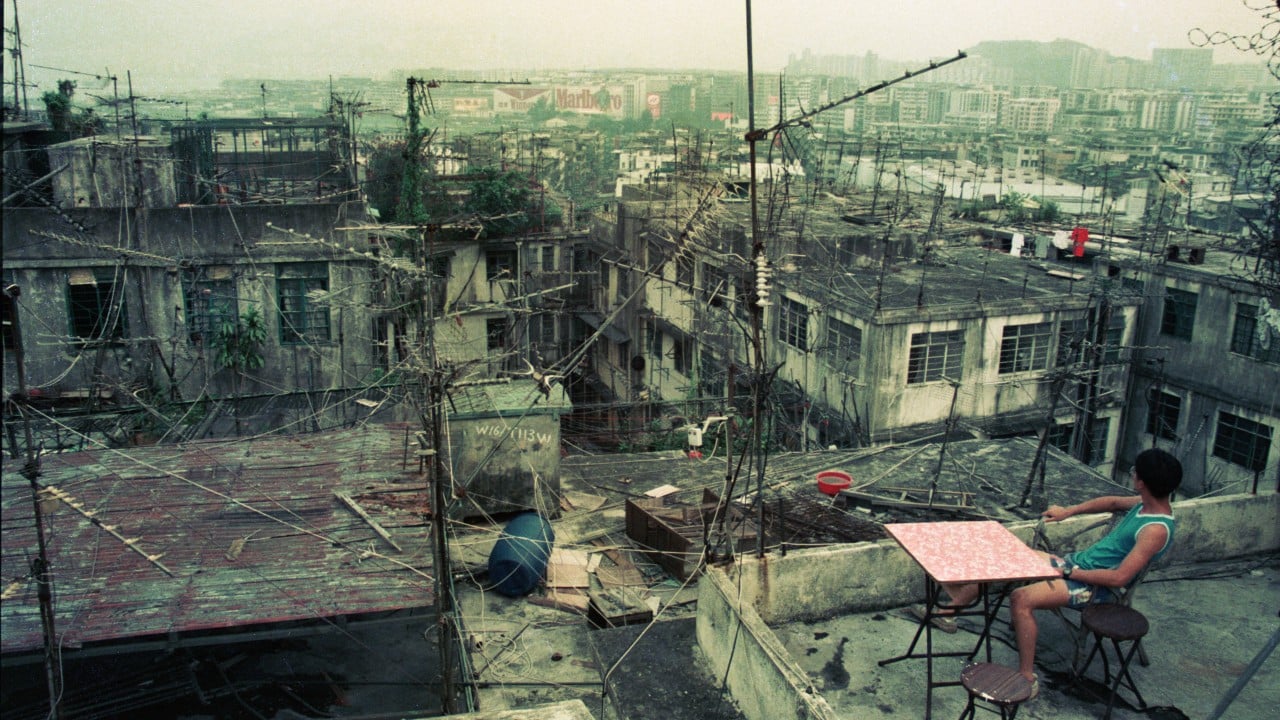
Civic architecture in Hong Kong excels at preserving physical memory while quietly discarding the social friction that produced it. When the demolished enclave of the Kowloon Walled City resurfaces in contemporary public dialogue, it usually arrives through stylized photographs, architectural models, or nostalgic cinematic homages. What rarely survives this transition into institutional respectability is the unglamorous mechanism of rehabilitation that once operated along its perimeter.
The public appearance of work from St Stephen’s Society brings that unresolved tension into sharp focus. Founded by Jacqueline Pullinger, a British missionary now in her eighties, the non-profit Christian charity operates a compound in Hong Kong’s New Territories that resembles a contemporary art gallery more than a conventional recovery center. Corridors lined with sketches, canvases, and photography lead to a wall of art supplies, yielding creative work now assembled for an exhibition titled “285 and Counting…” at Central Market.
The Commercial Frame
Staging this exhibition inside Central Market presents an instructive paradox. Central Market is itself a project of adaptive reuse, a sanitized municipal venue where Hong Kong’s commercial present negotiates its colonial and working-class heritage. To mount artwork created by recovering addicts within those polished corridors is to test the limits of urban nostalgia.
Public taste readily consumes the aesthetic of the Kowloon Walled City as a dark, dense labyrinth of informal survival. The reality was an environment shaped by systemic destitution, organized crime, and severe addiction. Pullinger’s work began inside that dense settlement decades ago, addressing human wreckage that municipal administrations largely ignored. Her assessment of the people producing these works remains direct: “Everybody else considers them failures, but I believe they are the future of Hong Kong.”
“Everybody else considers them failures, but I believe they are the future of Hong Kong.”
Placing that assertion into a pristine retail and cultural hub exposes an uncomfortable contradiction. The gallery setting asks viewers to evaluate recovery through the lens of aesthetic production. Art becomes the respectable passport through which individuals marginalized by dependency earn reentry into civic visibility. Yet framing social rehabilitation as creative achievement risks transforming survival into a decorative commodity, satisfying the audience's appetite for redemptive narratives while leaving structural exclusion unexamined.
Rehabilitation Beyond Display
A counterargument warrants consideration. Art within therapeutic environments serves an internal, functional purpose entirely detached from outside appraisal. In the charity’s New Territories facility, the act of painting or drawing offers discipline, routine, and a non-verbal medium for working through trauma. Allowing residents to exhibit at Central Market grants them cultural agency, validating their labor in a city that frequently treats social deviance with quiet erasure. From this viewpoint, the public setting is not a sanitizing filter but a rightful reclamation of civic space.
That validation, however, encounters a persistent barrier. An exhibition ends, the canvases are dismounted, and the patrons return to their offices. The residents remain dependent on long-term institutional shelter, navigating an economic environment with minimal tolerance for those carrying records of addiction. An art exhibition can dignify the individual without altering the structural conditions that rendered them marginal in the first place.
The installation at Central Market leaves these two realities standing side by side. Hong Kong can celebrate the creative artifacts generated by the survivors of its most notorious former slum, or it can engage with the ongoing human vulnerability those artifacts record. The sketches and canvases hang under clean gallery lighting, but the distance between civic admiration and actual social reintegration remains quietly intact.
Sources
Newsletter
Pacific Daily
A curated briefing from Thailand, Asia-Pacific and the world.