UN Meeting Signals Tactical Shift, Not Fundamental Change, in US-Iran Standoff
The first encounter between Presidents Trump and Pezeshkian since 'Operation Epic Fury' suggests a change in immediate posture, but core regional capabilities remain unaltered.
SINGAPORE
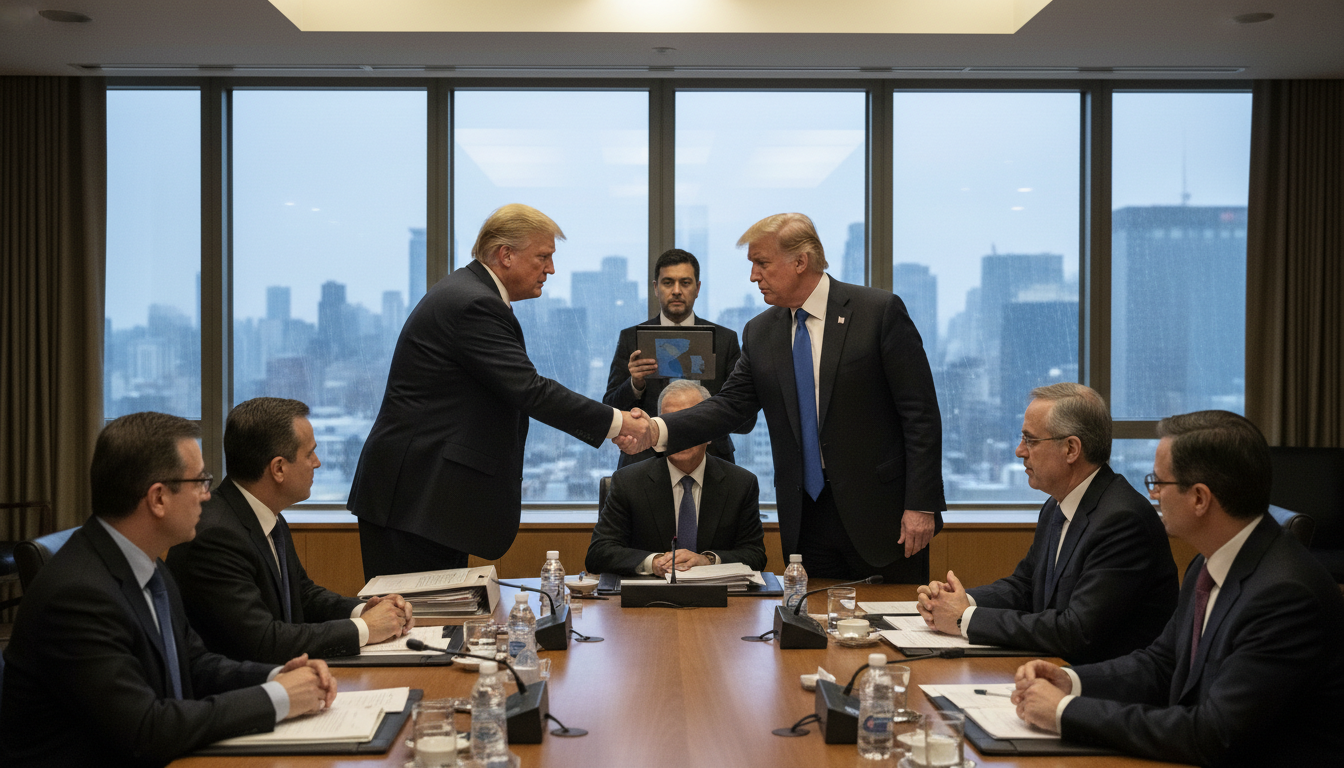
The presence of US President Donald Trump and Iranian President Masoud Pezeshkian at the UN General Assembly in New York marks their first co-attendance at an event since the US launched 'Operation Epic Fury' against Iran in February. This convergence, against a backdrop of prolonged maritime tension and diplomatic maneuvering, suggests a shift in the immediate dynamics of US-Iran relations, yet the underlying capabilities defining regional stability, particularly in Asia-Pacific, retain their established forms.
The history of US-Iran engagement, or disengagement, has been punctuated by escalating rhetoric and military postures. 'Operation Epic Fury,' initiated in February, represented a significant escalation. Prior to this, President Trump issued an ultimatum to Iran in March, followed by Iran’s reciprocal threat to the Middle East. Subsequently, reports in April indicated a US port blockade continued, even as President Trump hinted at the resumption of talks. This period also saw the US Navy reportedly offering to 'guide' ships from the Strait of Hormuz in May, amidst what President Trump described as 'very positive' talks with Iran.
The current situation, where both leaders are in the same location, represents a tactical change from the direct military confrontation exemplified by 'Operation Epic Fury' and the port blockade. It indicates a potential de-escalation of immediate, overt hostilities. Reuters reported in September that while the US and Iran remained at odds on key issues, both sides reported signs of progress. This suggests a re-engagement with diplomatic channels, however tenuous.
For the Asia-Pacific region, including Thailand, the immediate consequence of this development is not a change in fundamental security architecture but rather a possible, albeit temporary, reduction in the risk of supply chain disruptions through the Strait of Hormuz. The Strait, a critical maritime chokepoint, directly impacts global energy markets, and consequently, the economic stability of import-reliant nations. While the prospect of 'very positive' talks in May suggested a similar potential for stability, the subsequent 'Operation Epic Fury' underscored the fragility of such diplomatic overtures. A sustained reduction in tensions could indirectly benefit regional economies by mitigating energy price volatility and ensuring unimpeded trade routes.
However, the core military and strategic capabilities of both the US and Iran have not demonstrably changed. Iran’s reported hosting of Pakistan’s army chief in August, for instance, underscores its continued pursuit of regional alliances and strategic depth, independent of its relationship with the US. The cessation of 'Project Freedom' after two days in May, an initiative that followed reports of renewed talks, demonstrates the episodic nature of de-escalation. The meeting in New York, while notable for its symbolism, does not inherently alter Iran's nuclear program status, its regional proxy networks, or the US's broader strategic objectives in the Middle East. These fundamental capabilities and objectives remain unresolved, ensuring that any temporary détente may not translate into lasting regional stability.
Sources
Newsletter
Pacific Daily
A curated briefing from Thailand, Asia-Pacific and the world.