Tokyo's Midnight Containment Economy
Round-the-clock bathhouses keep capital inside the metropolis while Japan's peripheral coastlines struggle for economic oxygen.
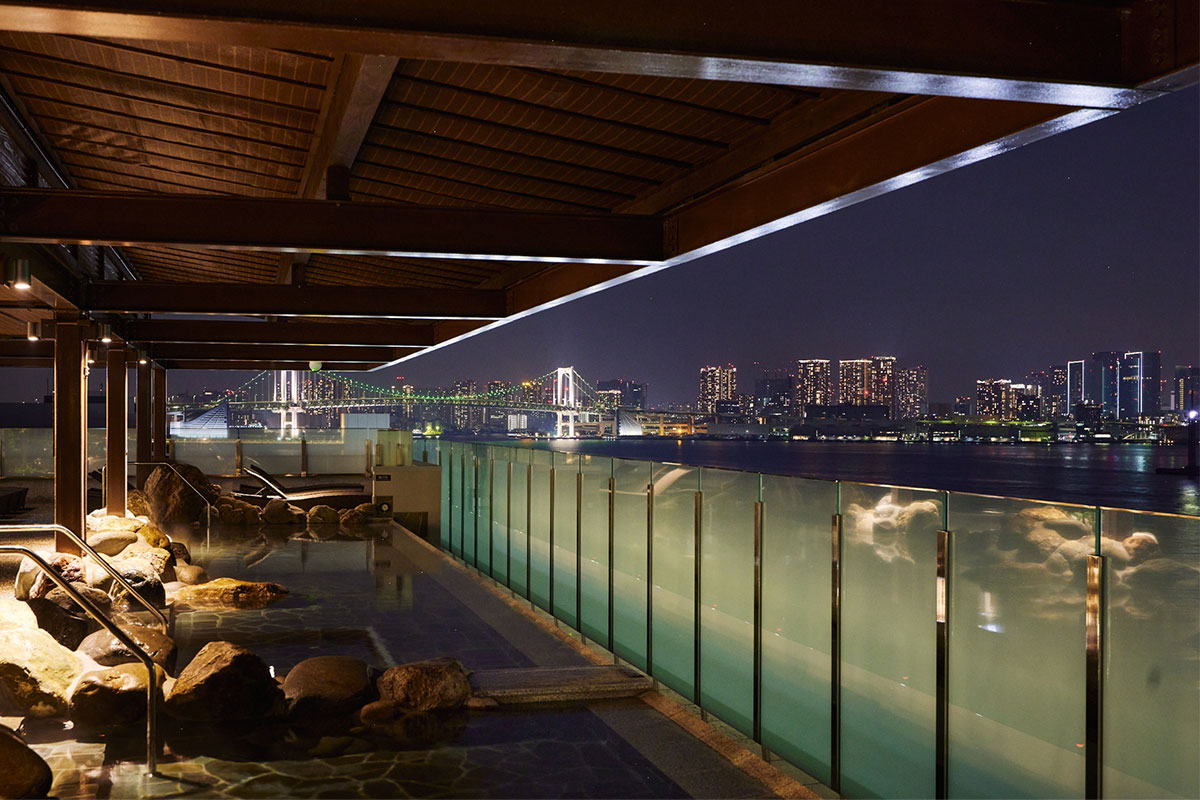
TOKYO
Metropolitan rail networks across Japan halt service before midnight, yet Tokyo continues to capture the commercial momentum of the hours that follow. The regular cessation of the last train creates an artificial suspension of mobility that would paralyze most capital cities. Tokyo absorbs that friction instead through an expanding network of nocturnal services, from super sento complexes to continuous commercial hubs such as the Tokyo Toyosu Manyo Club. While leisure outlets present late-night baths as practical refuges for stranded commuters, the pattern reveals a much deeper economic dynamic. Private developers and municipal operators have perfected the art of keeping capital and human activity within capital boundaries through the night, directly resisting national strategies designed to push investment and visitors into the country's outer coasts.
The Mechanics of Urban Containment
Decentralisation has stood as a stated economic priority for Japanese planners attempting to balance demographic contraction with regional vitality. International commentary, reflected in coverage by The New York Times in 2025, has urged international visitors to look past Kyoto and distribute their spending across smaller prefectures. Similar calls highlighted by The Straits Times in 2025 directed attention beyond Fukuoka toward smaller coastal communities such as Nagato. These regional initiatives depend on persuading travelers to leave the main transit corridors and commit their budgets to secondary towns.
Yet the domestic infrastructure of Tokyo works constantly against this regional dispersal. When transit stops, the metropolitan core does not lose its patrons to rest or force them outward. Facilities operating on a 24-hour cycle convert missed connections into extended consumer transactions. Tokyo Weekender documented these round-the-clock bathing and rest facilities, framing them as urban conveniences for people stranded until sunrise. Viewed through regional political economy, however, these establishments act as containment systems. Every facility operating through the early morning ensures that spending remains concentrated in the urban center rather than dispersing outward along transit lines.
Coastlines and the Cost of Centralisation
Peripheral economies struggle to capture durable revenue when capital networks remain anchored to metropolitan centers.
This dynamic mirrors wider geopolitical and macroeconomic patterns across the Asia-Pacific. While allied economic frameworks bring massive financial commitments, such as the USD 57 billion in corporate deals announced by Burgum, the domestic distribution of capital remains heavily skewed toward primary industrial hubs. External diplomatic analyses from the Lowy Institute note ongoing tensions surrounding regional influence and commercial alignment involving Beijing, Washington, and Tokyo. Even as central authorities coordinate with Washington on currency measures to stabilize broader trade balances, domestic fiscal vitality remains trapped inside metropolitan limits. A durable national economy requires resilience across smaller prefectures, not simply an overcrowded capital.
When coastal districts like Nagato attempt to establish sustainable revenue models, they face structural competition from an urban core designed to retain every yen. Infrastructure in Tokyo has evolved to monetize every hour of systemic interruption, turning transport gaps into commercial gains. Secondary regions, by contrast, lack the dense transit alternatives and all-night service buffers that allow capital to circulate without pause. Planning policy prioritizes capital efficiency in the center, while regional coastal communities bear the stagnation of lost economic momentum.
The endurance of Tokyo's round-the-clock bathhouse economy is not merely an eccentric answer to a missed train. It marks an unresolved contest between municipal efficiency and regional equity, leaving Japan's coastal peripheries to negotiate the persistent gravity of an inland metropolis that never genuinely closes.
Sources
Newsletter
Pacific Daily
A curated briefing from Thailand, Asia-Pacific and the world.