Beijing Halts SoftBank Deal to Redefine Industrial Leverage
China's veto of the $5.4bn ABB robotics buyout marks a structural shift where regulatory sovereignty overrules balance-sheet power across Asian manufacturing.
SINGAPORE
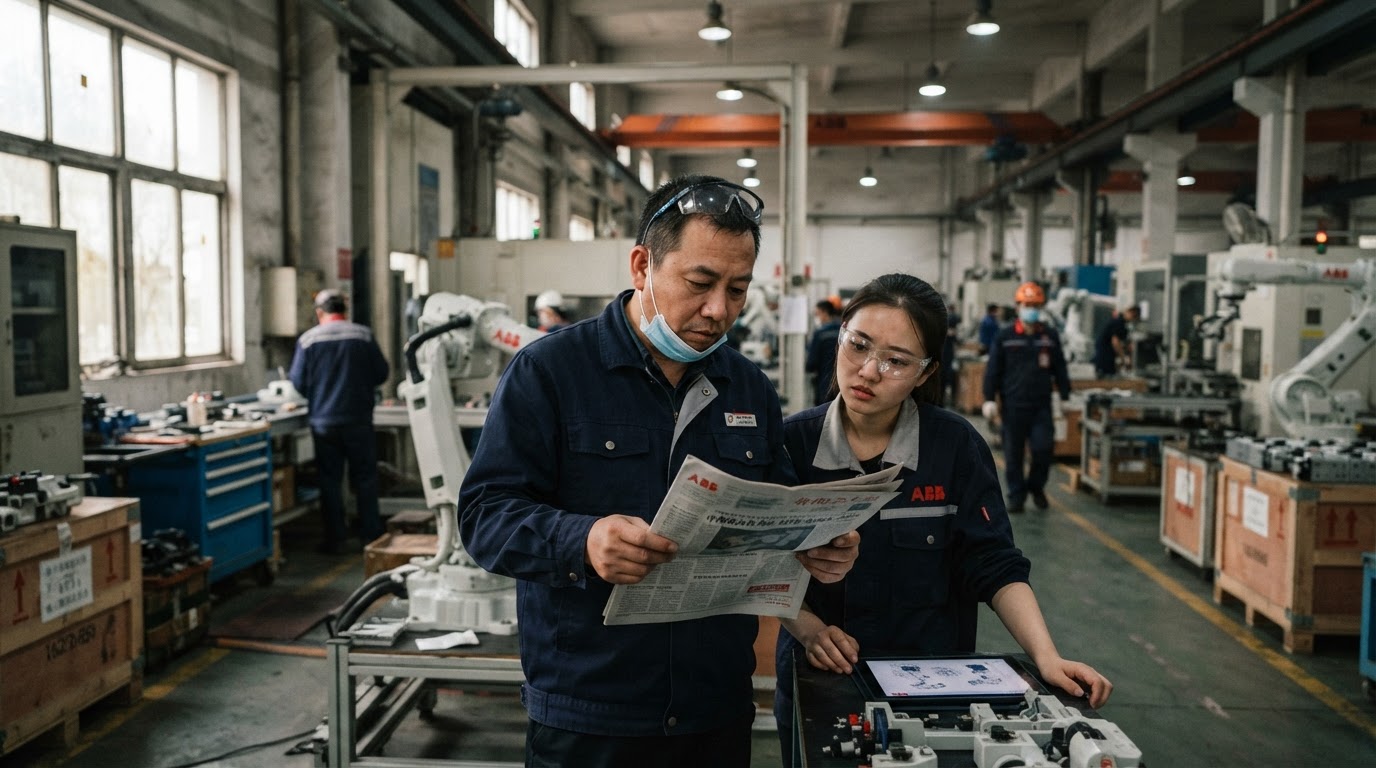
China's decision to block SoftBank from buying the robotics division of ABB for $5.4bn abruptly terminates an established commercial convention. For three decades, multinational engineering groups assumed that antitrust clearance in advanced manufacturing rested on quantifiable competition metrics: market share, regional concentration, and post-merger price power. That assumption has broken. By barring the Japanese conglomerate from acquiring the Swiss group's automation arm, Chinese regulators demonstrated that cross-border capital cannot guarantee control over physical assembly hardware when sovereign industrial planning intervenes.
Capital was not the barrier. SoftBank entered the transaction with substantial liquid reserves, bolstered by an $8bn gain on an Intel stake that expanded its acquisition headroom. ABB had sought to streamline its balance sheet by carving out its robotics operations, expecting a buyer with deep funding and minimal direct industrial overlaps to clear standard regulatory hurdles. The resulting rejection indicates that Chinese authorities treated the transaction not as a benign financial portfolio adjustment, but as a potential disruption to domestic manufacturing sovereignty.
The transaction collapsed because territorial exposure now outweighs legal domicile.
Divergent Markets
Consider the divergence across three distinct commercial environments. In Tokyo, SoftBank must recognise that domestic liquidity and non-Chinese asset registries provide no insulation against Chinese regulatory oversight when target operating units sell into Chinese factories. A financial buyer outside mainland jurisdiction remains vulnerable to Beijing's veto if the underlying hardware operates inside Chinese supply ecosystems.
In Europe, conglomerates like ABB face an unpalatable structural reality: carve-outs of global industrial divisions can no longer be executed cleanly on Western terms alone. Multinational manufacturers seeking to divest legacy hardware units must discount their valuations, knowing any buyer lacking Chinese regulatory endorsement risks a direct veto if the business maintains extensive domestic assembly lines.
Across broader Asian manufacturing corridors, factory operators depend heavily on installed industrial robotics. A blocked transfer leaves maintenance agreements, operational software upgrades and long-term procurement schedules in limbo, forcing plant directors to weigh whether their automation partners will remain commercially stable amid intensifying regulatory scrutiny.
Regulatory Sovereignty
Defenders of conventional antitrust enforcement may argue that competition bureaus evaluate only horizontal overlaps and market concentration. However, the regulatory rationale in this case clearly stretches beyond standard competition theory into defensive industrial strategy. Modern robotics constitutes the physical baseline of advanced manufacturing; losing regulatory leverage over that baseline would compromise sovereign manufacturing targets.
Financial liquidity alone no longer guarantees title to the mechanical hardware powering Asian industry.
SoftBank retains the capacity to deploy capital elsewhere, but the pool of accessible industrial robotics targets has compressed. European engineering boards will find their divestment options constricted, while Chinese industrial planners have affirmed that physical market access confers permanent jurisdictional authority over global corporate transactions. The unresolved tension is structural: capital flows globally, but manufacturing equipment remains rooted in territorial law, leaving cross-border industrial consolidation stalled wherever sovereign boundaries clash.
Sources
Newsletter
Pacific Daily
A curated briefing from Thailand, Asia-Pacific and the world.