Real Madrid Learns the Cost of Market Access in Beijing
A broadcast blackout on Chinese state television proves that European football properties cannot separate commercial scale from political compliance.
SINGAPORE
European football clubs have long treated international media rights as borderless commercial assets. That operating assumption encountered an abrupt boundary on Sunday, Nov 1, when Chinese state broadcaster CCTV declined to broadcast Real Madrid's La Liga fixture against Racing Santander across either of its two sports channels. The blackout followed public remarks by French forward Kylian Mbappe concerning former leader Mao Zedong, an intervention that instantly imperilled the institutional interests of club and league alike. What appeared to be an isolated comment from an individual athlete quickly transformed into an institutional crisis for European football governance.
The swift contrition that followed illustrated where operational leverage genuinely resides. Mbappe, Real Madrid, and La Liga issued apologies, prompting China's foreign ministry to acknowledge that it took the player's contrition seriously. Even so, the scheduled kickoff at 315pm GMT—broadcasting at 11pm in Singapore—disappeared from mainland screens. AFP reporters noted the absence across state television networks, confirming that diplomatic acknowledgement does not automatically translate into immediate broadcast rehabilitation. The episode demonstrates how rapidly consumer exposure can evaporate when athlete speech collides with sovereign sensitivities.
Asymmetric Exposure Across Regional Markets
The commercial implications of this friction differ fundamentally across separate Asian jurisdictions. In markets such as Japan and Singapore, European football functions largely as unencumbered subscription entertainment, shielded from direct regulatory intervention over ideological disputes. Broadcasters in those commercial centres evaluate rights packages through private carriage fees, viewership metrics, and digital subscriber acquisition, maintaining operational distance from diplomatic sensitivities. Commercial partners across Japan or Singapore rarely demand ideological alignment before transmitting weekend sports programming.
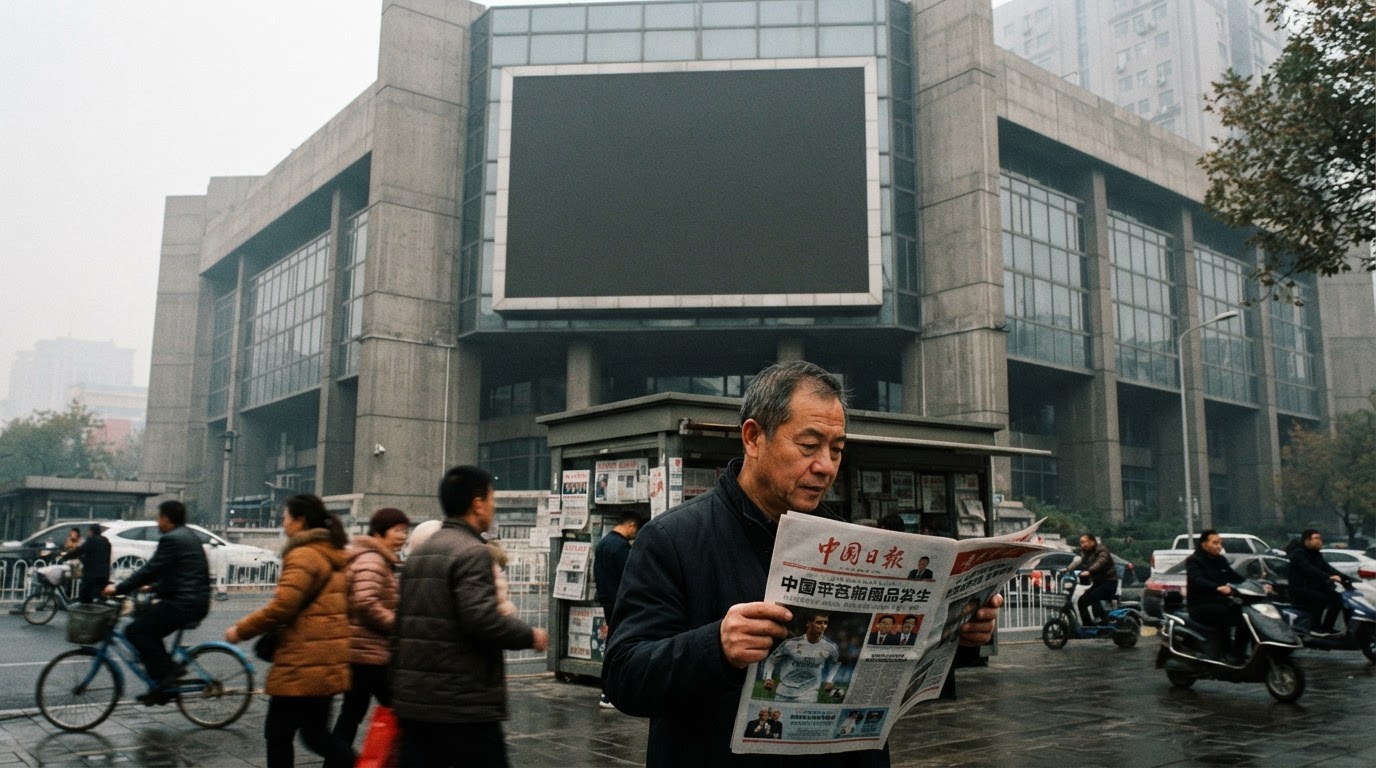
Inside China, distribution remains permanently conditional on state approval. A player's likeness does not merely sell match passes; it underwrites major domestic product campaigns, such as bottled drinks by Eastroc Beverage displayed on retail shelves in Beijing. When regulatory tolerance contracts, the entire commercial chain faces sudden disruption. Commercial sponsors and state networks possess the leverage to enforce silence or demand retraction. The cost of exclusion is high enough that La Liga and Real Madrid felt compelled to apologise alongside their marquee forward, subordinating European sporting autonomy to the preservation of market entry.
China's foreign ministry said it took the player's apology seriously.
Such institutional contrition reveals an unresolved tension for global athletic leagues seeking Asian revenue. La Liga requires expanding overseas audiences to offset domestic broadcast maturity, making Chinese viewership indispensable to long-term commercial balance sheets. Yet European sporting organisations operate with international squads whose individual public commentary cannot be comprehensively vetted by corporate compliance departments. The resulting exposure creates persistent friction between the expressive freedom permitted in European clubs and the regulatory discipline required to maintain access to Chinese broadcast networks.
The Friction of Corporate Apology
Former Real Madrid manager Jose Mourinho noted publicly that the club and Mbappe had moved on from the controversy. That appraisal may satisfy internal dressing-room management, but it underestimates the lasting structural hazard for sports enterprises operating in China. The foreign ministry's measured reception of the apologies demonstrates that access is monitored case by case, rather than guaranteed by past agreements or brand prestige. A single unscripted phrase can suspend broadcasting arrangements without formal legal appeal.
Rights negotiations across Asia will increasingly reflect these distinct vulnerabilities. Other regional sports markets may offer greater political predictability, yet none match the immediate scale of China's consumer base. Sports executives are left attempting to balance contradictory imperatives: securing lucrative broadcast and sponsorship contracts in Beijing while managing athletes whose public visibility remains beyond centralised institutional control. Until leagues establish a framework that insulates commercial operations from individual player speech, their distribution models remain vulnerable to sudden blackout decisions made by state authorities in Beijing.
Sources
Newsletter
Pacific Daily
A curated briefing from Thailand, Asia-Pacific and the world.