The Unseen Hand: Dolly Parton's Legacy and Asia's Wider Sphere of Influence
While diplomacy and trade define overt power, the passing of a cultural icon reveals the enduring impact of a different influence.
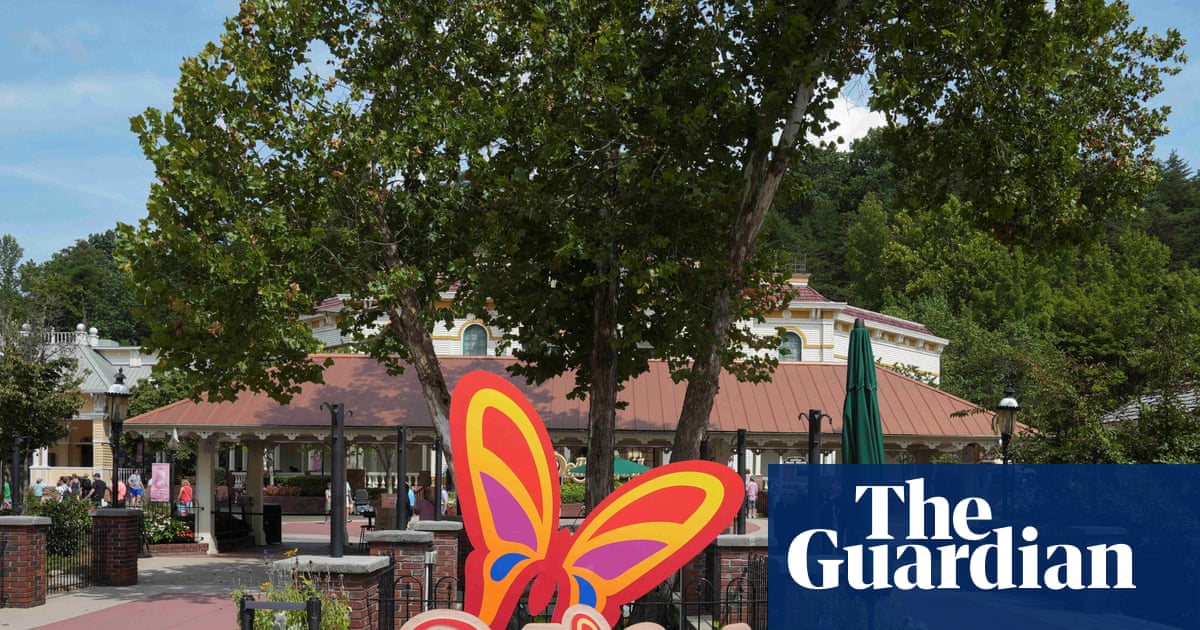
The death of Dolly Parton on August 27, 2026, spurred mourners to Dollywood in Pigeon Forge, Tennessee. The Guardian Australia Culture reported a memorial at the park’s entrance, adorned with bouquets. This reaction, described by a child asking why so many people were crying, underscores the depth of public connection to Parton.
While the immediate impact on the Asia-Pacific region may seem distant from a country music star's passing, it prompts an examination of how cultural figures, even those distinctly American, exercise a form of soft power. The grief expressed in Tennessee, and the text to Becky Bullard — “As soon as I heard about Dolly, I thought of you” — demonstrates an influence extending beyond musical genre. This is not about diplomatic pacts or trade agreements; it concerns shared cultural touchstones and the resonance of a public persona.
Simultaneously, the region is marked by more traditional assertions of influence. The Taipei Times reported on August 26, 2026, that Taiwan's foreign minister traveled to Palau for an island meet, indicating active diplomatic engagement. Focus Taiwan confirmed Taiwan's presence at this year's Pacific Islands Forum, an event where geopolitical interests converge. The Lowy Institute, also on August 26, 2026, addressed Australia’s Pacific energy pledges, suggesting a need for a new approach in its regional strategy.
These events unfold against a complex international backdrop, where, as the South China Morning Post noted, Pacific nations navigate a balance between Western security interests and Chinese trade relationships. The mechanisms at play here are economic incentives, security guarantees, and state-level diplomacy. These represent measurable, strategic interventions.
Yet, the enduring appeal of a figure like Dolly Parton, who cultivated an image of warmth, represents a distinct, less formal influence. It is not tied to government policy or military strength. Instead, it is a cultural diffusion relying on individual affinity and perceived authenticity. While a foreign minister's visit to Palau directly impacts policy, the widespread sorrow for a musician demonstrates the power of shared human experience to forge connections across distances.
The unresolved tension remains how to translate amorphous cultural appeal into tangible diplomatic or economic advantage, if at all.
The challenge for countries projecting influence is discerning the true leverage of these differing forms of engagement. Traditional statecraft offers clear objectives and measurable outcomes. Cultural phenomena, however, operate on an emotional plane, fostering goodwill that is difficult to quantify or direct. The grief at Dollywood, for all its emotional weight, will not alter any nation's trade balance or security posture. However, its existence points to deep, often unacknowledged, human connections that underpin international relations, connections that formal diplomacy alone often fails to foster. The unresolved tension remains how to translate this amorphous cultural appeal into tangible diplomatic or economic advantage, if at all.
Sources
Newsletter
Pacific Daily
A curated briefing from Thailand, Asia-Pacific and the world.