The Slow Dismantling of Tournament Retail
Merchandise leases outlast the spectacle they were built to celebrate, revealing the awkward mechanics of sports commerce.
SINGAPORE
Temporary commercial installations depend on artificial urgency, yet the physical machinery behind them rarely dissolves on schedule. In operational terms, closing down a retail venue involves an entirely different set of technical constraints than launching one.
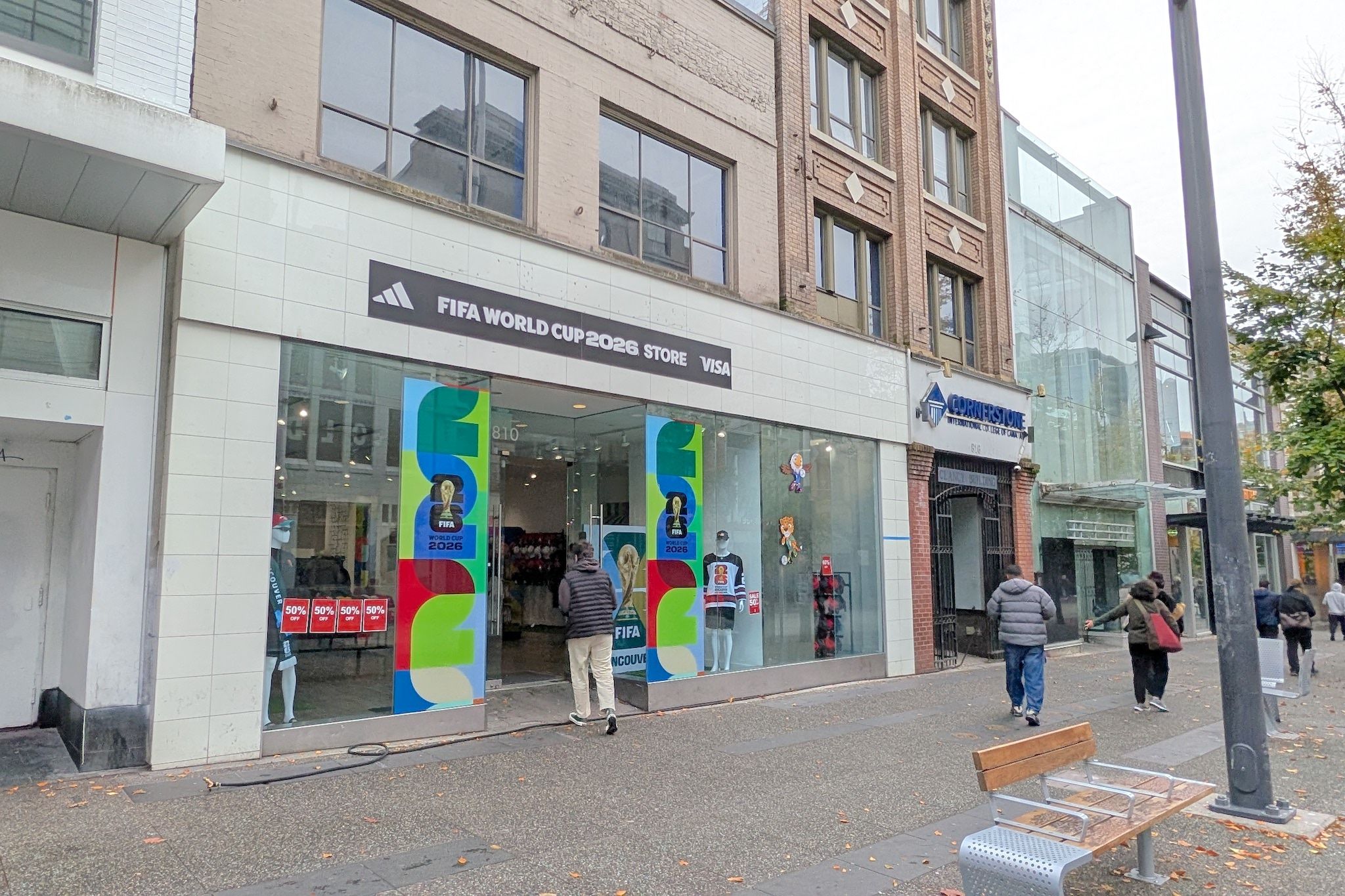
At 810 Granville St., near the southeast corner of Granville Street and Robson Street in Downtown Vancouver, one of two official merchandise outlets for the 2026 FIFA World Cup remains open for business in Oct 2026. The sporting tournament across North America concluded more than three months ago. Having opened its doors on June 5, just one week before kickoff, the pop-up location has now operated considerably longer as an improvised clearance depot than it did as an active promotional showcase. Much of the original retail floor has been cordoned off, leaving shoppers a diminished corridor where remaining inventory sits discounted by up to 60 per cent.
This lingering presence illustrates how temporary retail operations address inventory overhang when consumer interest wanes. Rather than taking on the immediate expense of full-scale off-site liquidation or closing prematurely, the operation appears to treat retail space as an elastic container. The observable technique is straightforward: reduce the accessible footprint, apply steep markdowns, and rely on residual pedestrian traffic to clear out the remaining stock.
The Cost of Lingering
During the run-up to an international event, sports retailing relies on intense anticipation. Pop-up storefronts use temporal scarcity to persuade buyers, pressing fans to secure licensed apparel before the games conclude. Once the tournament ends, that emotional leverage evaporates entirely. In its place remains an awkward operational reality, where ongoing staffing requirements and basic utility overhead accompany discounted items occupying prime downtown real estate.
From a property perspective, maintaining a partial clearance presence often reflects existing contractual commitments rather than fresh enthusiasm. Commercial leases in dense metropolitan districts typically involve fixed scheduling terms. When bound by predetermined agreements, commercial operators may reasonably conclude that recovering fractional margins at 60 per cent off proves less costly than absorbing the total loss of unsold merchandise while paying for unoccupied floor space.
Shifting consumer motivations help explain why such storefronts continue to draw visitors long after a tournament wraps up. Bargain hunters browsing high-traffic thoroughfares frequently respond to heavy price reductions regardless of whether the initial sporting narrative still holds general interest. The underlying consumer dynamic moves from event-driven enthusiasm to opportunistic shopping. Shoppers enter not to commemorate matches that finished months earlier, but because discounted textiles at a major intersection offer straightforward utility.
The Mechanics of Overhang
This retail hangover in North America reflects broader supply-chain dilemmas across major event economies, including host cities and commercial hubs throughout the Asia-Pacific. Long-term commercial arrangements across Japan and South Korea have repeatedly demonstrated that international athletic ventures demand prolonged capital investments months before opening day and well after the final whistle. When the international audience moves elsewhere, local centers must manage the physical surplus left in the wake of the event.
Defenders of extended clearance windows argue that prolonged store operations reflect prudent salvage recovery rather than planning failure. By continuing sales on Granville Street, organizers can extract residual value from existing merchandise, avoiding the abrupt diversion of unsold apparel into secondary discount streams. According to this reasoning, an orderly wind-down represents responsible supply-chain management.
Yet that assessment overlooks the visual erosion that occurs when a high-profile commercial venture outstays its moment. A flagship store reduced by partition tape and clearance signage presents an unmistakable portrait of miscalculated demand. Commercial spectacle demands focused public attention, but its physical aftermath frequently lingers as discounted surplus, sustained only until the lease finally runs its course.
Sources
Newsletter
Pacific Daily
A curated briefing from Thailand, Asia-Pacific and the world.