The Silent Language of Serenity: Hua Hin's New Demands
A tranquil resort in Hua Hin suggests a shifting landscape for luxury travel, moving beyond mere comfort to a deeper, more refined form of engagement.
SINGAPORE
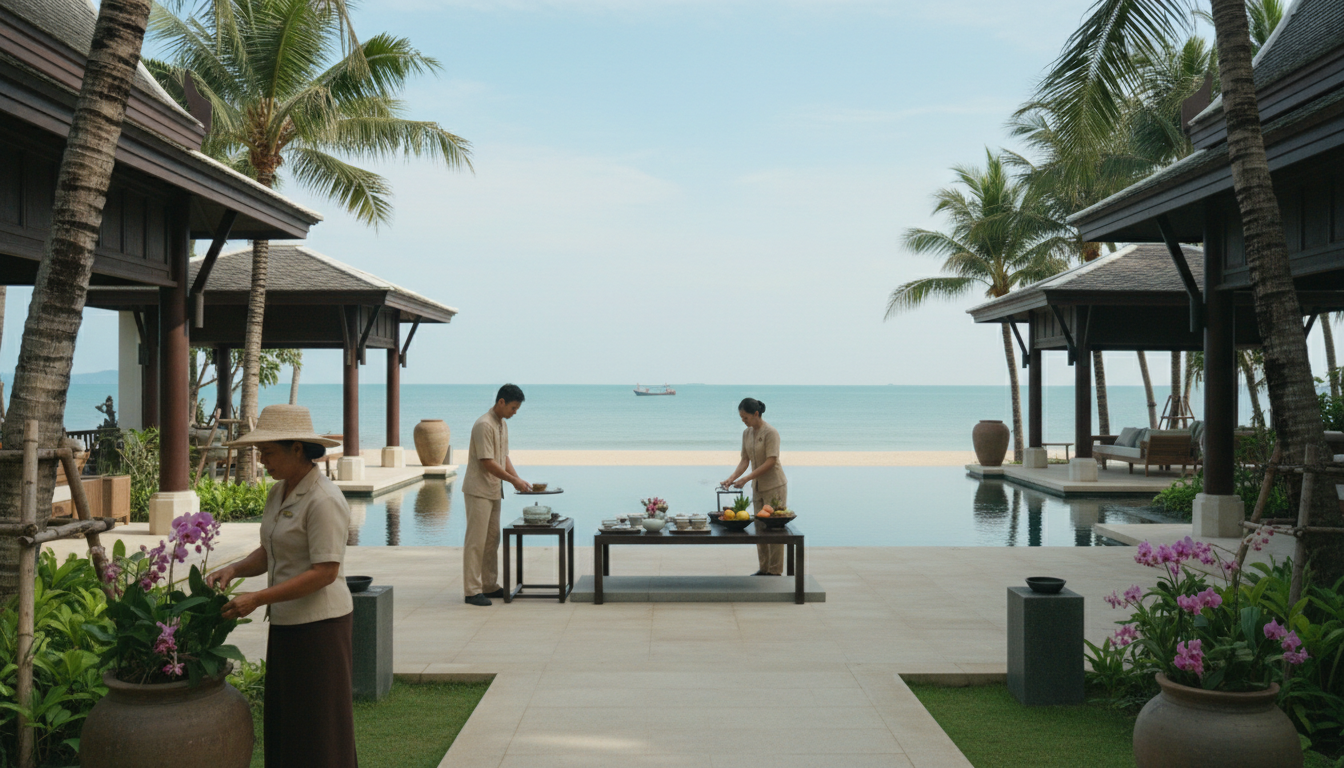
A resort in Hua Hin now presents itself not just as a place of rest, but as a sanctuary where, upon entry, one might feel the body lighten and the soul find peace. This description, given in the Bangkok Post Life on October 5, 2026, points to a subtle yet significant evolution in how destinations in Thailand, and potentially across the Asia-Pacific, are seeking to define their value. This quiet promise of lightness and peace represents a new demand on hospitality, moving beyond visible opulence or the promise of adventure, instead focusing on an internal, almost spiritual, experience.
Historically, the allure of coastal Thailand often rested on its vibrant energy, its natural beauty, or its capacity for straightforward relaxation. The current emphasis, however, reveals a deeper understanding of what a certain segment of travelers now seeks. The idea of a place that immediately calms and brings peace suggests a demand for curated environments designed to address the stresses of modern life, rather than simply offering a temporary escape from them.
Such an approach implies a more rigorous and subtle form of hospitality. It is not enough to provide amenities; the entire atmosphere must be engineered to evoke a specific emotional response. This focus on sensory and emotional calibration represents a challenge and an opportunity for the broader Thai tourism sector. While many establishments can offer a pool or a view, fewer can convincingly promise a 'lighter body' or a 'soul at peace'. This shift underscores a commercial imperative to differentiate not just through service or location, but through a deeply felt sense of wellbeing.
This evolving standard may also reflect changes in the regional travel market. As travel becomes more accessible, the definition of luxury often retreats into the intangible. The ability to craft an experience that transcends the physical and touches the emotional or even spiritual realm becomes a new benchmark. It demands a precise orchestration of environment, service, and philosophy.
The stated effect of the resort on its guests—a feeling of lightness and peace—suggests a growing market for destinations that offer more than an aesthetic experience. It asks of its visitors not just their presence, but their surrender to a specific kind of restorative process. This, in turn, asks of the destination a commitment to deliver a profound, almost therapeutic, impact, moving beyond the traditional notions of resort leisure. This silent language of serenity speaks to a new expectation, demanding a deeper engagement from the spaces designed to host us.
Sources
Newsletter
Pacific Daily
A curated briefing from Thailand, Asia-Pacific and the world.