The Insulated Forest and the Architecture of Leisure
A cocktail lounge car in northern California shows how scenic rail increasingly protects passengers from the landscapes they pay to admire
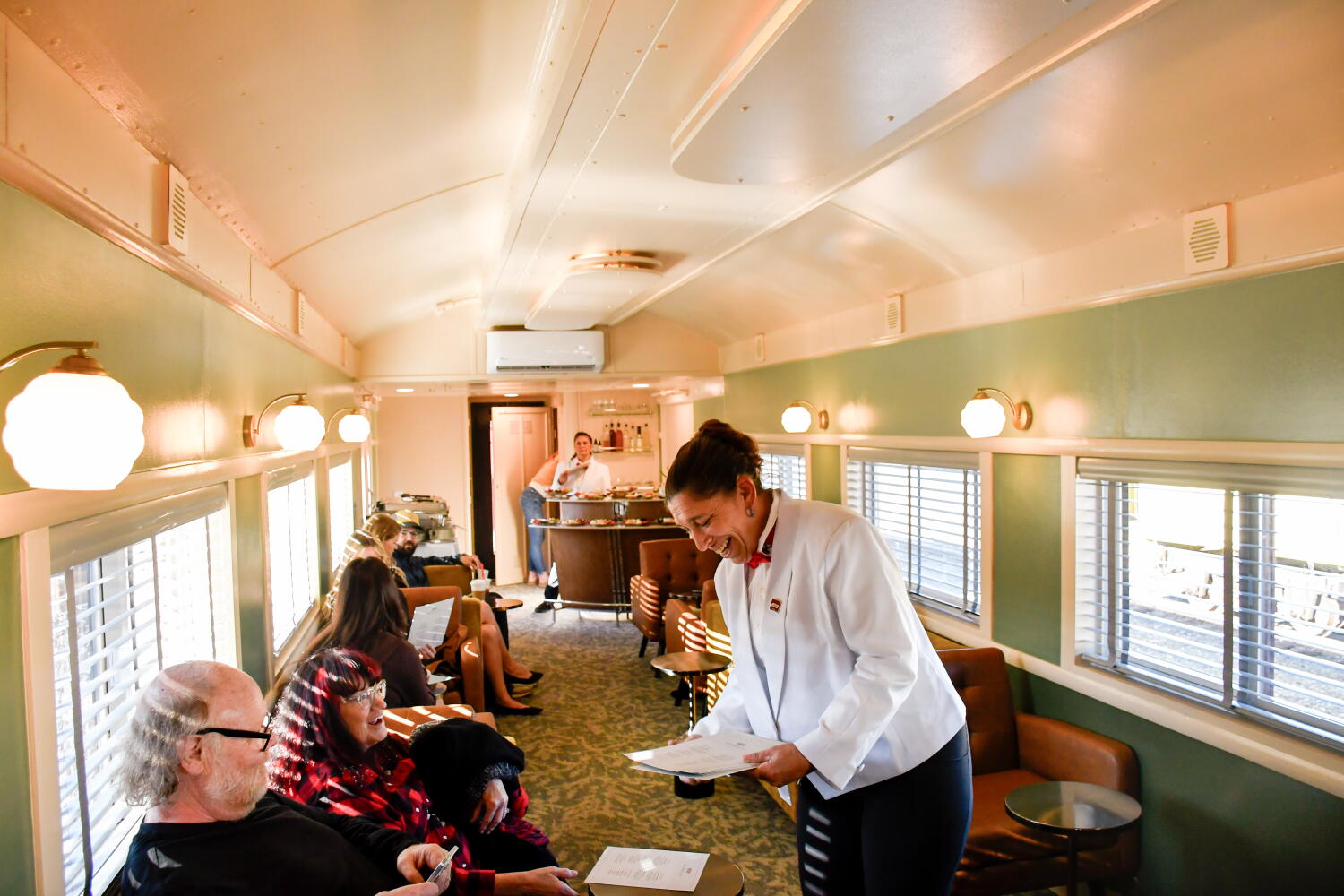
Heavy glass slides across polished wood while ancient timber passes just inches beyond the window frame, quiet and towering against the northern California sky. Along the winding rails of Mendocino County, a refurbished carriage rolls beneath the dense coastal canopy, carrying passengers who recline on plush couches with stiff drinks in hand. The vehicle is the Noyo, an adults-only salon car introduced by the historic Skunk Train. It represents a deliberate evolution in tourist mobility.
Everything about the interior suggests a retreat from the damp chill outside. Styled with overt fifties design cues, the lounge functions less like a rugged observation car and more like a private salon that happens to move along steel tracks. The tall redwoods remain visible through broad panes, yet the atmosphere belongs firmly to domestic leisure. Drinks arrive on small tables. Conversation stays low.
The Forest as Wallpaper
Forest journeys across this corridor, running between Fort Bragg and Willits near Highway 101, originated under starkly different industrial conditions. Mendocino Railway routes initially served timber camps and logging operations, hauling freight through steep terrain where ancient groves presented an obstacle to human commerce. Today, that relationship has reversed. The railway exists to display the forest, but the deployment of the Noyo indicates that the display must now be delivered through upholstered seclusion.
The commercial logic behind such retrofits is easy to understand. Operators often conclude that premium hospitality expands railway patronage by accommodating visitors who prefer mid-century seating to wilderness trekking. Providing cocktails and plush seating lowers physical barriers, introducing coastal woods to travelers who might otherwise bypass regional excursions entirely. That commercial calculation carries undeniable weight in competitive leisure markets.
Yet the spatial arrangement demonstrates an unmistakable aesthetic contradiction. What does an ancient woodland ask of the people who arrive at its perimeter? Traditionally, old-growth redwoods demanded humility, physical exposure and a confrontation with damp air and profound silence. Inside an adults-only cocktail car, that relationship shifts. The woodland is largely rendered as passing scenery.
Domesticating the Perimeter
When leisure infrastructure wraps the passenger in padded comfort, the surrounding environment becomes an ambient backdrop. The physical realities of the route—the scent of damp loam, the cold draughts off coastal rivers and the humbling scale of ancient bark—are filtered behind climate control and heavy upholstery. Landscape transforms from a sensory encounter into a curated visual performance.
This deliberate insulation mirrors wider leisure patterns observed across Pacific Rim travel corridors. Rather than requiring travelers to adjust their bodies to unfamiliar terrain, modern tourism operators increasingly build protective enclaves that transport domestic comforts directly into wilderness perimeters. Elevated boardwalks, glassed-in dining enclosures and moving cocktail bars all serve the same commercial purpose: softening the raw friction of the natural world so that it can be safely consumed without inconvenience.
The Skunk Train continues along its timbered track, carrying the Noyo between coastal terminal and inland depot. Through the windows, the tall redwoods stand indifferent to the velvet seating within. Passengers finish their drinks against the quiet glass, cushioned from the ancient grove that rolls endlessly beside them.
Sources
Newsletter
Pacific Daily
A curated briefing from Thailand, Asia-Pacific and the world.