The Fractured Frontier of Amazonian Gold
Informal mining networks along Suriname’s river borders expose the structural limits of state sovereignty and mineral governance.
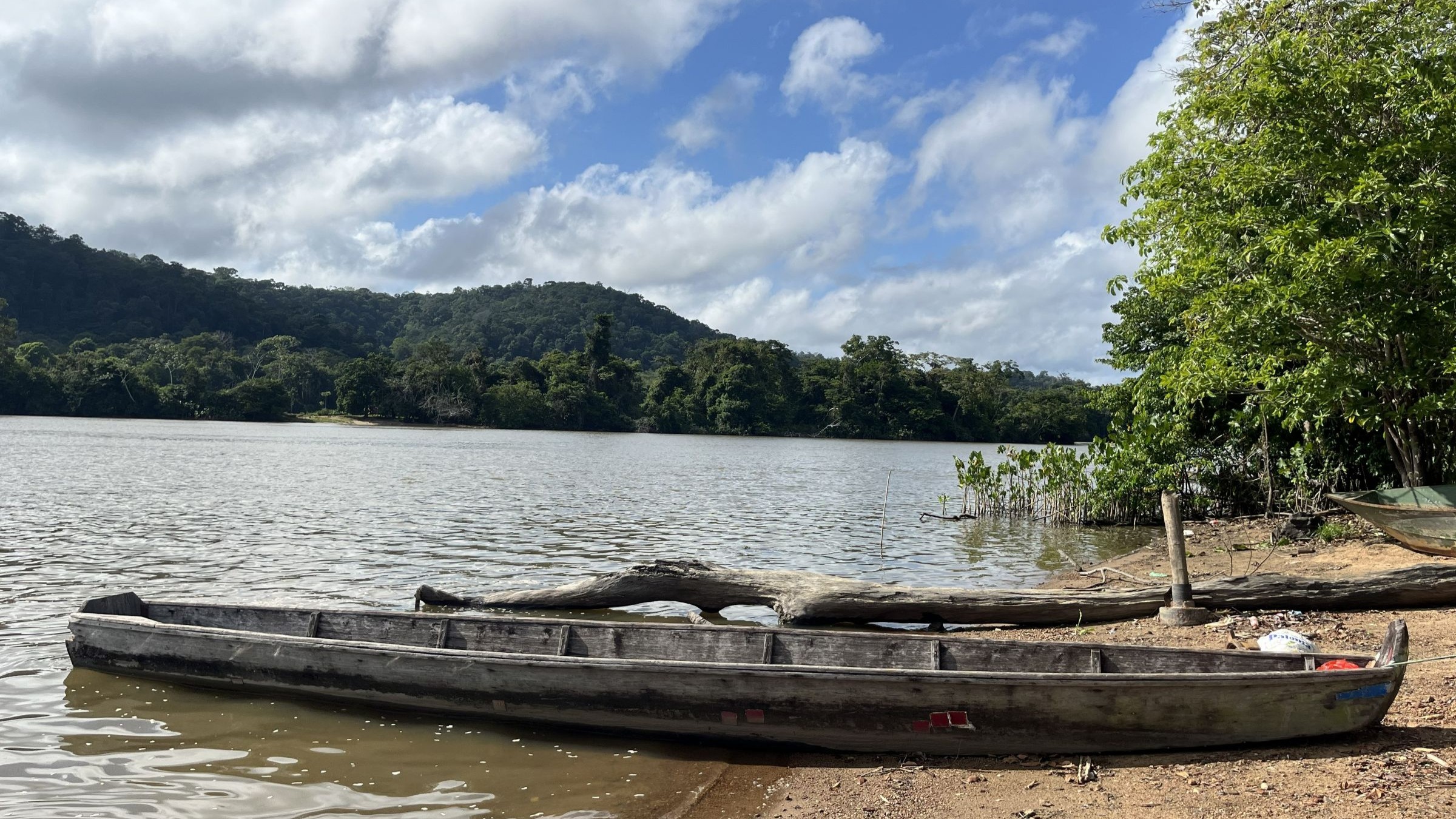
Around a million ounces of gold are extracted legally from Suriname every year, yet the underlying geography of extraction operates largely beyond the administrative reach of the state. In the remote river basins where the Amazon borders French Guiana, national authority dissolves into an informal resource corridor. Indigenous communities, particularly the Wayana around Kawemhakan, are left to manage the social and physical disruption caused by wildcat mining camps that clear swathes of sovereign forest. This dynamic is not merely an isolated environmental crisis in the deep rainforest. The structural outcome demonstrates how high global demand for minerals collides with an absent regulatory apparatus.
Historically, the dense waterways of the interior served as a protective barrier, sheltering populations such as the Saamaka who established autonomous settlements away from coastal colonial authority. That protective isolation has turned into acute vulnerability. Vast deposits of gold and other minerals beneath thousands of square kilometers of rainforest have pulled diverse commercial syndicates into ancestral lands. Along the Lawa River and its tributaries, local diggers operate in concert with Brazilian miners, while Chinese traders anchor the commercial posts that supply equipment and intermediate transactions. This frontier trade does not simply bypass official oversight; it actively displaces civil governance through extortion, armed robbery, and systematic violence.
Transnational supply lines and localized impunity
The composition of these river settlements illustrates how localized extraction networks link directly into trans-Pacific commercial flows. Chinese merchants operating deep along the Lawa River provide essential liquidity and retail goods, creating self-sustaining trading enclaves that function independently of formal banking or customs infrastructure. For policy strategists assessing commodity routes, the Amazonian interior reveals how informal supply chains adapt rapidly to geographic barriers that deter formal enterprise. Paramaribo remains largely incapable of projecting regular law enforcement across such distances, which permits cross-border syndicates to dictate the local terms of trade and security.
A common defense from administrative centers holds that resource-dependent economies must concentrate limited fiscal resources where they yield immediate national returns. Because formal mining concessions already produce around a million ounces annually under official oversight, direct military or police intervention in inaccessible borderlands is viewed as prohibitively expensive. Central authorities often treat remote river basins as peripheral zones where the high cost of persistent patrol operations cannot be justified by prospective tax receipts. This transactional view of statehood assumes that informal extraction remains contained within distant forest canopies without degrading institutional authority.
The regulatory vacuum on the border
That calculation misjudges the compounding hazard of institutional retreat. By permitting unauthorized camps to govern river transport and land use, the state allows informal economic actors to establish sovereign authority by default. Community responses reflect this structural absence. The Saamaka tribe has undertaken mapping and documentation projects to delineate territorial perimeters, attempting to construct an evidentiary defense against uncontrolled encroachment. These local documentation efforts serve as an improvised substitute for a legal title registry that the central judiciary has failed to guarantee.
Formal boundary mapping remains limited in its operational power when unsupported by statutory enforcement. Demarcation lines recorded on maps cannot inspect river vessels, close illicit airfields, or dislodge armed mining crews along the Lawa River. The unresolved tension confronting Suriname lies between its formal export ledgers in the capital and the real loss of territorial jurisdiction along its borders. Until statutory administration establishes an enduring presence in Kawemhakan, mineral extraction will remain governed by coercion and trans-border commercial syndicates.
Sources
Newsletter
Pacific Daily
A curated briefing from Thailand, Asia-Pacific and the world.