The Fiji Flying Circus: A Blueprint for Self-Reliance Beyond the Big Top
In Brisbane, a cultural act reveals a pragmatic ethos applicable to economic development across the Pacific.
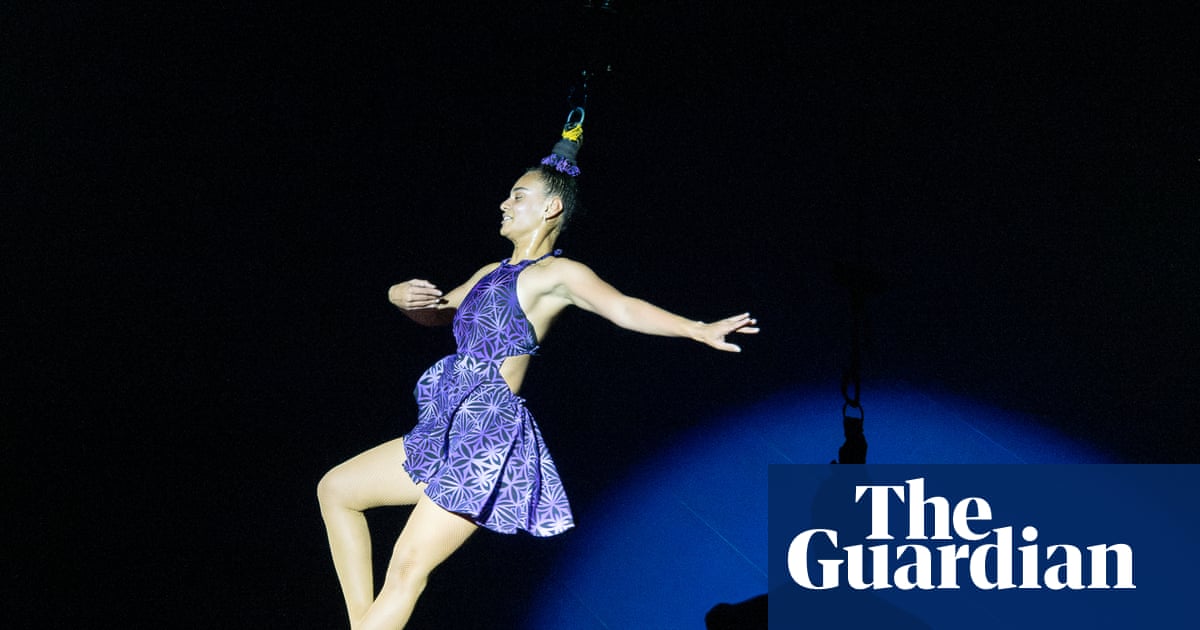
Beneath a circus tent in Brisbane, a young man, dressed as a bird, performs an aerial act. His ascent is powered not by elaborate machinery, but by a line of people outside the tent, their muscles straining, pulling a rope. These rope wranglers, who minutes earlier performed acrobatics themselves, embody a fundamental characteristic of the Fijian Flying Circus: everyone does everything. Performers are also stage builders, ticket sellers, and, crucially, the infrastructure that keeps the show aloft.
This communal, hands-on approach offers more than entertainment. It is, in its essence, a habit of self-reliance, a pragmatic response to resource constraints that often shapes how communities in the Pacific operate. The circus, as Guardian Australia Culture reported, teaches its performers a “valuable grab-bag of theatre and life skills.” These are not just artistic skills, but practical competencies in problem-solving, construction, and collective action, observed in performers setting up their own tent and seats two days before the show opened.
This model stands in quiet contrast to prevailing narratives of development and aid in the region. The Lowy Institute, for example, highlighted the need for Australia to build a “Pacific Olympics legacy” for Brisbane 2032. Such initiatives, while potentially beneficial, often focus on large-scale infrastructure or capital injection. The circus, however, demonstrates that foundational capacity can be built from within, through shared labour and multi-skilling. It suggests that economic stability might not always require external provision but rather an internal cultivation of versatile skills and collective responsibility.
Indeed, the Brisbane setting itself offers a telling context. Pacific leaders regularly convene in the city, as they did in July 2026, often discussing regional cooperation and economic pathways. Yet, amidst these high-level talks and concerns over external events—such as the May 2026 Cathay flight turbulence from Brisbane that injured ten people, an incident that echoes the region’s vulnerability to external shocks—the circus quietly presents an alternative. Its internal mechanism, where performers literally hold up their peers, suggests a self-contained system of support and production.
While this grassroots model fosters resilience and adaptability, its scalability and long-term economic impact remain subject to limitation. A circus, however ambitious, operates on a different scale than national economies. It does not replace the need for strategic investments or robust trade relationships, nor can it fully buffer against macroeconomic shifts. The sheer physicality of the circus’s operations, its “lo-fi, high-energy mix,” means it is intrinsically linked to human effort and direct engagement, which cannot always be replicated in larger industrial or service sectors.
What the Fijian Flying Circus does offer, however, is a discernible blueprint for local capacity building. It proposes that the habits of resourcefulness and multi-skilling, learned in the demanding environment of performance and production, are directly transferable to broader economic contexts. When a community can build its own stage, choreograph its own movements, and collectively bear the weight of its aspirations, it cultivates a foundational strength that lessens dependence and fosters a unique, self-determined path forward.
Sources
Newsletter
Pacific Daily
A curated briefing from Thailand, Asia-Pacific and the world.