The Dangerous Currents Powering Central Thailand's River Cargo
A capsized tugboat in Ayutthaya exposes the physical risks accepted by the working crews who keep inland freight moving during the wet season.
SINGAPORE
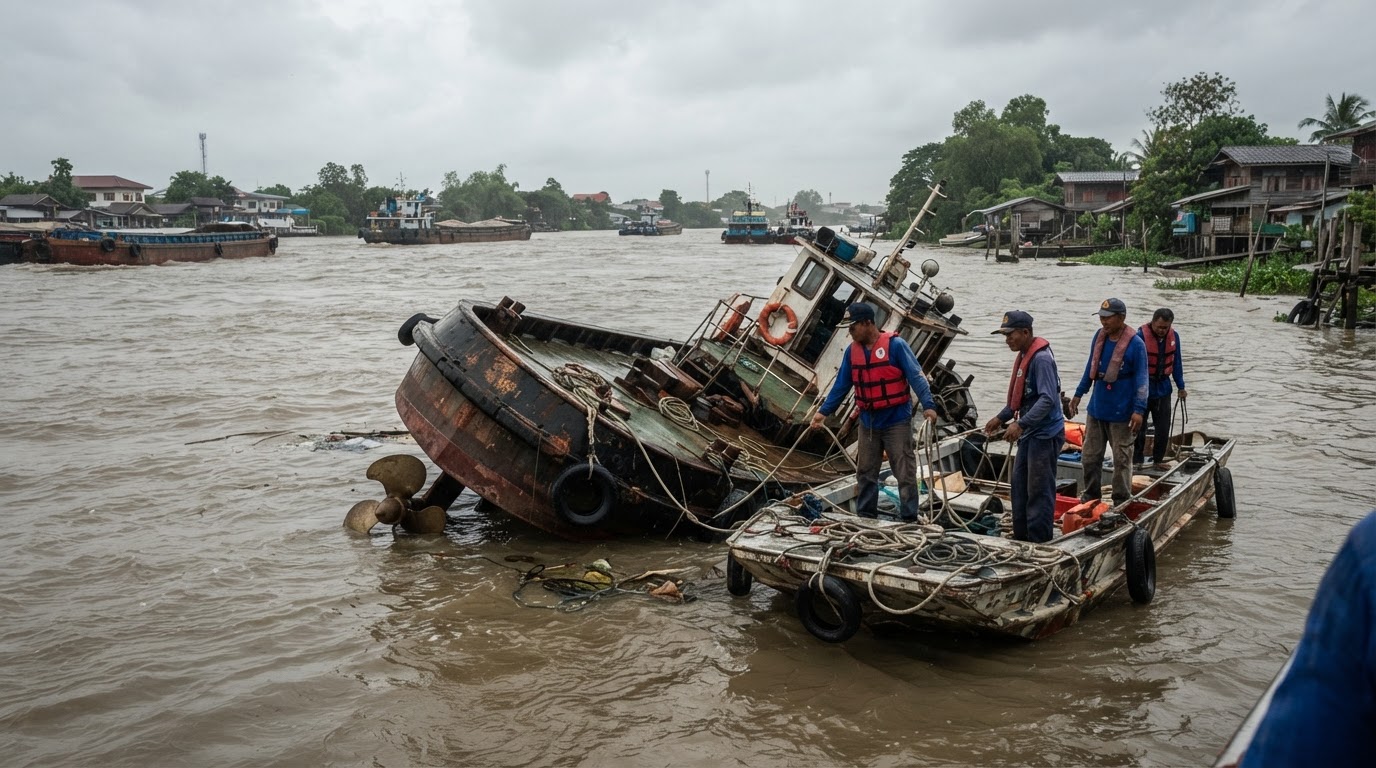
A working river junction during high water leaves almost no margin for mechanical strain or sudden hydraulic shifts. At 1.30pm on Sunday, turbulent waters at the point where the Pasak and Chao Phraya rivers meet pulled a working tugboat down in Phra Nakhon Si Ayutthaya district. The accident happened directly in front of Wat Phananchoeng while numerous tugboats were operating simultaneously, towing industrial barges out of the Pasak River and into the Chao Phraya River. Rescuers eventually pulled the 62-year-old boatman from the current with a broken arm after he surfaced seconds following the sinking and kept himself afloat. That survival spared a family a sudden bereavement, but the sinking exposes the steep physical price paid by the labour force running Thailand's inland cargo network during the wet season.
The confluence in Ayutthaya functions as a vital conduit for freight moving across central Thailand toward Bangkok. Towing operations run continuously through these channels, hauling bulk supplies between industrial depots along the Pasak River and shipping lanes downstream. When both rivers run high during the annual wet season, the volume of water turns this meeting point into an accident-prone bottleneck where opposing currents clash. Handling several heavily loaded barges through that cross-flow requires intense engine power and precise steering from relatively modest vessels. For crews who spend their weeks navigating these waterways, every delivery run demands a calculated gamble against unpredictable currents.
Freight Demands and Seasonal Currents
Transporting bulk goods across central Thailand keeps small tugboats working through hazardous river junctions even at the height of seasonal discharge.
Inland waterways handle substantial cargo volumes because river transport remains far cheaper and cleaner than moving freight by road. Hauling stone, sand, and manufacturing materials by barge eases traffic congestion on arterial highways and lowers operating costs for logistics firms. However, that commercial efficiency rests on the assumption that boat operators can absorb the dangers of seasonal surges without systemic upgrades. When several tugs attempt to cross the junction at the same moment, the combined wake and conflicting currents multiply the pressure on each hull. A single loss of engine purchase or a sudden transverse roll can overturn a vessel before its pilot can steer out of danger.
Freight companies may counter that rivermen possess extensive navigational knowledge gathered over decades on these waters. Thousands of barges complete the transit through Ayutthaya each season without mishap, demonstrating that seasoned crews understand local river behavior under typical wet-season stress. Moving cargo during periods of high water is seen by commercial operators as a standard logistical necessity rather than an irresponsible gamble. From the perspective of fleet managers, experienced hands like the 62-year-old driver know how to manage sudden emergencies, as his rapid escape and survival demonstrate.
The Human Cost of Routine Transport
Yet relying on individual competence to counter systemic environmental danger places an unfair burden on an aging workforce. An experienced river worker should not need to swim for his life through turbulent water to compensate for the hazards of crowded river corridors. Navigational conditions where the Pasak and Chao Phraya rivers converge are known to be hazardous whenever river levels peak. Continuing to run high-density barge traffic through an accident-prone bend without adjusting dispatch intervals or regulating convoy sizes leaves working crews vulnerable to catastrophic mechanical stress.
Preventing further capsizes will require river transport regulators to rethink how barge convoys are staged during the wet season. Implementing staggered departure schedules, capping the number of vessels entering the confluence simultaneously, and enforcing stricter mechanical standards could significantly reduce turbulence risks around Wat Phananchoeng. The survival of an injured boatman offers relief, but it should not obscure the preventable nature of the accident. Long-term safety on Thailand's working rivers depends on whether freight schedules will finally yield to hydrological realities.
Sources
Newsletter
Pacific Daily
A curated briefing from Thailand, Asia-Pacific and the world.