The Cost of Retail Politics After the Wangaratta Attack
Charging a suspect over a vehicle strike on independent lawmaker Helen Haines exposes the widening structural liability between public accessibility and representative security
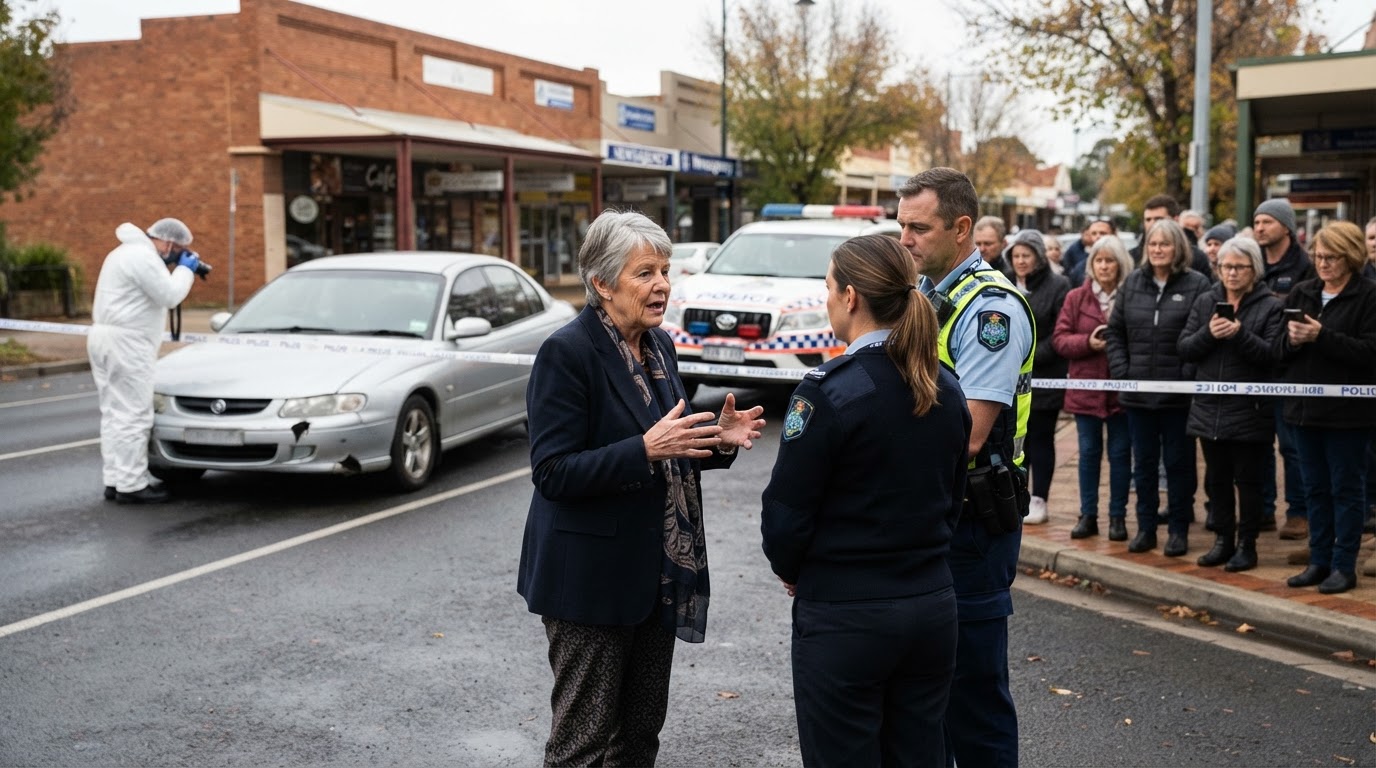
A sitting lawmaker lost a leg outside her regional office, and the state responded by treating the collision as a federal breach of governance. On Tuesday, Oct 20, 2026, Victoria police charged a man with dangerous driving causing serious injury, intentionally causing serious injury, and the federal crime of harming a public official. The charges follow an alleged targeted car strike against independent member of parliament Helen Haines.
Tributes and flowers gathered outside her electoral office in Wangaratta. Yet behind the physical wreckage sits an unhedged operational cost. Representative democracy functions on unpriced physical exposure. Lawmakers maintain open shopfronts, hold public clinics, and walk regional streets without protective cordons. When that exposure turns catastrophic, the institutional incentive structure shifts abruptly from open constituent access toward defensive fortification.
Political capital for independent lawmakers depends entirely on retail accessibility. Unlike major-party figures sheltered inside capital bureaucracies, an independent operates through direct local contact.
The Breakdown of Institutional Proximity
Security planning historically assumes hostile intent originates from ideological adversaries or anonymous agitators. Physical hardening against strangers is an established public expenditure. Bollards, perimeter fences, and credentialed entry systems resolve that specific risk profile through conventional capital allocation.
When an alleged strike against a sitting official occurs within familiar local bounds, administrative screening cannot easily identify the point of failure.
Here, that defensive logic collapses. A statement released by the suspect's parents confirmed that Haines had been "our friend for more than 20 years". The alleged strike occurred against a background of direct personal familiarity, not distant radicalization. Static surveillance and architectural barriers cannot screen against the friction of longstanding local ties.
Regional electorate offices function as administrative retail counters. Forcing those sites to adopt hardened security compounds introduces acute operational friction. Access tightens. Operating expenses multiply. Direct constituent interaction declines as perimeter controls take precedence.
Shifting Liabilities in Public Service
Defenders of the existing model argue that insulation damages democratic legitimacy. Open access prevents political alienation, keeping elected representatives accountable to the communities that grant them mandates. Walling off representatives behind physical cordons, by this logic, breaks the very social contract that parliamentary government requires.
That argument externalizes the physical liability onto the individual official. Unfettered access functions as a subsidy extracted directly from lawmaker safety. Once an intentional vehicle strike becomes part of the operating reality for rural representatives, unhedged personal vulnerability ceases to be sustainable.
Federal charges filed in Victoria establish that the commonwealth views the incident as a structural assault on the state rather than a routine vehicular crime. Yet prosecutorial action remains strictly backward-looking. Penalties punish harm after the physical damage occurs; they provide zero upstream protection for the next exposed office.
The broader outlook for parliamentary representation now depends on whether democratic systems can fund protective operational infrastructure without severing the local accessibility that legitimizes elected office.
Sources
Newsletter
Pacific Daily
A curated briefing from Thailand, Asia-Pacific and the world.