The Cost of Cultivating Terroir Under Borrowed Time
Randall Grahm’s documentary portrait exposes the tension between California viticultural ambition and the fragile human labor required to plant for the future.
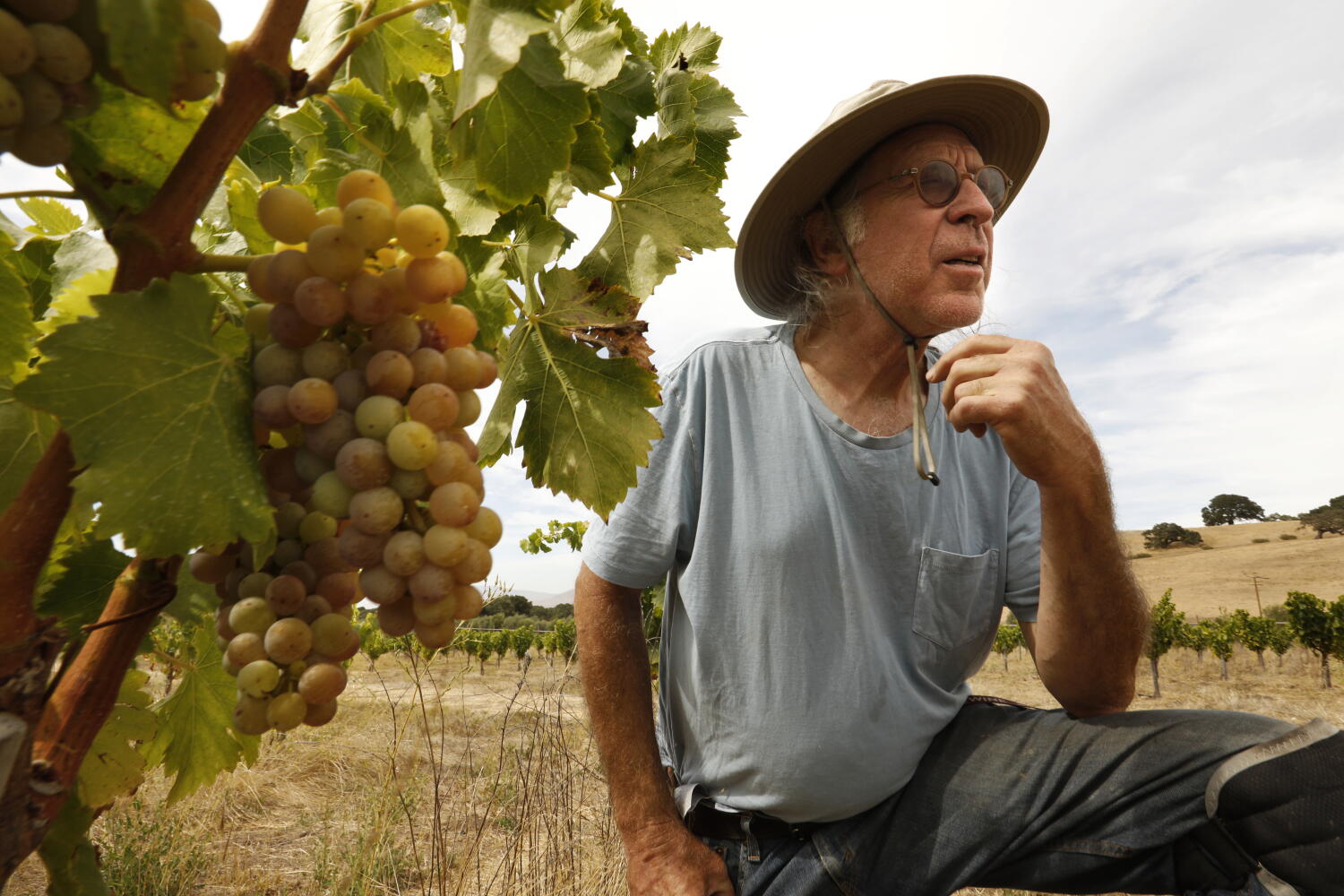
Planting a vineyard demands an act of agronomic faith that operates on decades, yet human vitality runs on a much shorter clock. Viticulture rewards patience above almost every other technical input. Vines require years to sink roots into poor soil, adapt to microclimates, and yield fruit capable of translating geology into character. When the person driving that planting faces a degenerative physical limit, the true cost of cultivating terroir becomes an immediate question of working on borrowed time.
That tension sits at the center of Jeffrey Reiner’s documentary, "The Terroirist." The film follows Randall Grahm, the California winemaker celebrated as the state's original Rhône Ranger, as he confronts a Parkinson's diagnosis while launching his most ambitious undertaking to date: establishing a vineyard in San Benito County. Known over decades for upending domestic convention through Bonny Doon Vineyard and labels like Big House and Cardinal Zin, Grahm spent his career challenging the industrial polish of California cellars by championing varieties rooted in France. His latest venture, as portrayed on screen, shifts the question from cellar ideology to biological endurance.
The Agronomic Friction of Place
Winemaking technique is frequently discussed in the abstract language of philosophy, but on the ground it amounts to physical attrition. Site selection in San Benito County requires constant trial, testing varieties against drought, shifting soils, and exposure. Establishing a new vineyard from scratch involves preparing ground, nursing fragile rootstocks, and accepting years of non-commercial output before discovering whether the site holds any genuine promise. Grahm’s ambition has long centered on discovering true site expression rather than assembling predictable commercial blends, an objective that visibly demands repetitive, manual scrutiny across successive seasons.
Filmmaker Jeffrey Reiner, previously known for dramatic television productions including "Friday Night Lights" and "The Affair," focuses his lens on this direct friction between physical fragility and agricultural stubbornness. According to the documentary's depiction, Parkinson's imposes tremors, fatigue, and diminishing mobility precisely when field viticulture requires relentless daily stamina. The camera records that toll directly without softening the physical reality of the work.
Succession Against Individual Obsession
A counterargument often advanced by the wine trade is that serious vineyard projects outlast their founders by design. Corporate cellars and family estates across the Pacific Rim routinely rely on institutional succession, arguing that an estate’s soil and vines possess an endurance independent of any single architect. In this reading, establishing a site in San Benito County creates an enduring asset whose ultimate realization can be carried forward by vineyard managers and subsequent generations.
Yet that institutional argument falters when applied to idiosyncratic viticulture. Grahm’s career has never conformed to standard corporate continuity. His work with Rhône cultivars succeeded because of relentless personal trial, eccentric intuition, and a willingness to abandon commercial security for speculative terroir. When a venture depends entirely on the singular palate and unorthodox experiments of one maker, the knowledge base cannot simply be transferred into an operational manual. The unresolved constraint remains the biological calendar: vines require decades to prove their worth, while the physical capacity to guide them remains strictly finite.
Sources
Newsletter
Pacific Daily
A curated briefing from Thailand, Asia-Pacific and the world.