The Arithmetic Behind Asia's Cruise Expansion
Headline growth rates of nearly twenty per cent mask how tightly maritime passenger volumes remain concentrated around a handful of regional ports
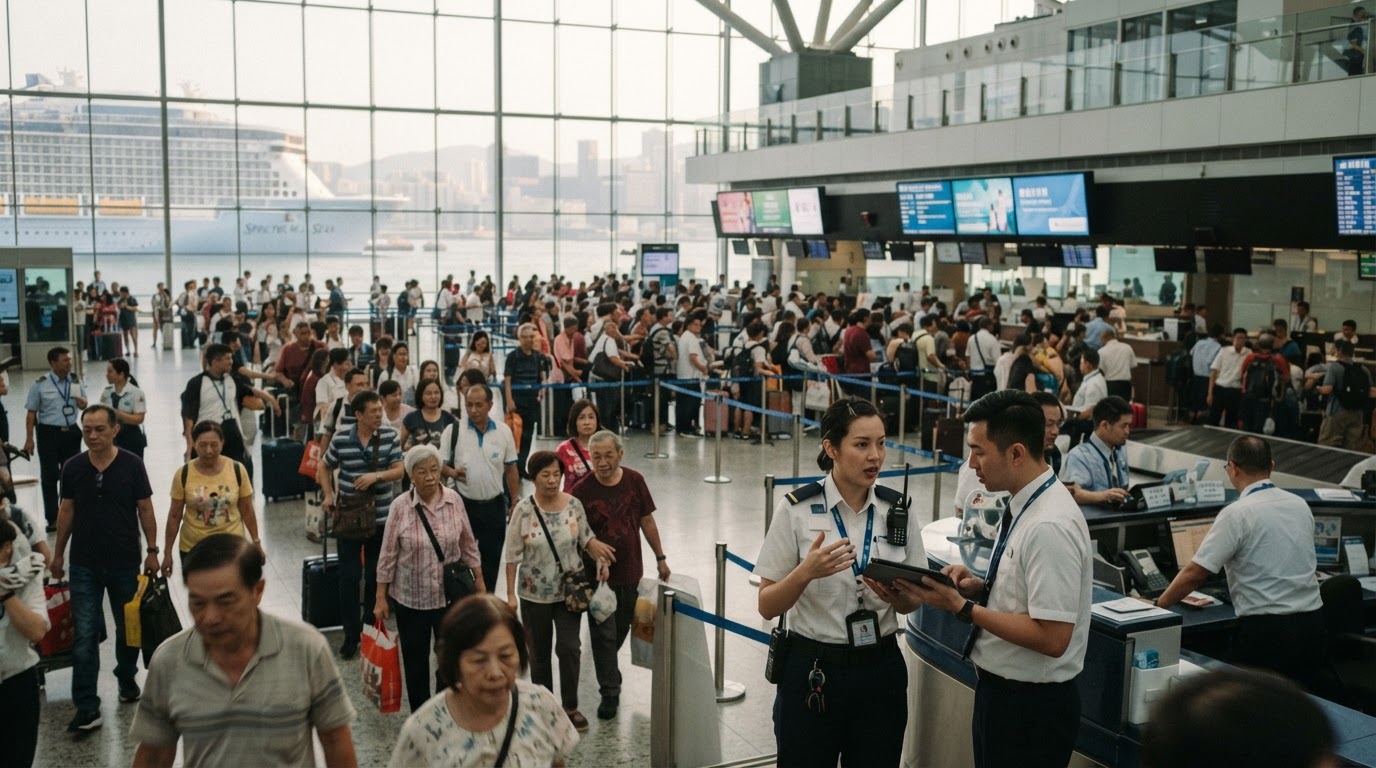
SINGAPORE
Passenger volumes across Asia-Pacific waters expanded by 19.6 per cent to push past three million travellers, according to Cruise Lines International Association data released at ITB Asia. That headline figure establishes the regional market as the fastest-growing in the world. Maritime executives assembled for the Cruise Leaders' Panel: The Future of Cruise Holidays in the New Travel Landscape framed these metrics as definitive evidence of an irreversible structural shift across the territory.
Yet top-line percentages often overstate market transformation. A 19.6 per cent lift sounds formidable against mature European or North American baselines. Across a vast ocean basin, three million passengers remains a remarkably small aggregate baseline.
Industry confidence rests on the assumption that virgin domestic markets are finally moving seaward. Speakers pointing to nascent feeder corridors cite outbound interest from India, Indonesia and the Philippines. In India, travel intermediaries such as STIC Travel Group, led by CEO Isha Goyal, watch port developments in locations like Chennai and Kerala alongside corporate outbound bookings to gauge whether sea voyages can evolve beyond novelty itineraries into repeatable holiday choices.
The Hub Dependency
Commercial realities tell a more guarded story about geographical distribution. Despite aspirations to scatter maritime traffic across emerging archipelagic routes, cruise logistics in the region remain anchored to established municipal hubs. Singapore continues to act as the primary operational turnstile, combining air connectivity, bunkering services and regulatory oversight.
The city-state has actively sought to institutionalise that position. The Singapore Tourism Board stepped in to regulate cruise terminal operators directly, establishing baseline operational standards while sealing institutional commitments like a three-year tie-up with Princess Cruises to add ships and extend regional itineraries. Operators such as Intercruises Shoreside & Port Services, where regional executives like Wen Ciu Lee monitor berth capacity, know that itinerary design is dictated by quay specifications and border processing speed rather than consumer sentiment alone.
Passenger numbers can expand swiftly on paper, but maritime routes can only multiply as fast as physical berths and shore infrastructure permit.
This structural bottleneck produces a sharp divergence between regional aspiration and operational capacity. While tourism authorities seek port calls, secondary coastal nodes rarely possess the deep-water berths, passenger handling terminals or customs clearance required by contemporary fleets. Capital requirements to upgrade ports in places like Chennai or secondary Indonesian harbours are significant, and municipal balance sheets face competing infrastructure priorities.
Limits to Velocity
The genuine counterargument to such skepticism is demographic momentum. Rising middle-class discretionary spending in Indonesia, India and the Philippines creates a pool of first-time cruise passengers that existing regional fleets can barely absorb during peak seasons. Even if voyages remain concentrated on short Singapore-hubbed loops, filling cabins does not require deep inland penetration; it merely requires capturing a fraction of existing metropolitan travellers seeking premium maritime leisure.
That dynamic creates a durable floor for booking volumes. Luxury operators and mainstream carriers alike have expanded their Singapore and regional deployments precisely because high-yield bookings absorb capacity without requiring carriers to risk unproven secondary destinations. Growth can continue at double digits simply by running larger hulls along well-worn maritime lanes.
Scaling beyond the current baseline will eventually require confronting physical constraints. Industry associations celebrate crossing the three-million threshold as proof of regional dominance, yet the sector remains tethered to a handful of deeply engineered ports. Until secondary harbour facilities across India, Indonesia and the wider Asia-Pacific match the throughput of established hubs, the regional boom will remain less an ocean-wide awakening than a disciplined, tightly circumscribed run between familiar docks.
Sources
Newsletter
Pacific Daily
A curated briefing from Thailand, Asia-Pacific and the world.