Thai EV Transition Faces Infrastructure Challenges as Incident Highlights Safety Gaps
An electric vehicle crashing into a Lampang petrol station toilet underscores the systemic pressures on infrastructure during Thailand's push for electrification.
SINGAPORE
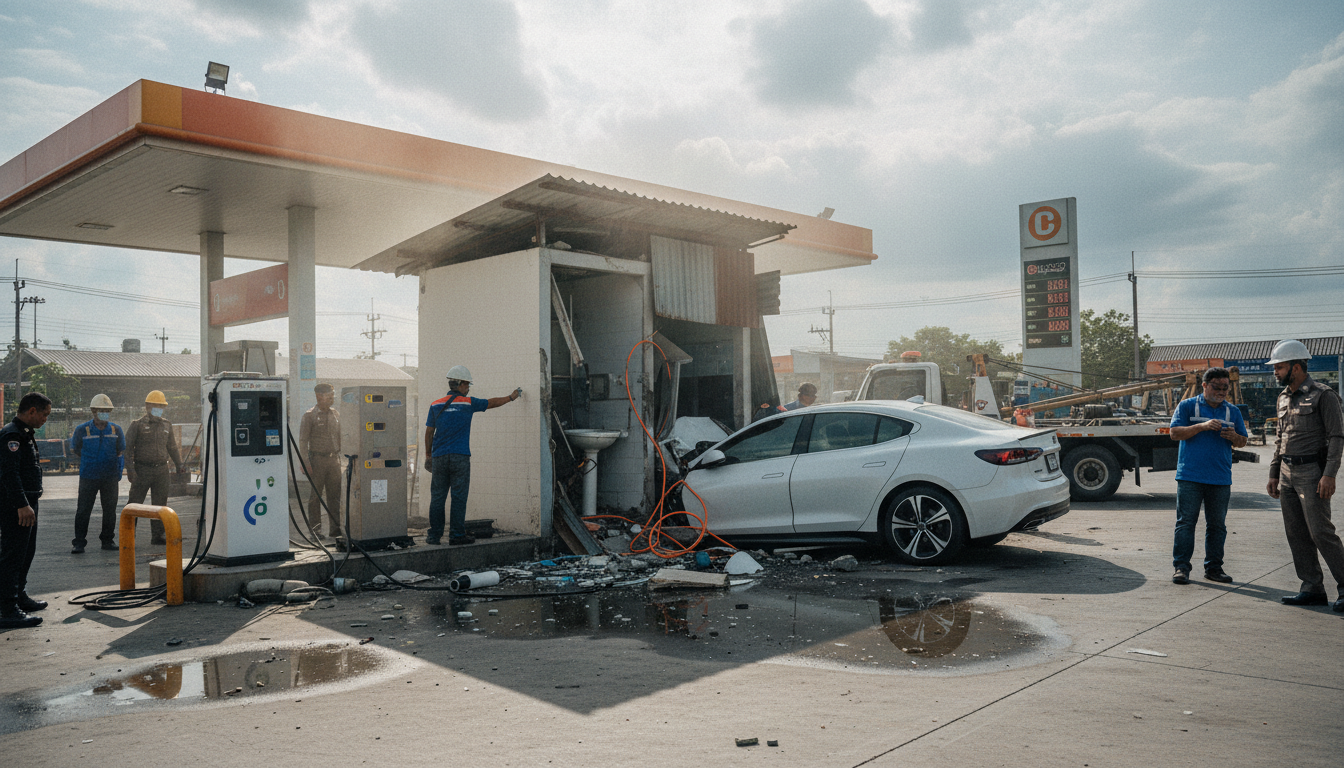
A white electric sedan crashed into a bathroom at a PT Petrol Station in Lampang on October 5, injuring 21-year-old Apichai who was inside. The impact, which occurred around 2:30 PM, caused sections of the bathroom walls and doors to collapse, with a wall, wooden door, and broken toilet pan falling onto him. This incident occurred while Thailand is actively working on a $700 million plan to replace 80,000 vehicles with electric models.
The increasing adoption of electric vehicles in the Asia-Pacific region, fueled by factors such as a fuel crisis, introduces new infrastructure demands beyond just charging stations. The Asian Development Bank launched a $70 billion plan for energy and digital infrastructure in the Asia-Pacific region, indicating the scale of investment needed for a broader transition. Schneider Electric is also establishing a training hub in Malaysia, signaling efforts to build capacity for the electric ecosystem. However, the Lampang incident suggests that the rapid introduction of new vehicle technologies can outpace the adaptation of existing physical infrastructure, leading to unforeseen risks.
While the specific cause of the Lampang crash remains unreported, the event highlights a potential vulnerability in the broader transition to electric mobility. The focus on replacing vehicles and expanding charging networks often overshadows the need to assess how these new vehicle types interact with older, static environments. The sheer force capable of collapsing concrete and wood in a standard service station toilet points to the kinetic energy involved, regardless of the vehicle's propulsion type. As electric vehicles become more commonplace, the frequency of such incidents might rise if surrounding infrastructure is not upgraded or if safety protocols are not reconsidered.
The Thai government's $700 million EV plan aims to significantly increase electric vehicle penetration. This drive, alongside regional interest in decarbonisation and digital infrastructure investments, indicates a clear policy direction towards electrification. However, the incident in Lampang raises questions about the comprehensive nature of these plans. Beyond manufacturing and charging, the structural integrity of public spaces, parking facilities, and even common service station layouts may require re-evaluation in anticipation of a future dominated by electric vehicles. The unresolved constraint remains the gap between ambitious policy targets for EV adoption and the slower, more complex process of adapting the physical environment to accommodate them safely.
Sources
Newsletter
Pacific Daily
A curated briefing from Thailand, Asia-Pacific and the world.