Television Redemption and the Working Kitchen
Screen visibility offers commercial leverage across the Pacific rim, but real culinary balance sheets demand presence on the pass
SINGAPORE
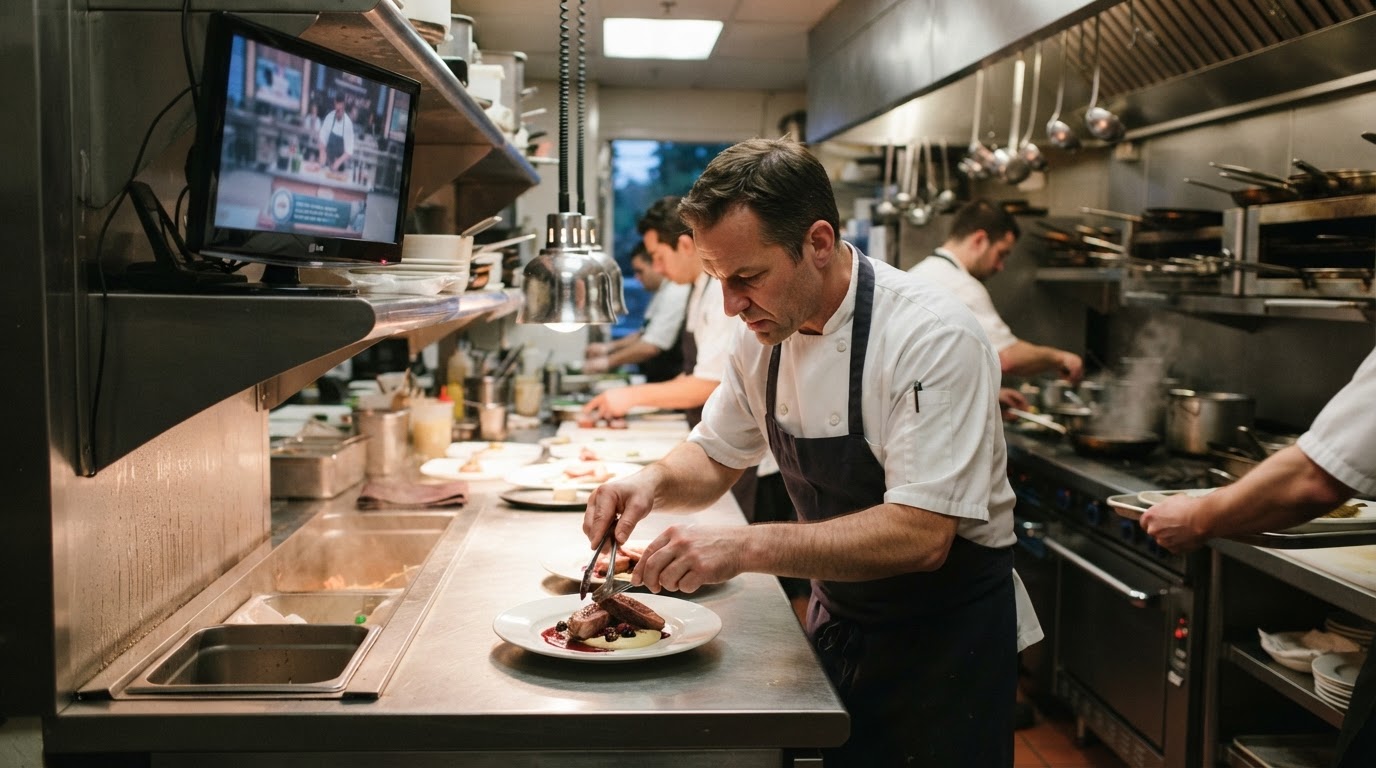
Television kitchens reward speed under artificial duress, while brick-and-mortar dining rooms penalise inconsistent prep and absentee ownership. The mechanics of the broadcast studio compress food preparation into timed spectacle, stripped of inventory management, staff retention, and margin control. When Vish Mayekar announced his return to the Top Chef Canada set alongside fellow Vancouverite Katy Cheung, the move highlighted the modern dilemma facing independent culinary operators across Pacific hubs. After competing in season 10, the chef behind ELEM, which opened its doors in Mount Pleasant in 2024, is once again betting on screen notoriety to underwrite physical enterprise. Maintaining standards across daily dinner services demands physical oversight, yet standing behind a stove rarely generates the cultural capital needed to keep tables full.
Broadcast competitions operate as commercial megaphones rather than genuine evaluations of restaurant viability. Producers assemble high-heat challenges to generate conflict, editing kitchen errors into dramatic arcs of personal redemption. Mayekar termed the venture redemption time on Instagram, acknowledging the emotional script that broadcast television requires. Such appearances can instantly fill reservation books across competitive dining corridors like Vancouver, where culinary influences and consumer ties to Japan and India intersect. Yet the translation of screen fame into durable dining stability remains fraught with friction, because television rewards theatrical flair rather than repeatable kitchen systems.
The Cost of Absence
Running a service kitchen requires relentless technical precision that cannot be delegated without financial risk. A head chef stepping away from the pass to film unscripted television creates an operational vacuum that guest expectations will not forgive. In Mount Pleasant, where independent dining rooms face compounding supply pressures, the brand equity generated by television provides no immunity against structural overheads. Broadcast exposure is ephemeral, but fixed lease costs and payroll remain immovable realities. When an executive chef departs for production, line cooks must shoulder the burden of consistency without the founder who defines the palate.
That vulnerability is hardly theoretical. The Pacific coast dining sector consistently illustrates how broadcast celebrity fails to insulate operators from commercial failure, demonstrated by the decision of a bakery brand founded by a MasterChef Canada winner to close all its locations. Meanwhile, international corporate capital continues to alter the competitive landscape, from a Japan-based noodle restaurant establishing its first Richmond outpost to a three-time James Beard Award-winning chef arriving in the market. Local proprietors must now compete against both deep-pocketed corporate operators and Michelin-recommended brands while maintaining consistent craft. Media prestige draws customers through the front door once, but only rigorous prep and impeccable kitchen execution ensure they return.
Calculated Leverage
Defenders of the screen tournament argue that broadcast television remains an irreplaceable hedge against market obscurity. Securing independent backing without personal celebrity has become nearly impossible as commercial rents and ingredient inflation escalate across metropolitan centers. A competitive television run functions as capitalisation through publicity, providing independent operators with bargaining power against institutional landlords and commercial lenders. If a returning run on Top Chef Canada delivers fully booked weekend covers, the temporary operational disruption might seem entirely rational to an independent business trying to stand out in a saturated marketplace.
Even so, commercial exposure cannot resolve the underlying labour equation of craft cooking. Media attention brings initial surges of curious diners, but long-term patronage depends entirely on what leaves the line on an unrecorded Tuesday evening. The fundamental discipline of running a restaurant lies in executing identical technical steps thousands of times without an audience cheering for a comeback. By returning to the studio, Mayekar and Cheung accept an uneasy bargain: trading kitchen focus for broadcast reach, hoping that transient screen redemption will outlast the permanent grind of the dining room floor. Ultimately, the camera captures the drama of cooking, but the balance sheet registers only the discipline of service.
Sources
Newsletter
Pacific Daily
A curated briefing from Thailand, Asia-Pacific and the world.