Suburban Condominiums and the Quiet Mechanics of Rendition
The arrest of a teenage Norwegian fugitive in Samut Prakan shows how residential fringes bear the weight of transnational policing.
SINGAPORE
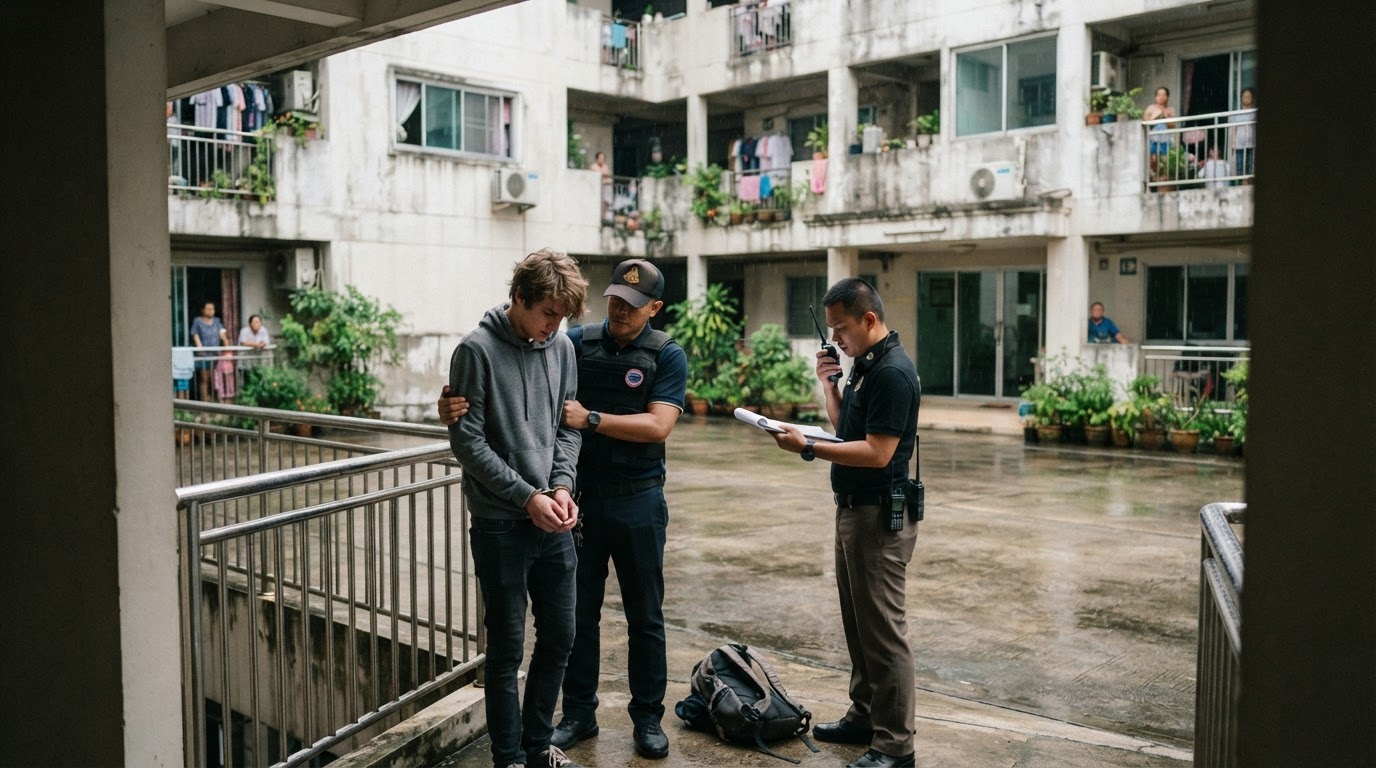
Rental corridors in suburban condominiums are designed for commuter privacy rather than international intrigue. That domestic quiet collapsed Wednesday morning in Bang Phli district. Police officers moved decisively against a nineteen-year-old Norwegian national wanted across borders for attempted murder and causing serious injury, detaining him inside a standard residential tower. Known to authorities only as Olaf, the suspect had taken shelter in Samut Prakan until an Interpol Red Notice triggered his apprehension. His presence was mundane, unremarkable, and virtually indistinguishable from that of hundreds of workers residing along the eastern perimeter of the capital.
The violence that prompted the warrant occurred far away in Norway. According to Pol Maj Gen Songprot Sirisukkha, commander of Immigration Division 3, the teenager allegedly stabbed a fifteen-year-old boy during an altercation over e-cigarette sales. Confronted by investigators, Olaf admitted his identity immediately. Thai authorities began deportation.
Behind the procedural arrest lies a wider systemic dilemma regarding how modern fugitives navigate urban edges while avoiding detection.
The Suburban Shield
Such cases reveal the quiet mechanics of rendition as they unfold far away from formal border gates. Metropolitan policing tends to celebrate airport biometric gates and computerized entry scans, yet foreign fugitives regularly slip past perimeter defenses before an alert reaches Bangkok. They settle in commuter towers. High-density developments across Samut Prakan offer flexible tenancy terms, minimal background scrutiny, and total personal anonymity. Someone fleeing a violent felony can buy groceries, lease an apartment, and vanish among airport staff and factory workers without raising alarms. The economic design of these suburban fringes provides an unwitting shield. Landlords require little more than a cash deposit, while building staff manage hundreds of turnover units without the inclination or authority to question foreign guests.
This operational dynamic shifts substantial daily risk onto unsuspecting neighbors who share residential stairwells with wanted suspects.
The real friction of international flight shifts directly into residential buildings where neighbors bear uncalculated risks.
Defenders of current practice maintain that transnational enforcement performed exactly as built. Immigration Division 3 acted promptly on the Interpol Red Notice, took Olaf without gunfire, and prepared the legal machinery of deportation. Cross-border communication between European police agencies and Thai authorities clearly succeeded in this instance. Legal institutions can point to the arrest as evidence that multilateral cooperation eventually catches up with individuals who flee justice. The fugitive found no permanent safe harbor, and the state resolved its statutory obligation smoothly.
Gaps in the Pipeline
That tactical success nonetheless highlights structural lags in transnational security protocols. A foreign national facing criminal accusations in Europe can easily board a scheduled long-haul flight, clear routine airport border gates upon arrival, and unpack his luggage long before judicial authorities abroad issue an international notice. Border guards cannot spot invisible warrants. By the time an international red alert finally circulates through Bangkok, an alleged offender has already secured a private flat on the urban fringe. The procedural interval between the commission of a violent offense overseas and the publication of an Interpol notice creates a window of effortless movement. During those unmonitored days, the suspect is merely another tourist or short-term tenant enjoying unhindered access to metropolitan transit and residential housing.
Deportation delivers legal closure for state bureaucracies, but suburban condominiums remain exposed to future evasions. Building managers hold no investigative tools beyond scanning photo IDs, leaving residential communities completely unaware of who occupies adjacent rooms. Transnational policing relies on catching up after the fact, treating residential proximity to violent crime as an acceptable friction. Until international registries accelerate real-time intelligence before suspects take flight, the quiet outskirts of Bangkok will continue to shoulder the hazards of rendition.
Sources
Newsletter
Pacific Daily
A curated briefing from Thailand, Asia-Pacific and the world.