Police extortion case highlights structural vulnerability for Thailand's tourism-dependent economy
An arrest in Chiang Mai reveals persistent challenges within state institutions, impacting foreign investment and national revenue streams.
SINGAPORE
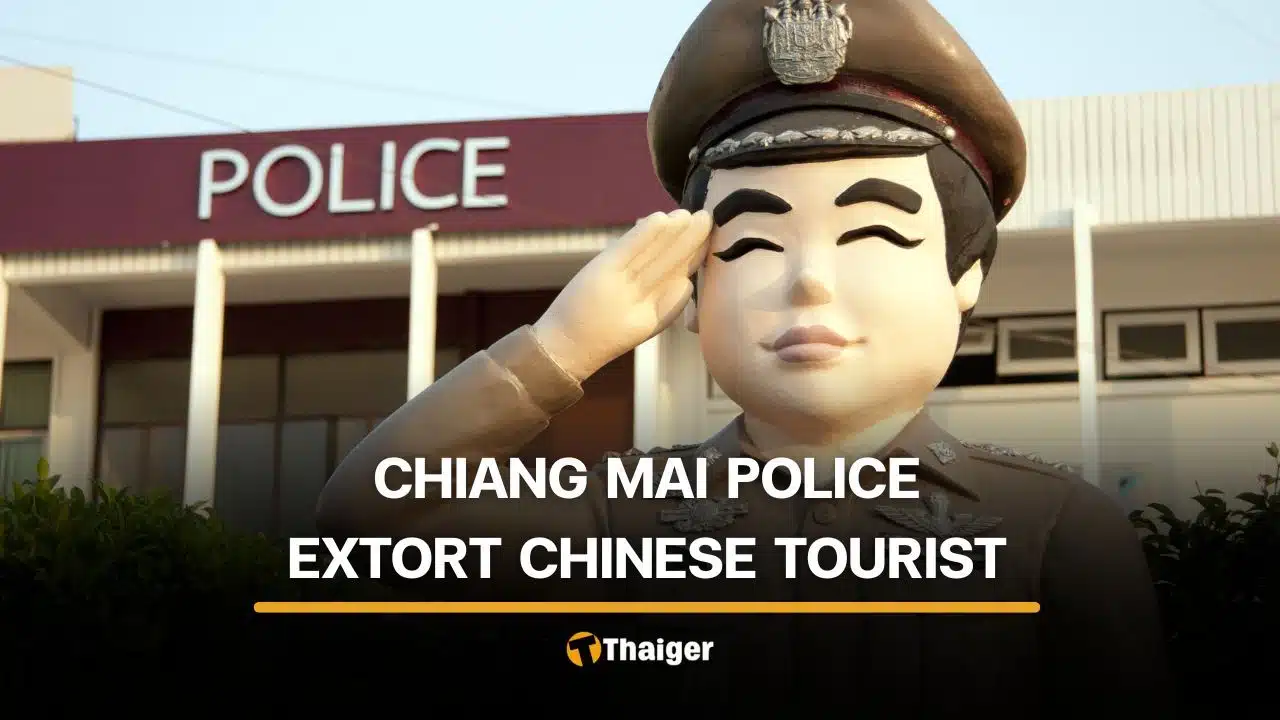
The arrest of a 57-year-old police lieutenant colonel, an inspector with the Special Operations Sub-Division of Provincial Police Region 5, alongside three other individuals, on September 15, marks a critical inflection point for Thailand’s economic strategy.
The group, whose identities beyond the lieutenant colonel's rank and the names Serksak, Narakorn, and Siraphob, 28, 39, and 38 respectively, were not disclosed, faces charges under Anti-Corruption Court warrants. This action followed a complaint from a Chinese national alleging extortion of 200,000 baht in San Kamphaeng district, Chiang Mai province. The specific unit involved, and the high-ranking nature of the police official, underscore that the issue extends beyond isolated incidents. When senior police officers are implicated in such activities, as seen with a drug crackdown arrest on July 2 involving a senior officer, or two army officers arrested in a drug probe on March 3, the institution's integrity is demonstrably compromised.
This incident poses a direct threat to Thailand's economic recovery, particularly its reliance on tourism. The Chinese market, a crucial segment for Thailand, is sensitive to perceived safety and governance issues. The attributed claim from the Chinese national about a 200,000 baht extortion payment highlights not just individual corruption, but a systemic failing that can deter future arrivals and investment. The implication is clear: if state agents are perceived as predatory rather than protective, the foundational trust required for robust international engagement erodes.
The government's stated efforts to attract foreign visitors and investment are undermined when internal security forces demonstrate such structural weaknesses. The arrests, while a positive step in enforcement, also serve as a public acknowledgment of the deep-seated nature of corruption within key state organs. This is not merely a public relations challenge; it is a structural impediment to economic growth and national development. Other documented instances of misconduct involving state officials and individuals claiming official status indicate a pattern of institutional vulnerabilities.
However, a counterargument might suggest that these arrests demonstrate a commitment to internal reform and accountability. The fact that Anti-Corruption Court warrants were issued, and arrests made, could be interpreted as the state actively addressing its deficiencies. This perspective argues that transparency in prosecuting such cases ultimately strengthens institutions by signaling that illicit activities will be met with consequences. This is a plausible interpretation, indicating that the state machinery is, at times, capable of self-correction. Yet, the persistent recurrence of such high-profile incidents suggests that while the symptoms are treated, the underlying structural conditions enabling corruption remain largely unaddressed.
The critical constraint that remains unresolved is the persistent susceptibility of state institutions to abuse of power, particularly when interacting with vulnerable foreign nationals. The outcome now depends on whether these arrests lead to a broader, more profound overhaul of accountability mechanisms within the police force and other state entities, rather than merely punishing individuals. Without such systemic reform, the structural vulnerability will continue to extract a hidden tax on Thailand’s economic potential.
Sources
Newsletter
Pacific Daily
A curated briefing from Thailand, Asia-Pacific and the world.