Thai Court Ruling Settles One Election Challenge, Broader Questions Remain for Public
The Constitutional Court’s dismissal of a petition against February's election ballot papers removes a specific legal uncertainty, yet the broader involvement of the judiciary in political processes continues.
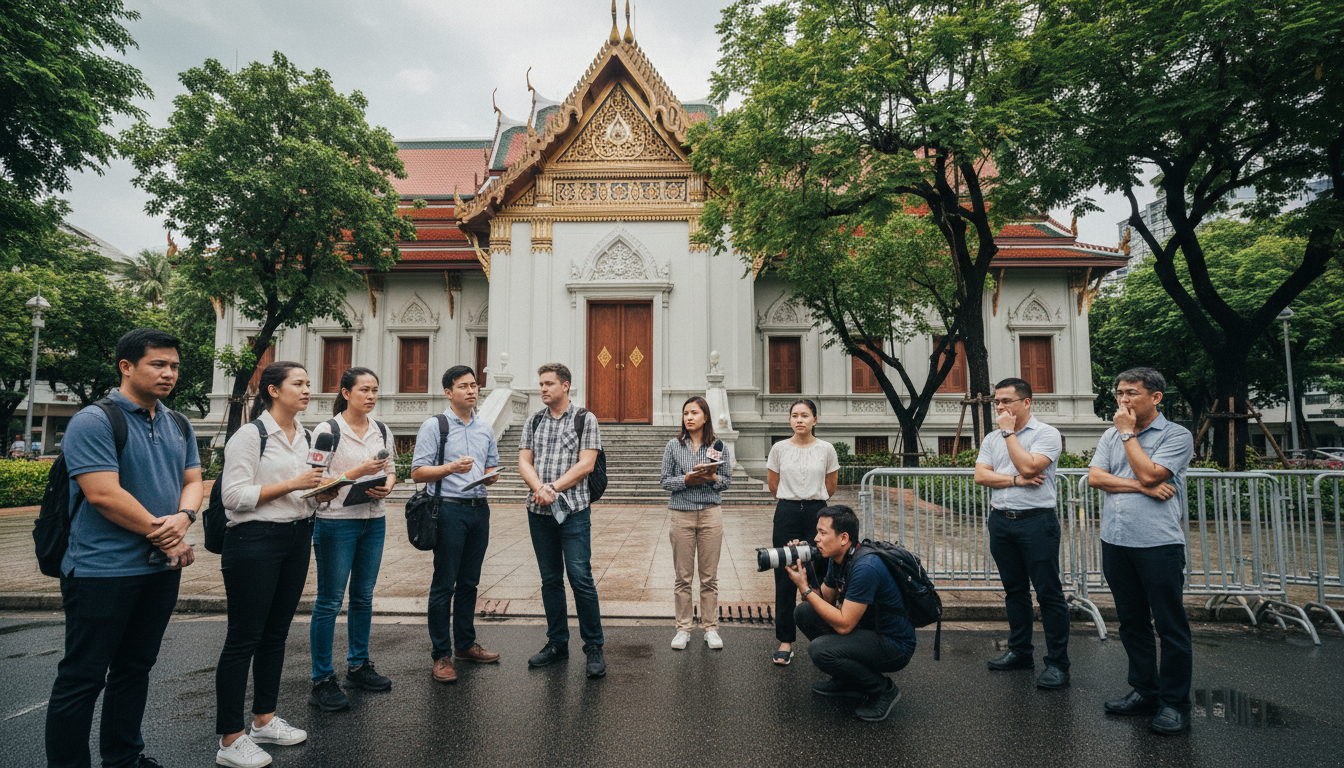
SINGAPORE
Thailand’s Constitutional Court on Monday dismissed a petition challenging the legality of ballot papers used in February's general election. The court ruled that the papers did not violate voter secrecy, effectively ending a specific legal challenge against the vote's validity. This decision offers clarity on one procedural aspect of the February election, settling a point of contention that could have prolonged political instability.
For residents in Thailand, such rulings often carry weight beyond their technical legal details. The immediate implication is that the structural integrity of the recent election, at least concerning its ballot design, is now affirmed by the court. This certainty can temper, though not eliminate, public anxiety around electoral outcomes and the processes that validate them. When court decisions uphold electoral results, it often provides a basis for the political landscape to stabilize, potentially allowing the focus to shift towards governance rather than legal disputes over legitimacy. This shift, if it occurs, could subtly affect daily life by reducing the background hum of political uncertainty that can influence economic confidence and social planning in the months ahead.
However, the resolution of this specific challenge does not address the underlying patterns of judicial involvement in political affairs that have characterized Thai politics. The core issue of whether ballot papers protected voter secrecy was resolved, but the broader pattern of election challenges reaching high courts remains a feature of the political system. This suggests a continued reliance on judicial bodies to arbitrate political disputes, a dynamic that can lead to public perceptions of judicial overreach or influence.
While this particular challenge was dismissed, constitutional courts in the region frequently rule on politically significant matters. For instance, The Diplomat reported in November 2023 that Indonesia’s Constitutional Court rejected a challenge to a controversial election ruling. The Jakarta Post reported in September 2025 that Indonesia's Constitutional Court rejected five petitions challenging the TNI Law. These instances, including the recent Thai ruling, highlight a trend where high courts play a pivotal role in validating or challenging political processes and legislation, shaping the operational reality of government and its accountability in the Asia-Pacific.
The Constitutional Court's decision to dismiss the petition provides a measure of legal finality for the February election. What remains to be seen is how this outcome influences the broader political narrative and whether it fosters a perception of settled electoral processes or merely concludes one episode in a longer series of challenges to political legitimacy. The outcome now depends on how political actors and the public interpret and respond to this judicial affirmation of the election’s procedure, which will ultimately shape the monthly rhythm of political engagement for those living in Thailand.
Sources
Newsletter
Pacific Daily
A curated briefing from Thailand, Asia-Pacific and the world.