Submerged Servers and the Uncounted Cost of Marine Cooling
Moving digital infrastructure into coastal waters solves an inland energy equation while shifting ecological risk to unmonitored seas.
SINGAPORE
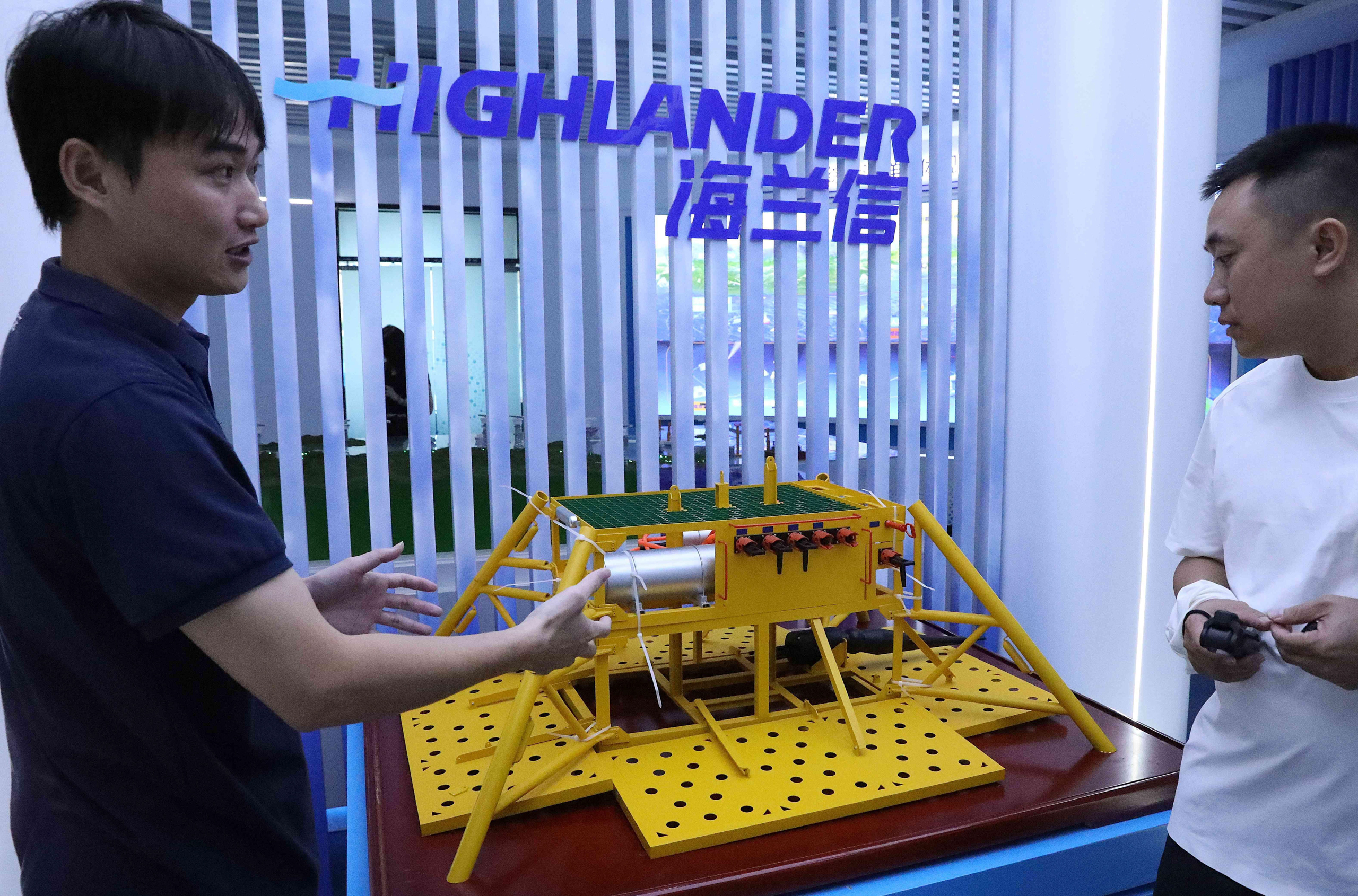
Continental power grids demand immediate reductions in digital energy consumption, yet moving heat dissipation from terrestrial facilities into coastal waters transfers an environmental burden to marine habitats whose baselines remain unmeasured. In China, industrial policy has prompted operators to place data capsules beneath the sea surface off Hainan and Shanghai. The operational premise relies on seawater providing natural cooling for dense arrays of processing units, bypassing the energy-heavy refrigeration cycles that burden municipal power distribution. What appears on balance sheets as thermal efficiency, however, emerges along the maritime periphery as an untested physical intrusion.
Industrial cooling historically anchored itself along rivers or within reach of municipal utilities, where thermal discharge could be measured against statutory environmental baselines. Subsea deployment alters that relationship. By sinking server units directly into coastal seabeds, commercial operators convert the marine water column into a thermodynamic buffer. The heat produced by intense computing does not disappear; it dissipates directly into surrounding currents. For coastal zones that already absorb agricultural run-off and intense maritime shipping, heat injection creates localized biological stressors. Marine organisms depend on narrow thermal windows for reproduction and metabolic function, yet corporate deployment has outpaced independent ecological surveying.
Shifting the Burden Offshore
Regional planning frameworks have consistently prioritised decarbonising inland utilities, driving infrastructure developers to treat oceanic space as an open-ended sink for industrial consequences. Technologists argue that deep-water placement limits land usage in densely populated coastal provinces while cutting freshwater consumption. That calculation holds true strictly within terrestrial accounting boundaries. Once those operations move offshore, the ecological liabilities become harder for civil regulators to evaluate.
Marine environments cannot serve as an unpriced heat sink for continental computing targets without rigorous public oversight.
Maritime authorities across the Asia-Pacific face a familiar dilemma as digital infrastructure expands into regional waters. If Chinese coastal tests turn into standardized regional templates, similar projects could easily appear across Southeast Asian shorelines where power grids are constrained. Emerging markets seeking foreign direct investment may accept submerged processing clusters without possessing the monitoring equipment necessary to measure bottom-water thermal plumes. Inland administrative centers achieve clean emissions metrics, while coastal communities and artisanal fisheries bear the uncertain biological fallout of artificial thermal disturbance.
Unresolved Ocean Baselines
Independent observers emphasize that scientific certainty regarding cumulative thermal impacts does not yet exist. A solitary seabed pod produces localized heat dissipation, but aggregated industrial fields could alter ambient currents, benthic sediment stability, and local plankton concentrations. Because proprietary enterprise data governs server performance, regulatory agencies lack comprehensive access to real-time discharge metrics beneath the surface. Independent marine scientists are left to evaluate long-term risks without baseline readings taken before the metal housings were lowered onto the seabed floor.
Technical ambition frequently outruns regulatory architecture across maritime Asia. Deploying computing clusters to ocean depths resolves immediate corporate pressures over land allocation and terrestrial electricity loads, yet it presumes the ocean possesses infinite capacity to absorb thermal waste without ecological consequence. The fundamental tension between inland digital acceleration and marine preservation remains unresolved on the seabed, where industrial heat continues to escape into currents that national planning targets never measured.
Sources
Newsletter
Pacific Daily
A curated briefing from Thailand, Asia-Pacific and the world.