Specialty Coffee Scales Architectural Theater Across the Pacific
Arabica reaches 247 global sites in Vancouver, testing whether high-cost spatial design can outlast specialty beverage fatigue
SINGAPORE
Retail expansions driven by design vocabulary face a persistent mathematical tension. A commercial operator can commission custom joinery and curate visibility, but beverage economics still require rapid transactional throughput to service high-rent leases.
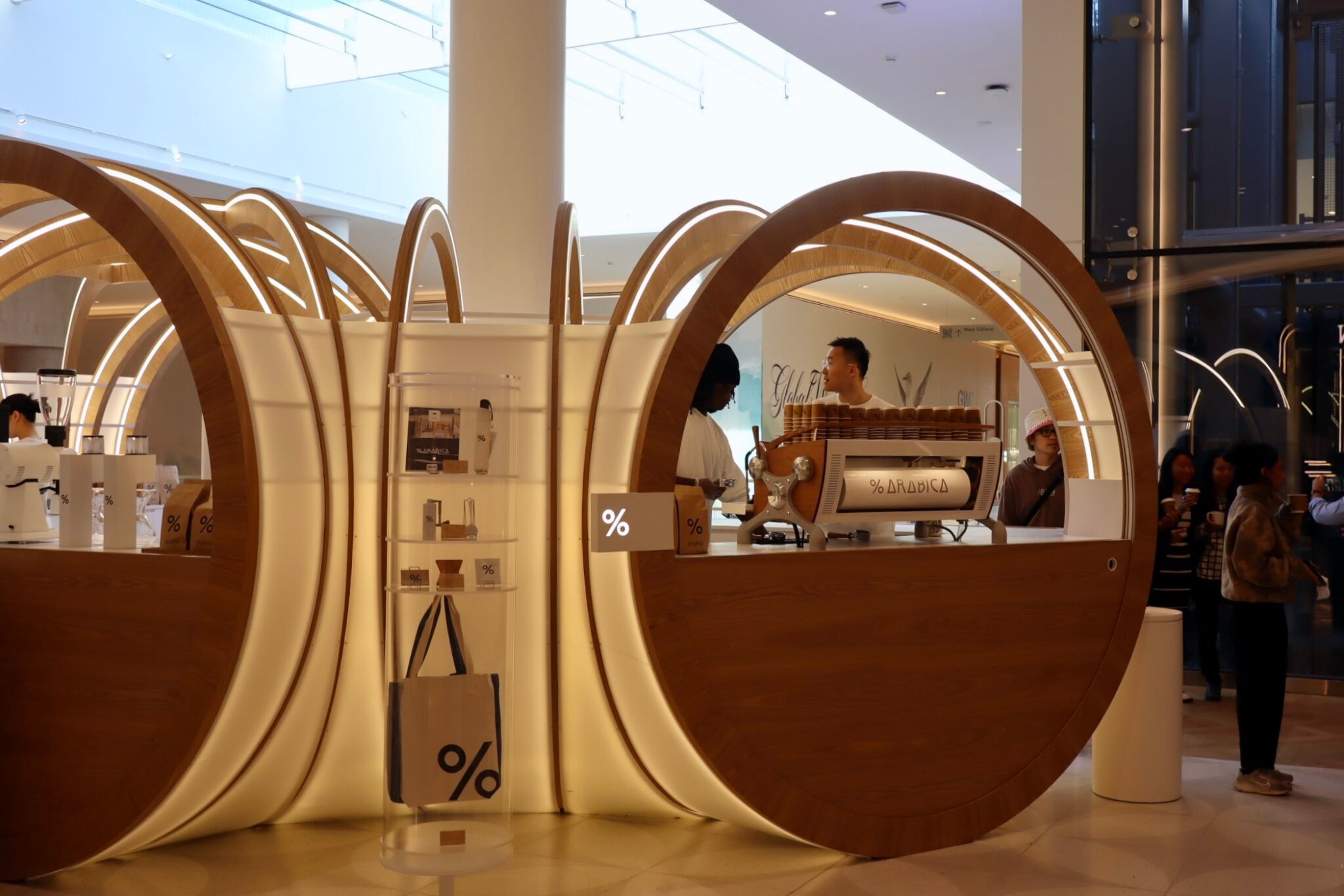
When Japan-based cafe operator Arabica opened its first store inside Vancouver proper at Oakridge Park, the announcement leaned entirely on spatial prestige. The company announced its arrival with the greeting, "Hello Vancouver! Your new store has arrived," marking its eighth location in Canada and its 247th location across the globe. Describing the physical pavilion, Arabica stated that "Illuminated overlapping oak rings form its primary architectural vocabulary," relying on sequential wooden ribs and framed sightlines to place coffee preparation on open display. The site follows an outpost opened in Richmond last year, alongside a previous temporary pop-up run inside Oakridge Park Gallery.
This physical staging illustrates how specialty beverage brands operating out of Japan attempt to command premium margins abroad. By converting an espresso counter into a design installation, the operator seeks insulation from common commodity pressures. The interior architecture acts as capital expenditure meant to signal distinction before a consumer tastes the product. Yet beneath the aesthetic framing lies an aggressive scaling strategy that runs directly counter to craft scarcity.
The Mall Footprint Formula
Operating 247 global units shifts a commercial enterprise out of independent boutique standing into institutional retail distribution. Oakridge Park positions the cafe within an orchestrated retail redevelopment, sharing the commercial ecosystem with food hall concepts like Time Out Market Vancouver and dining operators such as Hello Nori. In such developments, floor space carries elevated base rents and strict landlord covenants.
Pop-up operations inside preview spaces like Oakridge Park Gallery allow operators to test foot traffic and customer acquisition at contained operational risk. Transitioning to a permanent footprint changes that calculation. Custom timber pavilions require substantial upfront amortization. The primary operational question is whether footfall within high-end mixed-use retail hubs can generate the transaction volume necessary to clear high capital expenditure without diluting brand perception.
Skeptics of rapid cafe expansion point to market saturation across major metropolitan retail centers. Urban consumers have access to dense specialty coffee networks, making loyalty volatile and switching costs zero. A design pavilion can attract early architectural interest, but sustained profitability depends on daily repeat consumption rather than occasional aesthetic appreciation.
Valuation Against Craft Limits
Defenders of the model argue that Arabica maintains uniform execution by strictly scripting store layouts and customer sightlines across its international network. In their view, transparent service counters create operational discipline and brand distinction that commodity operators cannot replicate.
That argument faces real structural limits. When an operator reaches 247 branches across diverse jurisdictions, brand equity spreads thin. Architectural differentiation becomes harder to defend as competing chains adopt similar minimalist joinery and open bar layouts. Meanwhile, local independent roasters in competitive urban markets retain lower overheads and closer ties to neighborhood customer bases.
The Vancouver opening demonstrates that international specialty operators still view commercial hubs in Canada as prime targets for overseas expansion. What remains unproven is whether bespoke architectural investments can permanently alter unit economics when initial consumer curiosity subsides.
Sources
Newsletter
Pacific Daily
A curated briefing from Thailand, Asia-Pacific and the world.