Solitary Ocean Courses Mask the Industrial Realities of Modern Racing
While offshore solo marathons capture spectator attention, commercial maritime capital concentrates in closed fleet circuits and coastal infrastructure.
One hundred and fifteen singlehanded sailors competing across roughly 3,542 nautical miles of the North Atlantic create a compelling spectacle of isolated human endurance. The Route du Rhum commands public attention because offshore solitude contrasts sharply with landbound political cycles, particularly when media cycles across North America focus on domestic legislative contests in the United States. That solitary crossing is an established operational fact. Yet treating transoceanic solo racing as the bellwether of maritime commercial health represents an analytical misreading of how racing capital actually functions.
Long offshore passages consume immense sponsorship reserves while returning narrow, episodic commercial engagement.
Sustained maritime participation operates on different commercial incentives. Dense one-design competition, demonstrated by classes such as the J/70 North Americans and the established Stars, anchors the technical core of the sport. These regattas pull active boat owners and technical support crews into repetitive calendar schedules rather than isolated multi-year campaigns. Where singlehanded ocean crossings function as acute marketing exercises, closed-course fleets require reliable shore facilities and standardised equipment fabrication.
The Structural Divide
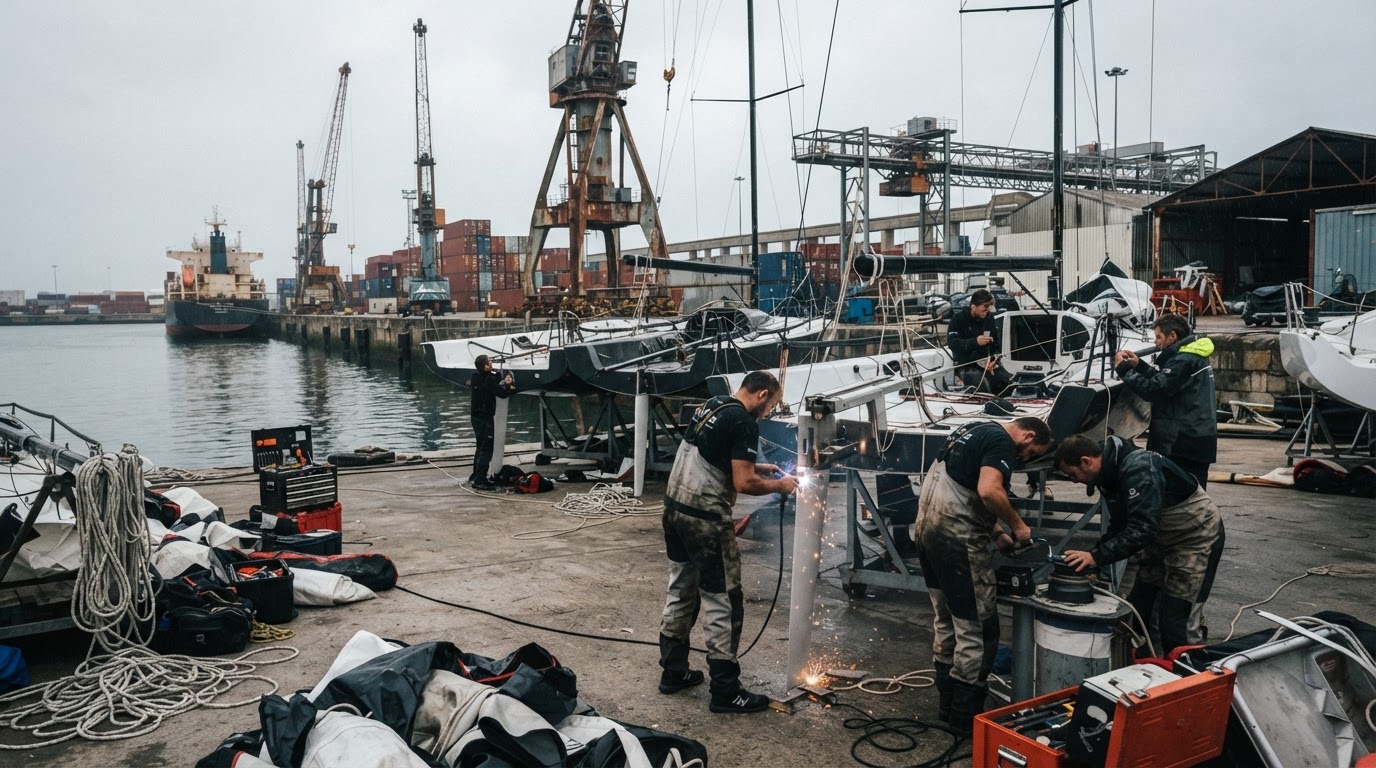
Offshore marathons generate severe operational friction. Managing 115 solo entries across 3,542 nautical miles requires emergency tracking redundancies and specialized naval architecture designed to survive deep-ocean depressions. The reporting confirms the scale of this transatlantic deployment. What remains an inference, supported by marine asset liquidity patterns, is that capital committed to such extreme hulls rapidly disperses once the finish line is crossed. The boats enter refit sheds or brokerage listings, generating little recurring yield for regional marine service yards.
By comparison, one-design classes generate steady commercial turnover. A fleet assembling for seasonal championships establishes a predictable rhythm for rigging shops and slipway operators. The capital committed to transportable hulls remains active across multiple coastal venues rather than tied to a single speculative transatlantic transit. Steady local participation sustains skilled marine labour far more effectively than occasional ocean spectacles.
Public fascination naturally gravitates toward solo navigators confronting heavy weather alone on open water. That narrative frames competitive sailing as an individual battle against ocean hydrology. In reality, high-performance racing is an industrial assembly process. A skipper on a solo transatlantic passage acts as the final operator of an extensive commercial supply chain that includes composite fabricators and computational routing specialists. Presenting these campaigns purely as solitary romantic ventures obscures the balance sheets required to place a single hull on the water.
Allocation of Capital
Regional waterfront authorities frequently misjudge these balance sheets. Civic promotional bodies often attempt to capture international attention by underwriting offshore stopovers or bidding for endurance race arrivals. These initiatives require municipal commitments for transient berths and hospitality facilities that sit empty after the fleet departs.
Long-term commercial solvency depends on fleet density, not grand departures.
Solitary ocean passages capture public imagination, but standardized fleet circuits provide the recurring commerce that sustains coastal maritime trades.
Consider the operational parallels between coastal thoroughfares and open-water racecourses. Terrestrial arteries require persistent engineering maintenance just to remain viable, as demonstrated along coastal infrastructure routes in North America during 2025. Marine racecourses require no physical pavement, but their shore support systems demand identical institutional discipline. Harbour masters and maintenance yards cannot survive on multi-year festival cycles. They rely on the regular arrival of class fleets and active dry-storage slips.
Commercial sponsorship markets face an eventual reckoning between brand visibility and recurring utility. A campaign crossing thousands of miles of empty ocean offers media exposure, but one-design fleets assemble active purchasing participants in close physical proximity. High-net-worth competitors in classes like the Stars invest directly into equipment and local service providers. That direct expenditure circulates through regional supply chains without requiring state underwriting for temporary race villages.
Whether capital continues to fund high-risk transatlantic solo ventures will depend on corporate tolerance for rising technical risk. The enduring health of competitive marine sectors rests on the recurring logistics of local fleet racing.
Sources
Newsletter
Pacific Daily
A curated briefing from Thailand, Asia-Pacific and the world.