Singapore's Sentosa Expansion Signals Intensified Regional Tourism Competition
The planned growth of Singapore's resort hub reflects a structural shift in Asia's tourism landscape, heightening pressure on destinations like Thailand.
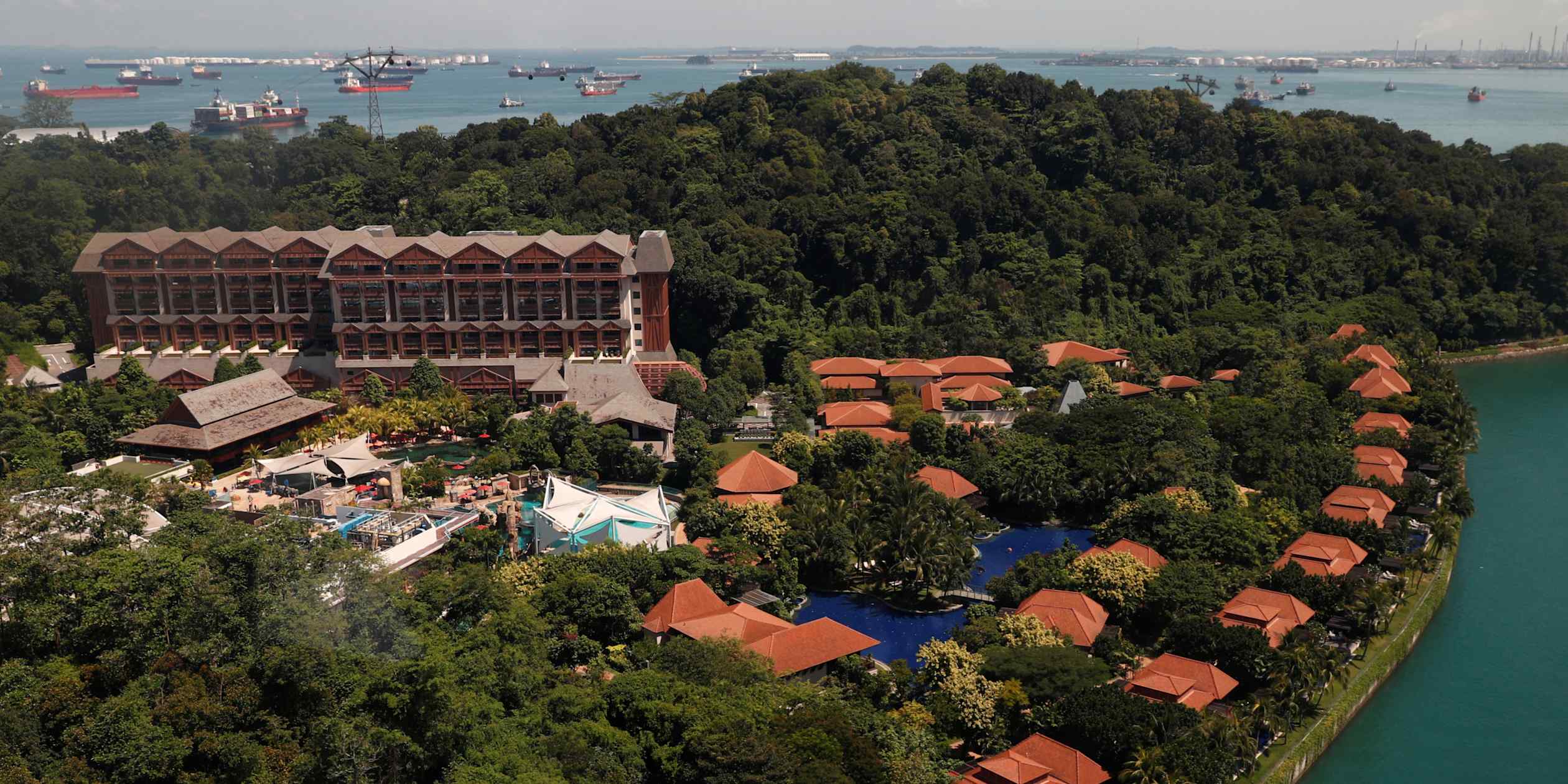
SINGAPORE
Singapore's announcement regarding the expansion of its southern resort hub, reported by Nikkei Asia on August 25, 2026, represents a significant structural development in Southeast Asian tourism. This move, aiming to boost tourism, follows a long-term strategic pattern. The Greater Sentosa Master Plan, unveiled by The Straits Times on July 3, 2026, indicates new attractions will be ready from the early 2030s. This commitment to sustained, large-scale infrastructure investment suggests an ambition to consolidate Singapore’s position as a premier regional tourism and leisure destination.
This initiative fundamentally alters the competitive environment for other regional players. While Singapore focuses on integrated resorts and high-value tourism, other nations, including Thailand, often compete on volume and diverse cultural offerings. The report from Nikkei Asia on August 25, 2026, details Singapore’s plan to expand its southern resort hub to boost tourism. This expansion, particularly following the government rebuke mentioned by CNBC on August 11, 2025, concerning Resorts World Sentosa, points to a determined, government-backed effort to control the trajectory of Singapore's tourism sector. The CEO of Resorts World Sentosa stated they would 'be ready,' indicating institutional alignment with state policy.
Structural Competition
The implication for Thailand is a need for renewed strategic clarity. Thailand's tourism sector has historically relied on a broad appeal, from cultural sites to natural attractions, often without the same level of integrated, large-scale, and centrally planned resort development. The rise of a more sophisticated, well-funded competitor in a key regional hub like Singapore means that the decision-making power of high-spending tourists is being increasingly influenced by a concentrated offering of entertainment and leisure options. This is not merely an increase in capacity but a qualitative upgrade in a competitor’s value proposition.
Some might argue that Singapore's high-end, purpose-built tourism model caters to a different market segment than Thailand’s more diversified approach, thereby limiting direct competition. This perspective suggests that tourists seeking integrated resorts might not be the same as those drawn to Thailand’s beaches or cultural heritage. However, this view overlooks the broader regional contest for tourism dollars. As Singapore enhances its offerings, it draws from a finite pool of potential visitors and, crucially, shifts perceptions of what a 'premier' Asian destination entails. The structural change lies in Singapore’s increasing capacity to anchor regional tourism with a singular, high-quality product, which then influences traveler expectations across the region. The constraint that remains unresolved for Thailand is how to respond to this structural challenge without diluting its own distinctive appeal, or to what extent it must recalibrate its own tourism infrastructure and policy to compete for a potentially shrinking share of certain tourist demographics.
Economic Implications
For Thailand, this development necessitates a re-evaluation of its tourism infrastructure, regulatory frameworks, and marketing strategies. Failure to adapt could result in a relative decline in high-yield tourist arrivals, impacting local economies dependent on the sector. The outcome now depends on the policy response of other regional governments, including Thailand’s, to Singapore's deepening strategic investment in its tourism capacity.
Sources
Newsletter
Pacific Daily
A curated briefing from Thailand, Asia-Pacific and the world.