Regional Security Apparatuses Confront Persistent Challenge of Tourism-Related Crime
Incidents at transit hubs underscore the ongoing tension between economic dependency on tourism and the capacity for effective cross-border law enforcement.
SINGAPORE
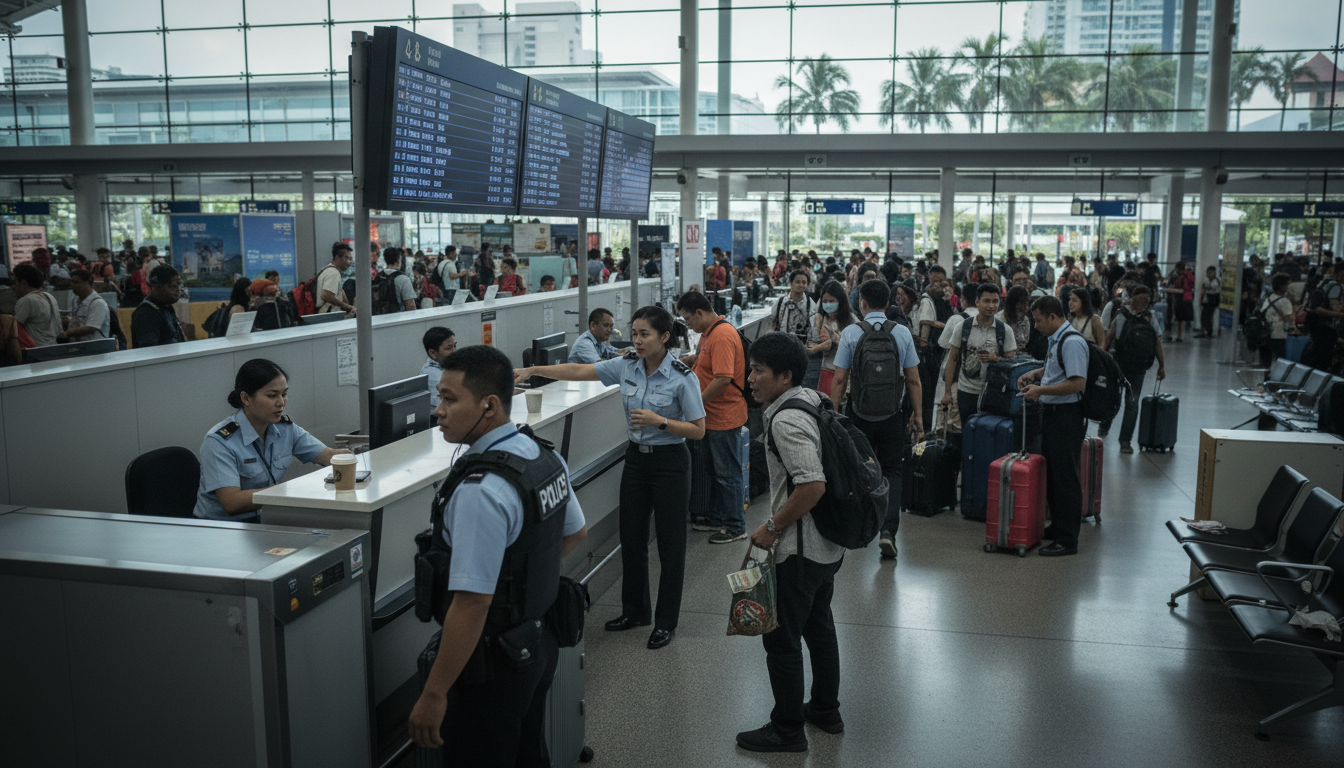
The arrest of a 27-year-old Vietnamese national on September 15 for the alleged theft of a luxury suitcase belonging to a Chinese tourist at Bangkok's Suvarnabhumi Airport, reported by VnExpress International on September 17, brings into focus a recurring pattern of security challenges in Southeast Asia. This incident, while specific, reflects broader regional dynamics concerning the management of transnational movement and associated criminal activities.
Historically, the increasing flow of people across national borders in Southeast Asia has presented opportunities for various forms of crime. This is not a new phenomenon, but its contemporary manifestation, often involving individuals from different nations and targeting specific tourist demographics, highlights a persistent pressure point for regional security frameworks. Thailand, a significant destination for international tourism, faces a continuous strategic imperative to safeguard its visitor economy. The 2024 arrest of a card theft gang in Bangkok that specifically targeted tourists, as reported by Bangkok Post on January 22, demonstrates a consistent requirement for law enforcement intervention. Broader concerns within the region regarding tourist misconduct, extending beyond simple theft to encompass wider behavioral issues, also reflect this ongoing challenge.
This incident at a major regional transit hub, involving a Vietnamese national and a Chinese tourist, underscores the interconnectedness of regional security and economic factors. While the immediate response is law enforcement, the underlying economic currents are substantial. Nations like Vietnam, which experienced an attempted gold theft by foreign individuals valued at $7,700, reported by VnExpress International on September 15, 2026, also contend with their own internal security complexities, often linked to economic disparities and cross-border mobility. The capacity of state security apparatuses to manage such incidents, rather than merely the occurrence of the incidents themselves, significantly shapes the perception of regional stability. The consistent ability of regional governments to detect, investigate, and prosecute these crimes serves as a critical measure of their operational effectiveness and responsiveness.
These individual infractions, though seemingly minor, contribute cumulatively to the regional tourism infrastructure's perceived vulnerability. For Thailand, maintaining its reputation as a secure destination is a foundational strategic objective. The perceived safety of key entry points like Suvarnabhumi Airport is a vital component of this national security posture. The argument that such events are isolated occurrences, statistically minor against the millions of annual travelers, is a consideration. However, the consistent reporting of such incidents, alongside ongoing efforts to counter more organized criminal enterprises such as card theft, indicates a systemic vulnerability that impacts regional confidence. The direct financial cost of a single stolen luxury item is minor compared to the potential long-term erosion of trust among crucial source markets, particularly from countries like China, whose outbound tourism remains a pivotal economic driver for the entire ASEAN bloc.
The unresolved tension lies in the ongoing balancing act for Southeast Asian nations: maximizing the substantial economic benefits derived from tourism while simultaneously mitigating the persistent, albeit often individually small, security challenges that accompany increased human movement. The capability for effective cross-border law enforcement cooperation and intelligence sharing, rather than merely reactive arrests, remains the crucial determinant of regional stability in this domain.
Sources
Newsletter
Pacific Daily
A curated briefing from Thailand, Asia-Pacific and the world.