Singapore's Proposed COE Revisions Target Luxury Car Segment with Higher Costs
The Land Transport Authority's plan to merge car Certificate of Entitlement categories and introduce a rebate-surcharge system could raise costs for high-end vehicles by up to S$30,000, signaling a sharper segmentation of the vehicle market.
SINGAPORE
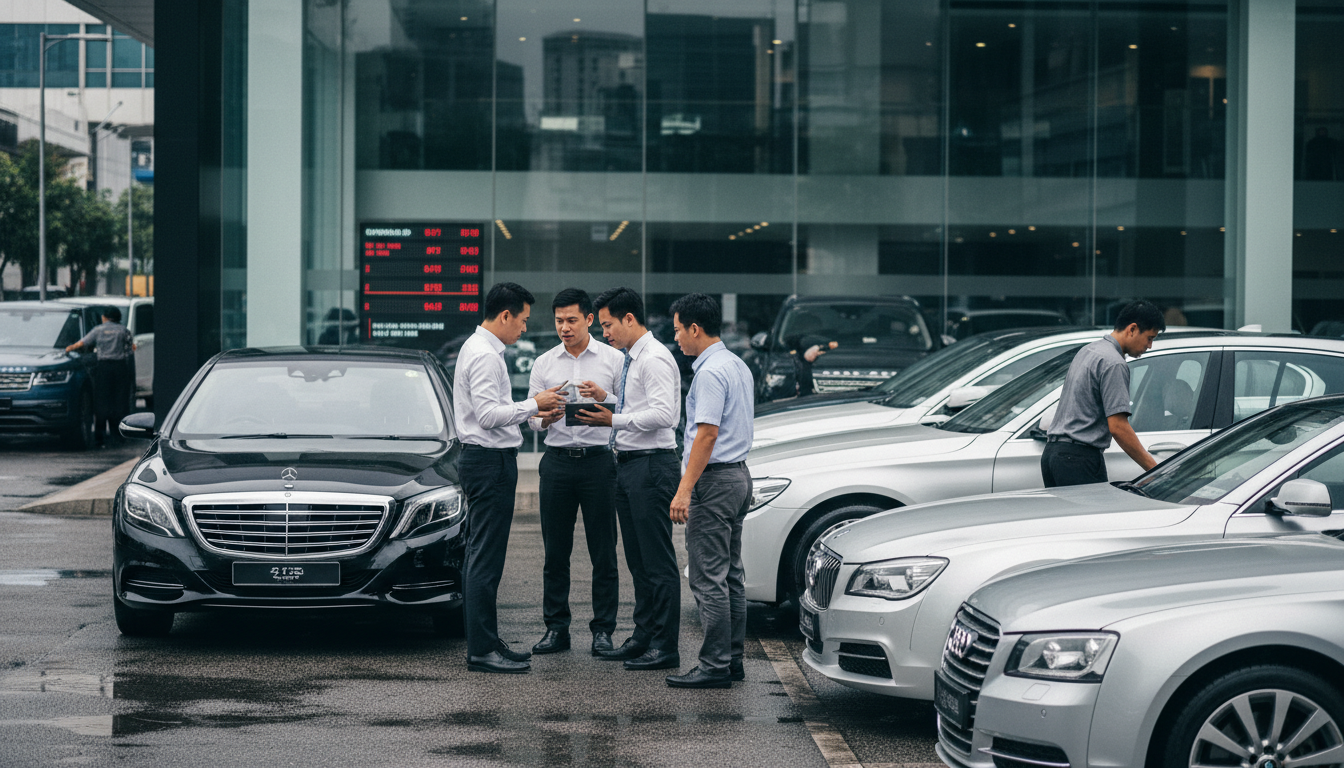
Singapore’s Land Transport Authority (LTA) has proposed modifications to its Certificate of Entitlement (COE) system, including the merging of car categories and the implementation of a fee and rebate structure. Under this system, buyers of higher-end cars could pay up to S$30,000 more than mass-market buyers, Channel News Asia reported on October 8, 2026. This adjustment indicates a shift in how Singapore intends to manage vehicle ownership and demand.
The LTA’s proposal involves combining previous COE categories for different engine capacities. A new tiered system would then apply fees and rebates, calibrated by car value. This approach suggests a direct effort to manage traffic congestion and vehicle population growth by targeting the luxury segment, where demand might be less sensitive to price increases.
While these policy changes primarily address Singapore’s domestic market, their implications could extend regionally. For Southeast Asian car manufacturers and distributors, particularly those operating in the premium segment, Singapore’s market dynamics are undergoing adjustment. A potential S$30,000 increase for higher-end vehicles risks altering purchasing decisions and the overall demand mix within Singapore. This could prompt luxury car buyers to explore alternatives in neighboring markets or delay acquisitions, potentially influencing export strategies for companies targeting affluent consumers in the region.
However, the proposal may not uniformly deter all high-end car purchases in Singapore. Buyers in this segment often possess significant capital, and the S$30,000 additional cost, while substantial, might be absorbed without a drastic reduction in demand. The LTA’s stated objective of controlling car ownership levels and promoting public transport use may achieve some success, but luxury demand typically exhibits lower price elasticity compared to mass-market demand. The full impact on sales volumes, particularly for high-value vehicles, remains uncertain. Singapore is employing financial mechanisms to segment its vehicle market more acutely, aiming to reduce the prevalence of certain vehicle types on its roads.
The effectiveness of this differentiation hinges on the precise implementation of the rebate-surcharge system and the rate at which consumer behavior adapts. Current information suggests that while mass-market vehicle access may be supported through rebates, the luxury segment is poised for increased costs, indicating a distinct policy direction for managing urban mobility and luxury consumption.
Sources
Newsletter
Pacific Daily
A curated briefing from Thailand, Asia-Pacific and the world.