Seoul's Consistent Call for Dialogue Amidst DMZ Incident Highlights Unresolved Regional Tension
President Lee Jae Myung's renewed push for talks with Pyongyang, following a Demilitarized Zone blast that injured South Korean soldiers, underscores a persistent security dynamic between the two Koreas and its broader implications for stability across Asia.
SEOUL
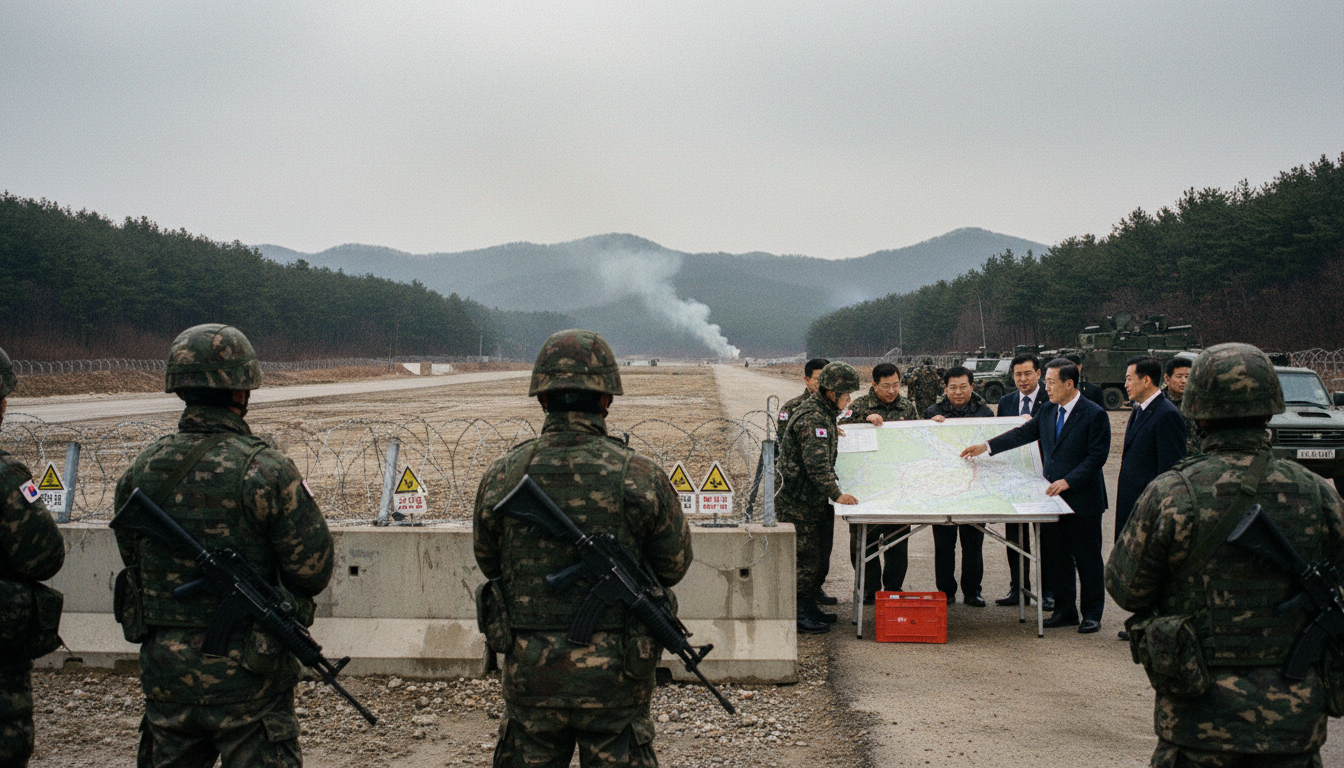
South Korean President Lee Jae Myung urged North Korea to return to dialogue on October 1, a day after Seoul's military demanded an apology over a blast in the Demilitarized Zone. Three South Korean officers were severely injured in the September 21 explosion inside the DMZ, an area described as heavily mined. This request for dialogue follows previous efforts by President Lee; he urged talks with North Korea to replace the armistice with peace in August, and called for conditions to resume US-North Korea dialogue in September. In November 2025, South Korea’s Lee also warned of a “dangerous situation” with North Korea.
This recurring pattern of South Korean diplomatic overtures, often prompted by military incidents, reveals an ongoing and precarious situation. The 1950 to 1953 Korean War ended in a truce, not a peace treaty, leaving Seoul and Pyongyang technically at war. Each incident, such as the recent explosion, brings this unresolved state of conflict to the forefront. The demand for an apology by Seoul's military signals the gravity of the September 21 event.
The implications of this persistent tension extend beyond the immediate region. While direct conflict might seem contained, the economic and security consequences of instability can resonate broadly. Global trade routes, which traverse the wider Asian region, could face disruption. Supply chains, reliant on major manufacturing economies, could be impacted. Investment flows, including those into various Asian markets, often retract in the face of heightened security concerns. The Republic of Korea is a significant economic and technological partner for many in Southeast Asia, and its stability is a prerequisite for continued growth and collaboration in that sub-region.
Singapore encouraged North Korea to keep dialogue channels open in May, reflecting a wider regional understanding that stability, even if fragile, is preferred over escalation. The consistent diplomatic effort from South Korea, even when met with silence or hostility, aims to manage immediate threats and prevent miscalculation. This cycle of incident and renewed call for dialogue has become a defining characteristic of relations between the two Koreas. It represents an attempt to mitigate the constraints of a historical conflict that remains unresolved, influencing policy decisions throughout the broader Asian region.
Sources
Newsletter
Pacific Daily
A curated briefing from Thailand, Asia-Pacific and the world.